2026-09-29
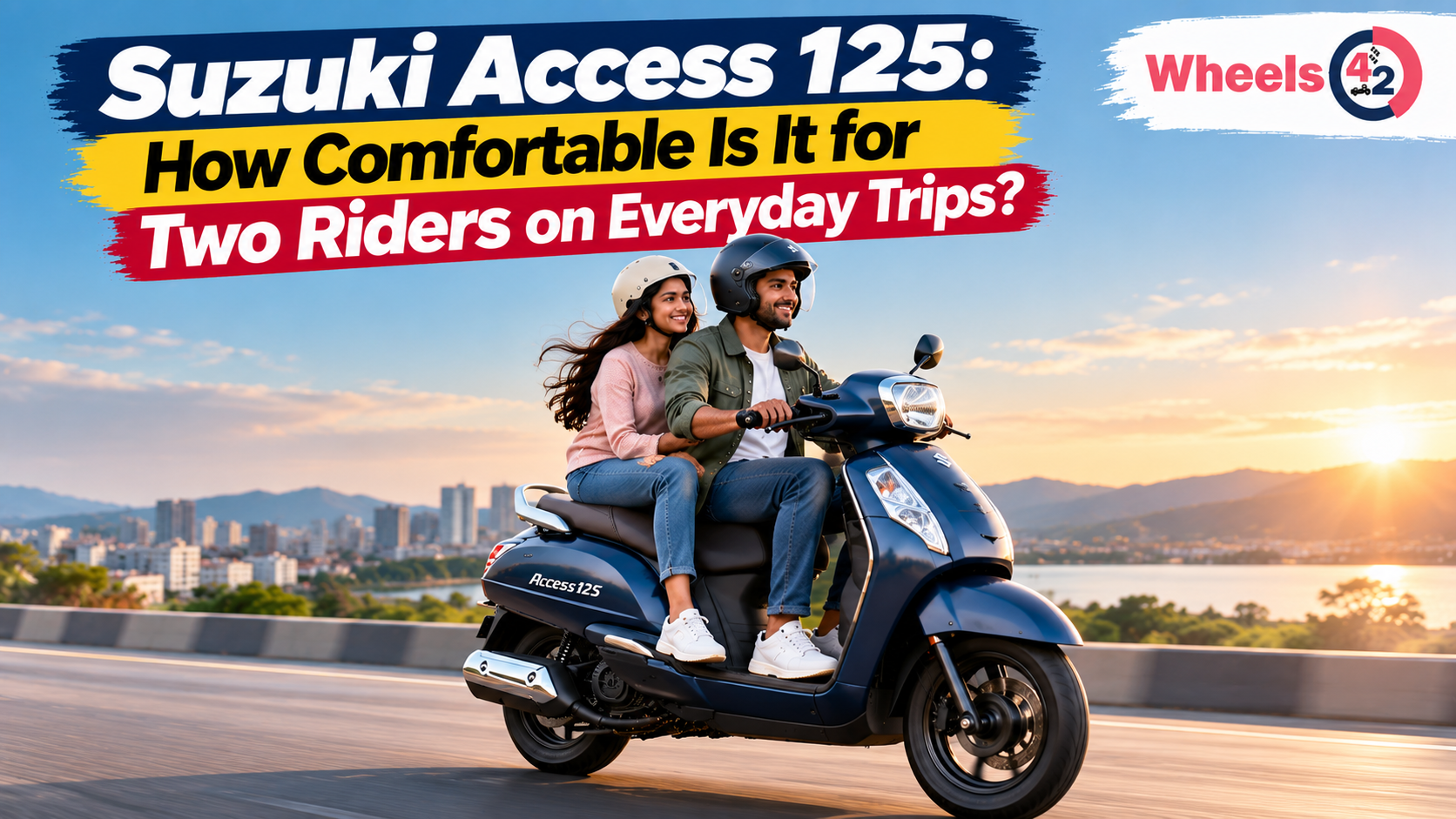
For many Indian families, a scooter is not just a solo commuter. It often has to handle two riders, daily office runs, shopping trips, school drops and weekend travel. The Suzuki Access 125 is designed with this kind of everyday use in mind, offering a long seat, dedicated pillion footrest and a spacious floorboard.
But does that translate into genuine comfort when two people are riding together? Let's look at the features that matter most for rider-and-pillion use.
One of the most important features for two-up riding is the seat. The current Suzuki Access 125 gets a wide, flat and long seat measuring 856 mm, according to Suzuki's specifications. The company says the seat is designed to provide comfort for both the rider and pillion, while the narrower front section helps the rider reach the ground more easily.
For a passenger, the length of the seat is particularly important because it provides enough room to maintain a comfortable sitting position without constantly moving forward.
The sturdy grab rail also gives the pillion a dedicated handhold, which can be useful during braking, acceleration and slow-speed riding.
The Access 125 uses an extended aluminium pillion footrest positioned lower on the scooter. Suzuki says its design is intended to provide better comfort for the passenger, while the raised tip helps with mounting and dismounting.
This is a small detail, but it matters on longer rides. A well-positioned footrest can reduce the need for a passenger to keep their legs in an awkward position.
The scooter's floorboard is another practical feature. Suzuki describes it as spacious enough to support comfortable riding with a pillion passenger. It also gets a non-slip surface designed to provide secure footing.
This gives the rider enough room to maintain a natural riding position even when carrying a passenger.
Two-up comfort depends heavily on suspension because the scooter has to deal with additional weight.
The Access 125 uses a telescopic front suspension and swingarm rear suspension. Suzuki says the suspension system is designed to provide smooth operation.
In real-world use, comfort will still depend on the combined weight of the riders, tyre pressures, road conditions and riding speed. Potholes and sharp speed breakers can feel more pronounced when two people are onboard, so slowing down over rough surfaces remains important.
The Access 125 is powered by a 124cc, single-cylinder, air-cooled petrol engine producing 6.2kW at 6,500rpm and 10.2Nm at 5,000rpm. It uses a CVT automatic transmission.
The automatic transmission makes the scooter straightforward to operate in traffic. For typical city journeys with two people, the engine is aimed at providing practical everyday performance rather than outright acceleration.
With two riders and luggage, performance will naturally feel different compared with riding alone. This is particularly noticeable during steep climbs, overtaking or quick acceleration from a standstill.
The Access 125 has a kerb mass of around 106–107kg depending on the variant, which keeps it relatively manageable for a scooter in this segment. It also has a 1,260mm wheelbase and 160mm ground clearance.
The relatively manageable weight can be useful when manoeuvring through congested roads, parking or moving the scooter at low speeds with a passenger.
The answer depends on what you mean by "longer."
For city commuting and moderate-distance trips, the long seat, pillion footrest and floorboard design make the Access 125 well suited to two-up usage.
For extended highway journeys, comfort will depend more heavily on rider and passenger body size, road quality, riding speed and how frequently breaks are taken.
A scooter designed primarily for everyday mobility should not be evaluated like a touring motorcycle. For occasional weekend trips, however, its automatic transmission and seating design can make two-up riding convenient.
The Access 125 also focuses on practical features beyond seating. Depending on the variant, Suzuki offers features such as Ride Connect technology, a TFT display on applicable versions and different braking configurations. The current range includes multiple variants, with Suzuki's website listing six versions in some markets.
The scooter also gets a 5.3-litre fuel tank, LED lighting and both electric and kick-start capability.
|
Feature |
Suzuki Access 125 |
|
Engine |
124cc, single-cylinder |
|
Power |
6.2kW @ 6,500rpm |
|
Torque |
10.2Nm @ 5,000rpm |
|
Transmission |
CVT |
|
Seat Length |
856mm |
|
Wheelbase |
1,260mm |
|
Ground Clearance |
160mm |
|
Kerb Weight |
106–107kg |
|
Front Suspension |
Telescopic |
|
Rear Suspension |
Swingarm |
|
Fuel Tank |
5.3 litres |
|
Pillion Footrest |
Extended aluminium design |
|
Seat Design |
Long and ergonomic |
Specifications are based on Suzuki India's current published information.
The Access 125 can make sense for riders who frequently use their scooter with a passenger and want a practical automatic option.
It particularly suits:
However, if two-up riding involves frequent long-distance highway journeys, buyers should take a proper test ride with both riders before making a decision.
The Suzuki Access 125 is built with two-up practicality in mind, rather than treating the pillion seat as an afterthought. Its 856mm-long seat, sturdy grab rail, dedicated aluminium footrest, spacious floorboard and suspension setup are all relevant to passenger comfort.
For everyday city riding with two people, these features make the Access 125 a scooter worth considering. The final comfort experience will still depend on rider and passenger size, road conditions and journey length, so a test ride with both riders is the best way to judge the fit.











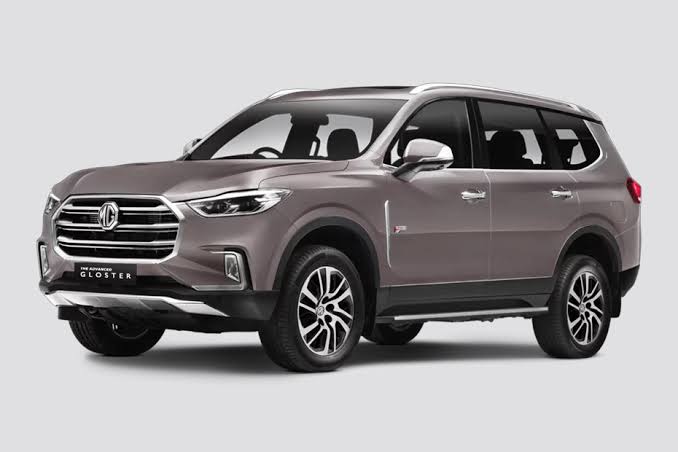
MG Motor
₹40.00 Lakh