
 Khyati Sharma 2026-09-02
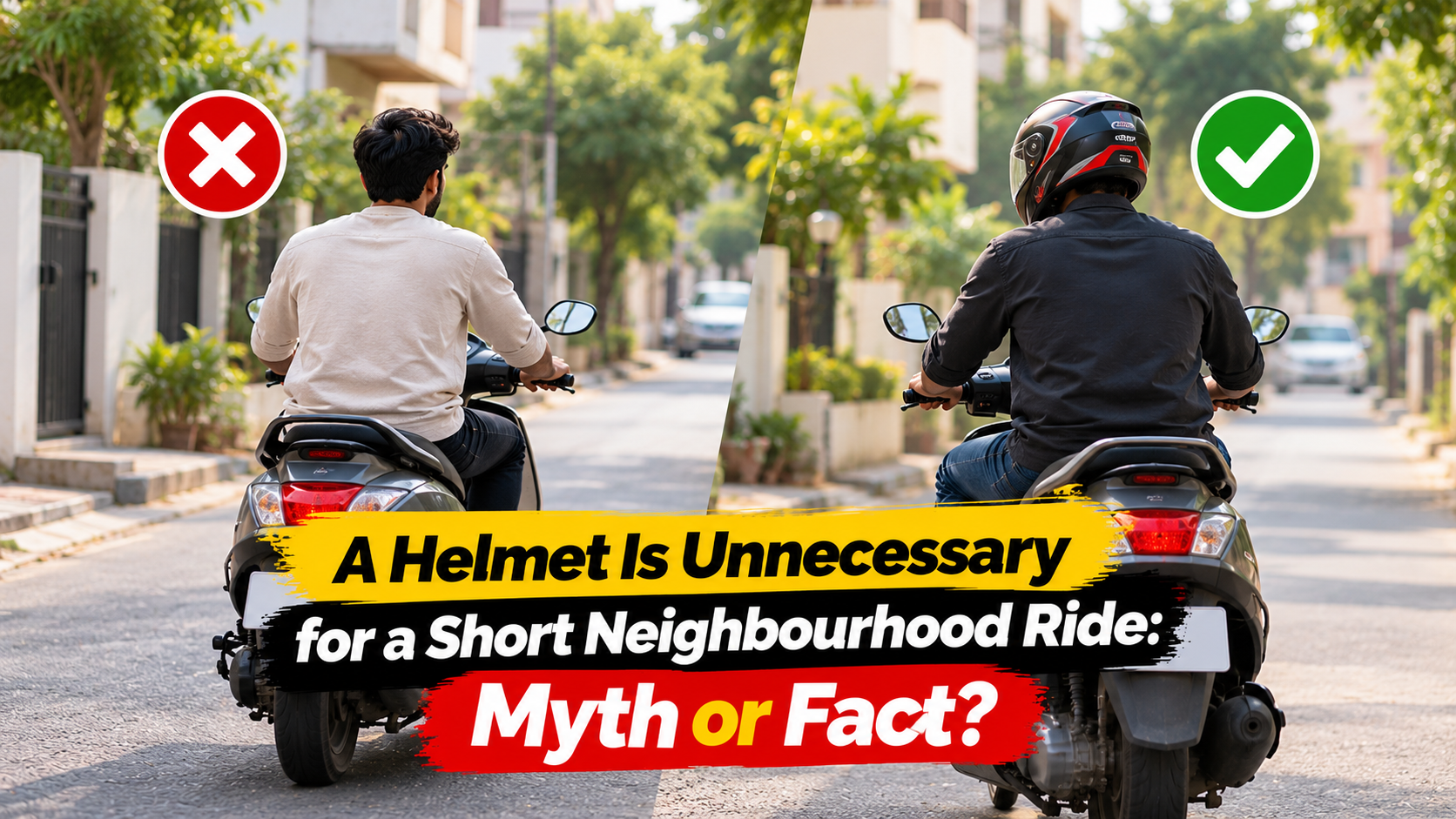
Myth or Fact? Many two-wheeler riders believe that wearing a helmet is only necessary for long journeys, highway rides or travelling at high speeds. For a quick trip to a nearby shop, the local market or a friend's house, some riders choose to leave their helmets behind. The reasoning often sounds simple: the destination is close, the speed will be low, and the journey will take only a few minutes.
However, this belief can create a dangerous false sense of security. Road accidents can happen close to home, and even a short ride can involve sudden braking, slippery roads, unexpected obstacles or collisions with other vehicles.
Verdict: Myth. A helmet is important even for a short neighbourhood ride. The distance you travel does not eliminate the possibility of an accident. Wearing a properly fitted, certified and securely fastened helmet is one of the most important precautions a two-wheeler rider can take.
Documents Required to Buy a New Car in India (Complete Checklist)
The idea that short journeys are safer is common among scooter and motorcycle riders. Several everyday habits contribute to this misconception.
First, riders may believe that low speeds automatically mean low injury risk. Although speed affects the severity of a crash, it does not guarantee safety. A rider can lose balance, hit a pothole, skid on loose gravel or collide with a vehicle emerging from a side street.
Second, familiar roads can make people less cautious. Someone who travels along the same neighbourhood streets every day may feel confident because they know the route. However, pedestrians, parked vehicles, animals and other road users can create unexpected hazards at any time.
Third, convenience plays a major role. Putting on a helmet, fastening its strap and carrying it after parking may seem unnecessary for a two-minute journey. Yet the potential consequences of riding without head protection can be far more serious than the small inconvenience of wearing one.
The truth is that safety equipment should be used before a journey begins, not only when a rider expects dangerous conditions.

A short journey is still a journey on a public road. Even if you travel only a few hundred metres, you may encounter a range of hazards.
A car could suddenly turn into your path. A pedestrian might cross between parked vehicles. A delivery rider could stop unexpectedly, or a patch of sand and water could cause your scooter to skid.
Neighbourhood roads may also have uneven surfaces, potholes, speed breakers and narrow intersections. These conditions can force riders to brake suddenly or change direction without warning.
Importantly, a crash does not need to occur at high speed to cause a serious head injury. Falling from a two-wheeler and striking the road or a hard object can cause significant trauma.
The US National Highway Traffic Safety Administration notes that helmets substantially reduce the risk of fatal and brain injuries among motorcyclists. The World Health Organization similarly highlights the protective benefits of quality helmets. These findings reinforce why riders should not base helmet use solely on the length of a journey.
The World Health Organization reports that safe, quality helmets can reduce the risk of death in a road crash by more than six times and the risk of brain injury by up to 74%.
These figures demonstrate that helmets are more than a legal requirement or an accessory. They are protective equipment designed to help manage the forces involved in a crash.
A helmet works by providing an outer shell and an energy-absorbing liner. During an impact, these components help distribute and absorb some of the energy that would otherwise be transferred directly to the head.
The chin strap is also important. If the helmet is loose or comes off during a collision, its protective value can be greatly reduced.
A helmet cannot prevent every injury, and wearing one does not make reckless riding safe. However, a properly fitted helmet significantly improves protection when a crash occurs.
Many riders assume that travelling slowly through a residential area makes a helmet unnecessary. While lower speeds can reduce some crash risks, they do not remove the possibility of injury.
Consider a scooter rider moving through a narrow lane. A pedestrian suddenly steps into the road, forcing the rider to brake sharply. The front wheel loses grip, and the rider falls sideways. Even without another vehicle being involved, the rider's head may strike the pavement.
A similar incident can occur when a motorcycle hits an uneven road surface or a pothole. A rider may lose balance and fall before having time to react.
The outcome depends on several factors, including the angle of impact, the surface struck, the rider's position and whether protective equipment is being worn.
This is why riders should not treat low-speed travel as risk-free. The sensible approach is to wear a helmet every time they ride.

Yes. Under Section 129 of India's Motor Vehicles Act, 1988, people above four years of age driving, riding or being carried on a motorcycle in a public place are generally required to wear protective headgear that meets prescribed standards.
The law includes a stated exception for a Sikh person wearing a turban while riding or driving in a public place. Other applicable provisions and rules should be checked for the specific circumstances.
The requirement does not depend on whether the destination is nearby or far away. A short trip to a grocery shop or local market is not automatically exempt simply because it takes only a few minutes.
Government guidance also emphasises the importance of using certified helmets. In India, buyers should look for a genuine Bureau of Indian Standards (BIS) certification rather than choosing a helmet solely because it is cheap or looks sturdy.
Riders should also check current state and local enforcement requirements. Fines and other consequences may apply for violations, but the primary reason to wear a helmet is to protect your life and health.
Hatchback vs Sedan vs SUV: Which Car Type Suits You Best?
Not every helmet offers the same level of protection. A suitable helmet should fit properly, meet the applicable safety standard and remain securely fastened while riding.
Before purchasing one, check the following:
Certification: Choose a genuine helmet that complies with the applicable safety standard. In India, look for the appropriate BIS certification.
Correct fit: The helmet should sit level on your head and feel snug without causing painful pressure points.
Secure strap: The chin strap should fasten properly and keep the helmet in position.
Good condition: Avoid helmets with cracks, damaged straps, compromised padding or signs of significant impact.
Suitable coverage: Choose a design that offers appropriate protection for your type of riding. A full-face helmet provides additional coverage for the face and chin compared with an open-face design.
Clear visibility: Make sure the visor or eye protection allows you to see clearly, especially at night or in poor weather.
Never buy a helmet just because it is inexpensive or fashionable. A product that looks like a helmet but lacks reliable protective construction may provide a false sense of safety.
|
Common belief |
Reality |
|
Helmets are needed only on highways. |
Neighbourhood roads also have hazards, including pedestrians, potholes and unexpected turns. |
|
A short journey is too brief for an accident. |
A crash can happen within seconds, regardless of how close the destination is. |
|
Low speeds cannot cause serious head injuries. |
A fall or impact at relatively low speed can still cause a serious injury. |
|
A helmet is unnecessary when travelling to a familiar place. |
Familiarity does not prevent other road users from making sudden or unexpected movements. |
|
Any helmet provides adequate protection. |
A helmet should be certified, correctly fitted, undamaged and securely fastened. |
|
Wearing a helmet means riding faster is safe. |
Helmets reduce certain injury risks but do not eliminate crash risk or replace responsible riding. |
|
Only the rider needs a helmet. |
Pillion passengers should also use appropriate protective headgear as required by law. |
Helmet safety is not limited to the person controlling the motorcycle. A passenger sitting behind the rider can also be thrown off balance during sudden braking or a collision.
In India, the general helmet requirement applies to people riding on motorcycles in public places, subject to the applicable legal provisions and exceptions. Riders should therefore ensure that their passengers have suitable helmets before starting the journey.
Sharing one helmet between the rider and passenger is not a safe solution. Each person needs a helmet that fits their head properly and can be fastened securely.
Parents and guardians should pay particular attention to children travelling on two-wheelers. A child's helmet must be suitable for the child's head size, and applicable child-safety requirements should be followed.
If a passenger does not have an appropriate helmet, delaying the journey or choosing another mode of transport is a better decision than accepting unnecessary risk.
Petrol vs Diesel vs CNG vs Electric Cars: How to Choose the Right Fuel Type

Making helmet use a routine is easier than deciding whether a particular trip is long enough to justify wearing one.
Keep your helmet in a convenient place near your keys or two-wheeler. Before leaving, put it on, adjust the fit and fasten the chin strap. Do not assume that placing a helmet loosely on your head provides adequate protection.
Along with wearing a helmet, follow basic road-safety practices:
Ride at a suitable speed for the road and traffic conditions.
Maintain a safe distance from other vehicles.
Slow down near intersections, schools and crowded markets.
Avoid sudden manoeuvres and unnecessary overtaking.
Do not use a mobile phone while riding.
Never ride under the influence of alcohol or impairing substances.
Keep tyres, brakes, lights and mirrors in good condition.
Ensure pillion passengers are seated safely and wear appropriate protective equipment.
These habits work together. A helmet is essential protection, but careful riding and a roadworthy vehicle also help reduce the chance of an accident.
The statement that a helmet is unnecessary for a short neighbourhood ride is a myth. A quick trip can involve unexpected road hazards, sudden falls and collisions that may cause serious head injuries.
A properly fitted, certified and securely fastened helmet helps reduce the risk of severe injury and can save lives. In India, the general legal requirement for protective headgear also applies to ordinary rides on public roads, not just long journeys.
Do not wait until you plan a highway trip to take safety seriously. Whether you are travelling to a nearby shop, dropping someone off or riding to work, make putting on your helmet part of starting the vehicle.