Khyati Sharma 2026-10-22
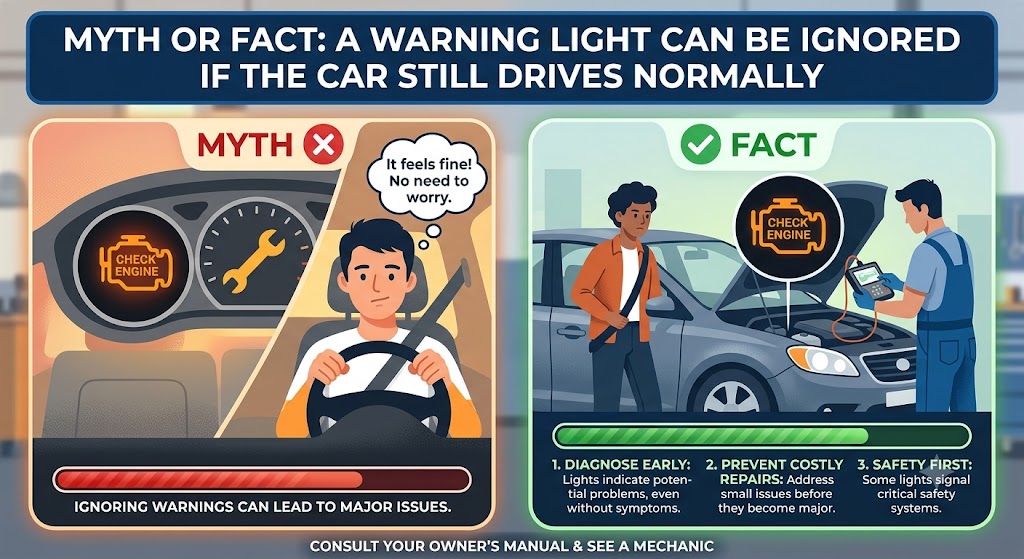
A warning light can be ignored if the car still drives normally. Many drivers believe that if their car starts properly, accelerates smoothly and shows no obvious signs of trouble, a dashboard warning light is nothing to worry about. However, this assumption can be dangerous.
Modern cars use electronic sensors and onboard diagnostic systems to monitor important components, including the engine, brakes, battery, airbags, tyres and cooling system. When something goes wrong or operates outside its expected range, the vehicle may display a warning light on the dashboard.
Sometimes, the problem is minor, such as a loose fuel cap or low tyre pressure. In other cases, the warning may indicate a serious issue that could cause expensive damage or compromise safety, even when the car appears to be functioning normally.
Company-Fitted vs Aftermarket Accessories: Which Is Better?
The truth is simple: a car driving normally does not mean that every system is working correctly. Understanding dashboard warning lights can help drivers respond appropriately, protect their vehicles and avoid unnecessary repair costs.
Dashboard warning lights are designed to alert drivers when a vehicle needs attention. Sensors and electronic control units continuously monitor different systems and communicate information to the car's computer.
For example, the engine management system checks information from sensors related to fuel delivery, exhaust emissions, ignition and engine operation. The braking system monitors components such as the anti-lock braking system, while the tyre-pressure monitoring system checks tyre inflation where fitted.
When a sensor detects an abnormal reading or a system identifies a fault, the dashboard may display a warning.
Not every warning means that a major component has failed. Sometimes, the light appears because a sensor has detected a small issue or a maintenance requirement. Nevertheless, the warning should be understood before deciding whether it is safe to continue driving.
A car can feel completely normal even when a fault has been detected. Some problems develop gradually, and the driver may not notice a difference until the condition becomes more serious.
No. Ignoring a warning lights simply because the vehicle drives normally is not a safe habit.
Consider an engine oil-pressure warning. The engine might initially sound normal and continue running, but insufficient oil pressure can prevent important internal components from receiving adequate lubrication. Continuing to drive may cause severe engine damage.
Similarly, a brake-system warning may appear before the driver notices any obvious change in braking performance. An airbag warning can indicate that part of the restraint system may not function as intended during a collision.
The important point is that dashboard warnings often provide an early indication of a problem. Acting promptly can help prevent a minor issue from developing into a costly repair.
However, not every warning requires the driver to stop immediately. The appropriate response depends on the specific light, its colour, the owner's manual and any accompanying symptoms.
Ex-Showroom vs On-Road Price: What's the Real Difference?
The colour of a dashboard warning light can help you understand its urgency, although the exact meaning varies by manufacturer.
Red warning lights generally indicate a serious condition that requires immediate attention. Examples include an oil-pressure warning, engine overheating warning or certain brake-system warnings. When a red warning indicates a potentially dangerous fault, stop as soon as it is safe and switch off the engine if instructed.
Amber or yellow warning lights usually indicate a fault or condition that needs checking. A check-engine light, ABS warning or tyre-pressure warning may fall into this category. The vehicle may remain driveable, but you should consult the owner's manual and arrange inspection promptly.
Green or blue indicator lights generally show that a feature is active, such as the high-beam headlights or certain driving systems. These are usually informational rather than fault warnings.
Do not rely on colour alone. Some warnings have specific instructions, and a flashing warning light can indicate a more urgent problem than a steady one.
|
Warning light |
What it may indicate |
Recommended action |
|
Check-engine light |
Engine management, sensor or emissions-system fault |
If steady and the car runs normally, arrange diagnosis soon; if flashing or accompanied by severe symptoms, stop safely |
|
Oil-pressure light |
Low engine oil pressure |
Stop safely and switch off the engine; seek assistance |
|
Engine-temperature light |
Overheating or a cooling-system problem |
Stop safely, switch off the engine and allow it to cool; never open a hot coolant cap |
|
Battery or charging light |
Charging-system fault involving the alternator, battery or wiring |
Stop somewhere safe and arrange inspection if the light remains on |
|
Brake-system light |
Parking brake engaged, low brake fluid or another brake-system fault |
Check the parking brake; if the warning remains or braking feels abnormal, stop safely |
|
ABS light |
Anti-lock braking system fault |
Drive cautiously only if normal braking remains and the manual permits; arrange inspection promptly |
|
Airbag light |
Possible fault in the airbag or restraint system |
Arrange inspection as soon as possible because occupant protection may be affected |
|
Tyre-pressure light |
Low tyre pressure or a monitoring-system issue |
Check tyre pressures promptly and inspect for damage; do not drive on a visibly damaged tyre |
The check-engine light is one of the most commonly misunderstood dashboard warnings. It can appear for various reasons, ranging from a relatively simple emissions-system issue to a fault affecting engine operation.
A loose or faulty fuel cap can trigger an emissions-related warning on some vehicles. Other possible causes include a malfunctioning sensor, ignition problems, fuel-delivery issues or a fault in the exhaust after-treatment system.
When the light stays on steadily and the car appears to run normally, the issue may not require an immediate roadside stop. However, it should not be ignored indefinitely.
A flashing check-engine light, particularly when accompanied by shaking, rough running or a loss of power, can indicate a serious fault such as an engine misfire. Continued driving may damage components such as the catalytic converter.
The best approach is to arrange a diagnostic scan and have the underlying problem identified. Simply clearing the warning light without fixing the fault does not solve the problem.
New Car Delivery Day: What to Check Before You Drive Off
Oil-pressure and engine-temperature warnings deserve special attention because continued driving can lead to serious damage.
An oil-pressure warning may indicate that the engine is not receiving sufficient lubrication. Possible causes include a low oil level, an oil-pump problem, a blockage or another mechanical fault. If the warning appears while the engine is running, stop safely and switch off the engine.
An overheating warning may indicate low coolant, a cooling-system leak, a malfunctioning fan or another problem. Continuing to drive an overheating vehicle can damage the engine.
If the temperature warning appears, stop in a safe place and follow the owner's manual. Do not remove the radiator cap or coolant reservoir cap while the system is hot, as pressurised coolant can cause severe burns.
In both cases, the car may initially continue moving normally. That does not make it safe to continue driving.
How Many Airbags Do You Really Need? A Safety Primer
Some warning lights relate to systems that may not immediately change the way a car feels on the road.
A battery or charging-system warning can indicate that the alternator is not charging the battery properly. The car may continue running for a while using stored electrical energy, but it could eventually stop when the available power is depleted. Electrical systems may also be affected.
An ABS warning means that the anti-lock braking system may not be functioning correctly. Conventional braking may remain available, depending on the fault, but anti-lock assistance may be unavailable during hard braking. Follow the vehicle manual and have the system checked.
An airbag warning can indicate a fault in the airbag or seat-belt pretensioner system. The car may drive normally, but some safety features may not operate as intended in a collision.
These examples demonstrate why normal driving performance is not a reliable way to judge whether a warning light matters.
If a dashboard warning light appears while driving, stay calm and follow a sensible sequence.
Identify the symbol. Check the owner's manual or the vehicle manufacturer's official guidance to understand what the light means.
Look for other symptoms. Notice whether the engine is overheating, the brakes feel different, the steering becomes heavy or the vehicle loses power.
Assess the urgency. If a serious warning appears, stop as soon as it is safe. Do not continue simply to reach your destination.
Check only what is safe. Once parked and the engine is switched off, you may be able to inspect tyre pressure or check the oil level according to the manual. Avoid touching hot or moving components.
Arrange professional diagnosis. If the warning persists, seek help from a qualified mechanic or authorised service centre.
If you are unsure whether the vehicle is safe to drive, roadside assistance is a safer choice than guessing.
New Car Dealer Negotiation Tips That Actually Work
Regular maintenance helps reduce the risk of some faults, but it cannot prevent every warning light from appearing.
Follow the manufacturer's service schedule, use the correct engine oil and coolant, check tyre pressures and pay attention to unusual sounds or changes in vehicle performance. Keeping the battery and charging system in good condition can also help prevent certain electrical problems.
Routine servicing may identify worn components, fluid leaks and other issues before they become more serious. However, sensors and electronic systems can still develop faults unexpectedly.
It is also important not to replace parts based only on a warning symbol. A diagnostic scan can help identify stored fault codes, but those codes must be interpreted correctly to find the underlying cause.
A warning light should be treated as useful information—not something to cover up or reset without understanding why it appeared.
Myth: A warning light can be ignored if the car still drives normally.
A vehicle can feel perfectly normal even when an important system has developed a fault. Some warnings may indicate minor issues, while others can signal a serious risk to the engine, braking system or passenger safety.
The right response depends on the warning. Red oil-pressure or overheating warnings generally require you to stop safely and switch off the engine. Other warnings may allow cautious driving for a limited distance, provided the owner's manual permits it and there are no concerning symptoms.
Never ignore a warning simply because the car still moves. Understanding the symbol, checking the manufacturer's guidance and arranging timely diagnosis can help protect your vehicle, your budget and your safety.











BMW
₹111.28 - 190.95 Lakh