
 Khyati Sharma 2026-10-01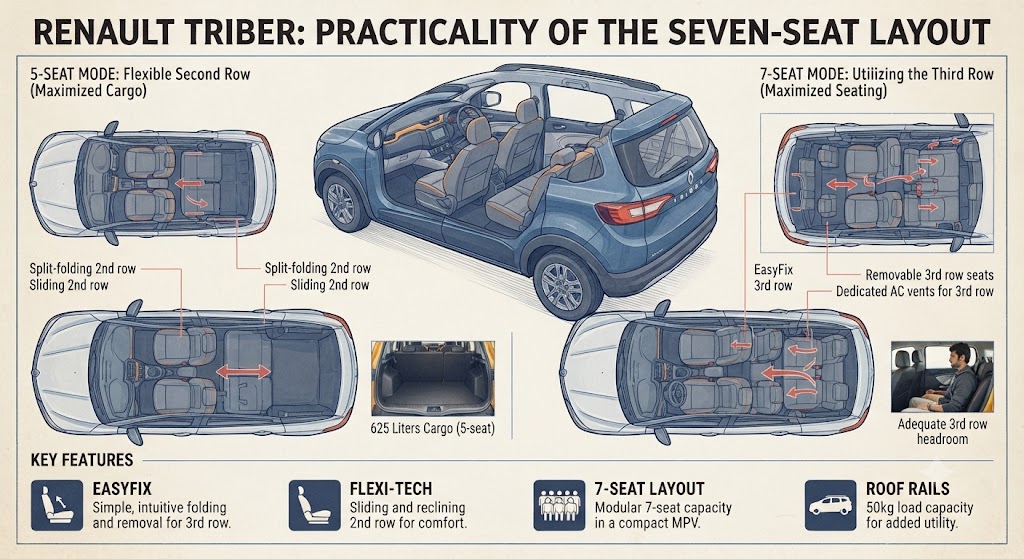
The Renault Triber has built its identity around one key idea: offering the flexibility of a seven-seater in a compact package. Unlike larger MPVs that require considerably more road space, the Triber retains a sub-four-metre footprint while offering multiple seating and luggage configurations.
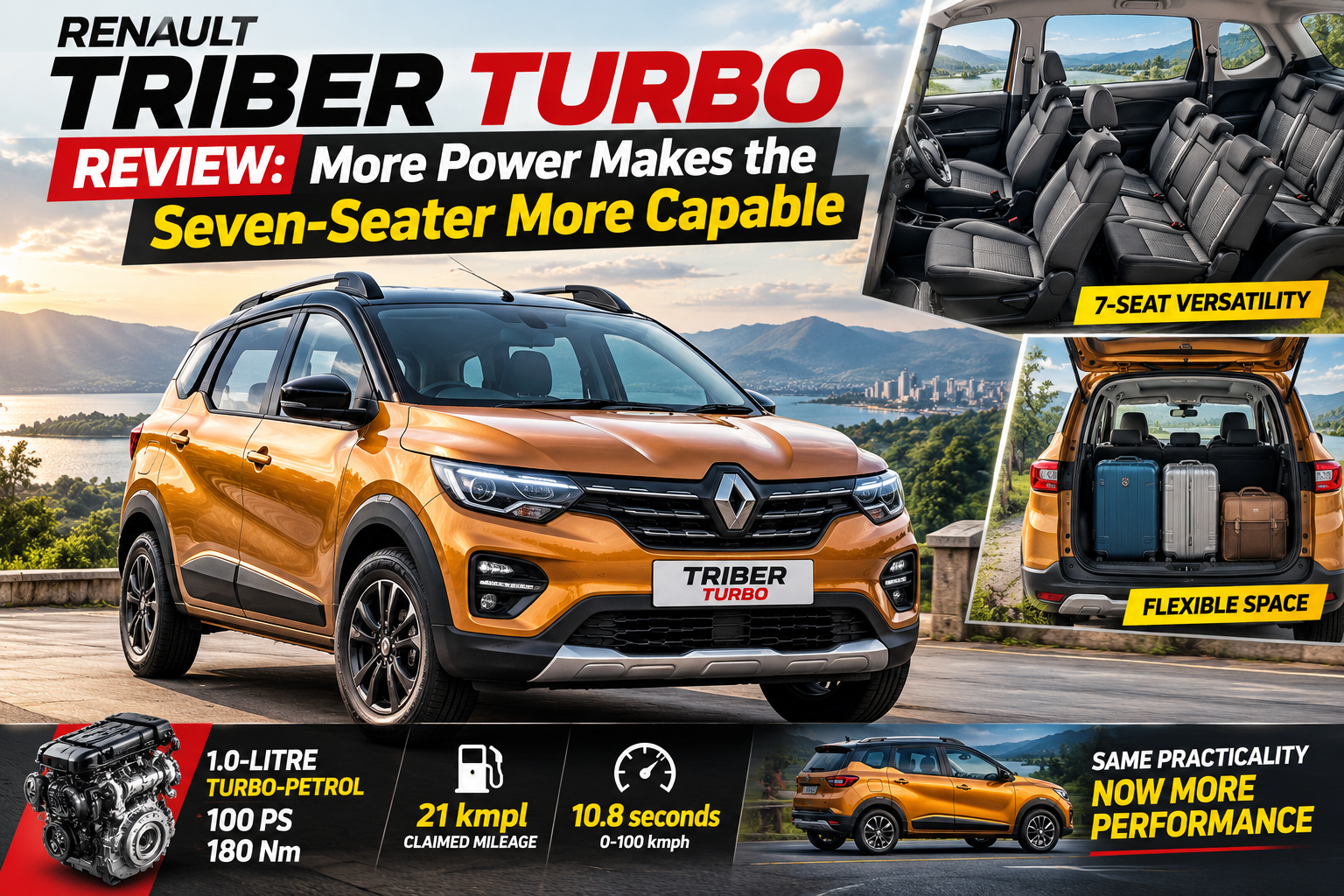
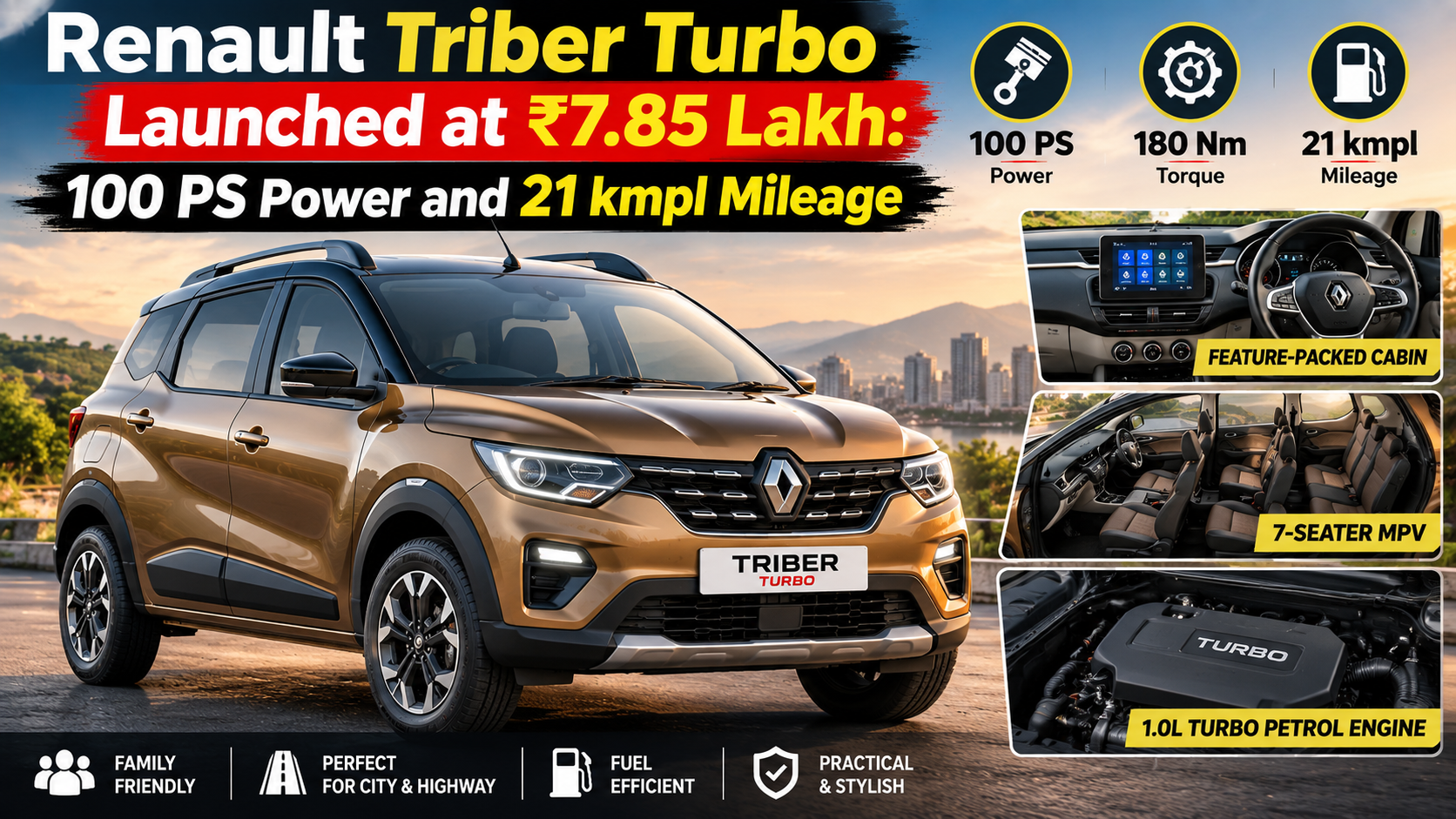
With the launch of the new Triber 100PS, Renault has also addressed one of the model's biggest talking points — performance. The turbo-petrol version produces 100PS and 180Nm while retaining the Triber's flexible 5-, 6- and 7-seat configurations.
But how practical is the Triber when all seven seats are actually being used? Here's a closer look.
The Triber uses a 2+3+2 seating arrangement, with two seats in the front, three in the second row and two individual seats in the third row.
What makes the layout particularly flexible is that the second and third rows can be rearranged according to passenger and luggage requirements.
Renault says the Triber offers more than 100 seating configurations, allowing owners to switch between passenger-carrying and luggage-carrying modes.
The third-row seats are removable, while the second row can slide, recline, fold and tumble. This gives the MPV a level of flexibility that is particularly useful for families.
This is one of the most important questions for any compact seven-seater.
The Triber's third row is not simply an occasional-use space. Its two individual seats can accommodate adults, particularly when the second row is moved forward to create additional legroom.
The third row also gets adjustable headrests and dedicated air-conditioning vents, helping make longer journeys more comfortable. Renault's current Triber specifications list third-row headroom at 834mm.
However, like most compact seven-seaters, space depends on how the second row is positioned. If taller passengers are occupying the second row, the third-row occupants may have to sacrifice some legroom.
For children and teenagers, the third row is considerably easier to use. Adults can also use it, particularly for shorter journeys.
The second row is arguably the most important part of the Triber's modular cabin.
The seats can slide and recline, allowing owners to prioritise either second-row passenger comfort or third-row legroom.
The second row also features a one-touch fold-and-tumble mechanism, making access to the rear seats easier. Renault says this functionality is designed to make changing between seating configurations quicker and simpler.
This flexibility is useful when the car is used differently from day to day.
For example:
7-seat mode: Seven passengers can be carried.
5-seat mode: The third row can be removed to create substantially more luggage space.
6-seat configuration: One third-row seat can be removed when a mixture of passengers and luggage is required.
Cargo mode: The second row can be folded flat along with the third row for maximum carrying capacity.
This is where the Triber's compact dimensions create an unavoidable compromise.
With all seven seats in use, Renault lists 84 litres of luggage space. That is enough for smaller bags and everyday items, but it isn't comparable with the luggage capacity of a larger MPV.
For a family trip involving seven people and large suitcases, owners will need to plan their luggage carefully.
The situation changes dramatically when the third row is removed.
In five-seat configuration, the Triber offers up to 625 litres of boot space.
This makes the car considerably more useful when seven seats aren't required.
One of the biggest advantages of the Triber is that its practicality doesn't stop at five or seven seats.
With the third row removed and the second row folded flat, Renault claims cargo capacity can increase to 1,065 litres.
That means the same vehicle can be used for:
Daily family commuting
School runs
Airport trips
Weekend travel
Shopping
Carrying larger household items
Small business or utility requirements
This multi-purpose character is one of the strongest reasons to consider the Triber.
Passenger comfort becomes especially important when seven people are travelling together.
The Triber is available with independent rear air-conditioning and vents serving the second and third rows. Higher versions also get automatic climate control.
This is useful for Indian conditions, particularly when the vehicle is being driven with a full passenger load.
The third-row occupants also benefit from dedicated airflow rather than having to depend entirely on the front vents.
Another part of the Triber's practicality comes from its storage solutions.
The cabin has multiple storage compartments, including door pockets, centre-console storage and cooled storage areas on applicable versions.
Renault says the Triber offers around 23 litres of cabin storage, allowing occupants to keep bottles, phones and other everyday items organised.
For a family car, these seemingly small details can make a significant difference during daily use.
Yes. The Triber measures under four metres in length, making it considerably easier to manoeuvre and park than many larger seven-seat vehicles.
Its compact footprint is particularly useful in:
Crowded urban streets
Narrow residential roads
Shopping areas
Busy parking lots
Tight apartment parking spaces
The 182mm ground clearance also gives it useful clearance for typical Indian road conditions.
The combination of compact dimensions and a flexible cabin is what makes the Triber different from conventional larger MPVs.
The latest development is the arrival of the Triber 100PS turbo-petrol.
Launched in September 2026, the new version uses a 1.0-litre turbocharged petrol engine producing 100PS and 180Nm. It is offered in Evolution, Techno and Emotion variants, with prices starting at around ₹7.85 lakh and extending to about ₹9 lakh, ex-showroom.
The new engine is particularly relevant to the seven-seat question because carrying six or seven occupants places more demand on the powertrain.
Compared with the naturally aspirated 1.0-litre petrol engine, the turbo motor's additional torque should make the Triber better suited to situations such as:
Full passenger loads
Inclines
Highway overtaking
Long-distance travel
Frequent acceleration with passengers onboard
The new turbo version also retains the Triber's modular seating concept rather than sacrificing passenger flexibility for performance.
|
Feature |
Renault Triber |
|
Seating capacity |
Up to 7 |
|
Seating layout |
2+3+2 |
|
Seating configurations |
100+ |
|
7-seat boot space |
84 litres |
|
5-seat boot space |
Up to 625 litres |
|
Maximum cargo capacity |
Up to 1,065 litres |
|
Third-row seats |
Removable |
|
Second row |
Slide, recline, fold and tumble |
|
Ground clearance |
182 mm |
|
Length |
3,985 mm |
|
Width |
1,935 mm |
|
Height |
1,643 mm |
|
Wheelbase |
2,636 mm |
|
Turbo engine |
1.0-litre, 100PS, 180Nm |
|
Drive type |
Front-wheel drive |
Specifications and equipment can vary by variant. Renault's official material confirms the modular 5-to-7-seat arrangement, removable third-row seats and flexible cargo configurations.
The answer largely depends on how the vehicle will be used.
For a family that needs seven seats occasionally but wants a compact vehicle for everyday city driving, the Triber's modular cabin is a major advantage.
The ability to remove the third row and create up to 625 litres of luggage space means owners don't have to live with a permanently compromised boot when seven seats aren't required.
On the other hand, families regularly travelling with seven adults and large amounts of luggage may find the 84-litre boot restrictive.
The third row is also better suited to children, teenagers and adults on shorter journeys rather than expecting the same amount of space available in a larger MPV.
The Renault Triber's seven-seat layout is practical primarily because of its flexibility rather than sheer size.
Its compact dimensions make it easy to use in cities, while the removable third-row seats, sliding and reclining second row and multiple seating configurations allow the cabin to adapt to different requirements.
The limited luggage space with all seven seats occupied remains the main compromise. However, once the third row is removed, the Triber becomes a significantly more capable family and luggage carrier.
The arrival of the 100PS turbo-petrol engine further strengthens the Triber's practicality by giving buyers a more powerful option for carrying a full passenger load. For buyers who want a compact seven-seater that can change roles between family transport and cargo carrier, the Triber's modular layout remains its defining feature.

Land Rover
₹67.90 Lakh