 Khyati Sharma 2026-09-30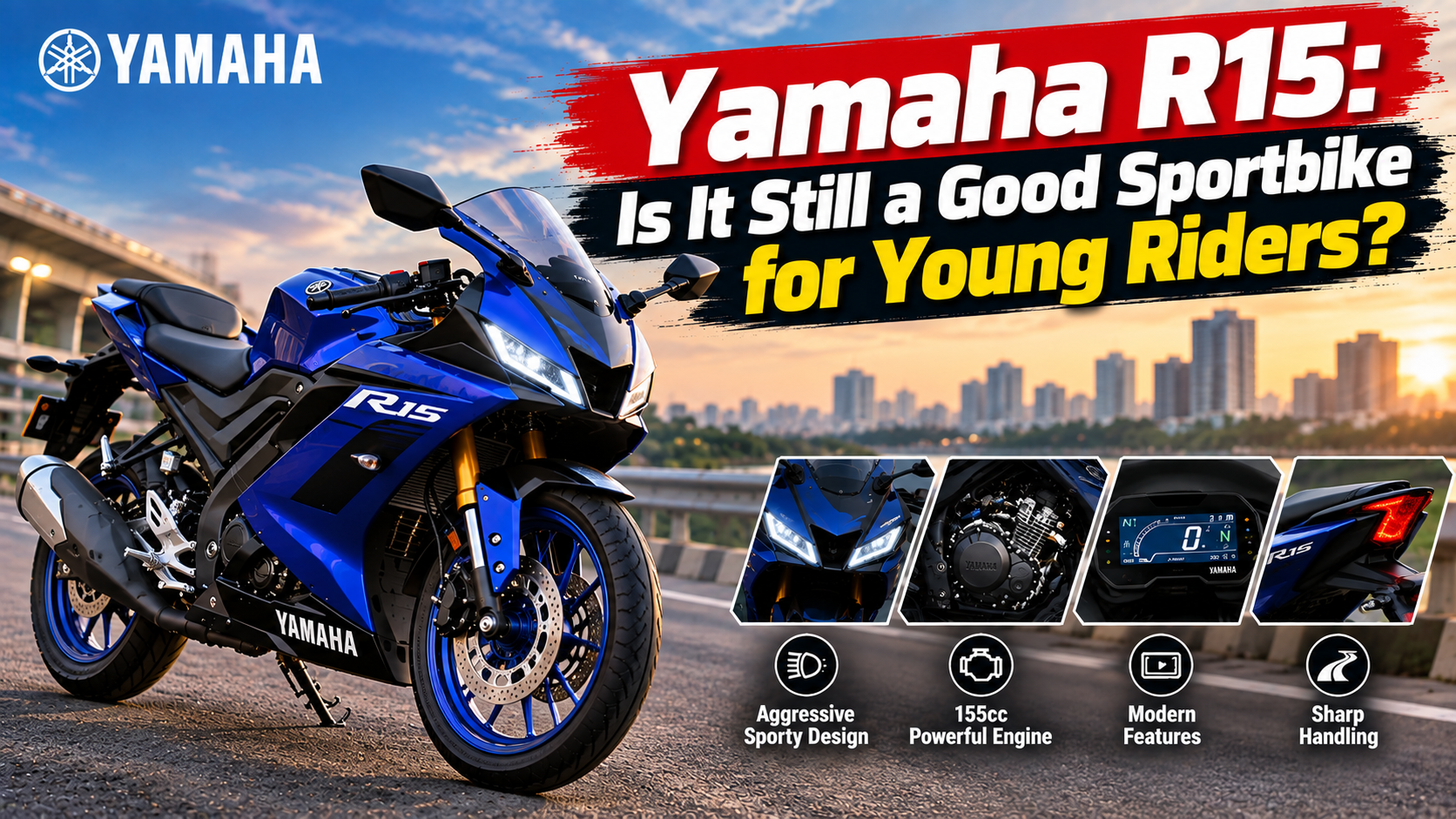
The Yamaha R15 has remained one of the most recognisable entry-level sports motorcycles in India. With its aggressive styling, fully faired bodywork, lightweight construction and high-revving engine, the R15 has traditionally attracted riders looking for a motorcycle that feels closer to a full-size supersport machine.
But with newer motorcycles entering the 150cc-200cc segment, does the Yamaha R15 still make sense for young riders?
The answer depends on what a rider expects from a motorcycle. The R15 focuses strongly on sporty handling, riding engagement and track-inspired design rather than outright practicality.
|
Specification |
Yamaha R15 V4 |
|
Engine |
155cc, liquid-cooled, single-cylinder |
|
Maximum Power |
18.4 PS |
|
Maximum Torque |
14.2 Nm |
|
Transmission |
6-speed |
|
Clutch |
Assist & slipper clutch |
|
Fuel Tank |
11 litres |
|
Front Brake |
Disc with ABS |
|
Rear Brake |
Disc with ABS |
|
Front Suspension |
Upside-down fork |
|
Rear Suspension |
Linked-type monocross |
|
Kerb Weight |
Around 141 kg |
|
Fuel Type |
Petrol |
One of the biggest reasons young riders consider the R15 is its design.
The motorcycle takes inspiration from Yamaha's larger R-series machines, giving it a sharp front fairing, aggressive riding stance and compact proportions.
The full fairing also gives the motorcycle a distinctly different appearance from conventional commuter motorcycles and naked bikes.
For riders who want the visual character of a sports motorcycle without moving directly into a larger-engine category, the R15 offers that experience in a relatively accessible package.
The R15 uses a 155cc liquid-cooled, four-valve, single-cylinder engine with Yamaha's Variable Valve Actuation technology.
The engine produces around 18.4 PS and 14.2 Nm in the current R15 V4 specification.
Rather than delivering all of its performance at very low engine speeds, the motor rewards riders who are comfortable using the rev range.
That character is part of what makes the R15 feel different from a typical commuter motorcycle.
The R15 comes with a six-speed transmission, allowing riders to make better use of the engine's performance across different speeds.
The gearbox also contributes to the motorcycle's engaging character on open roads.
For a new rider, however, learning to select the correct gear and manage engine speed smoothly takes some practice. This is one reason a proper riding technique is more important than simply focusing on the motorcycle's performance figures.
The R15 is relatively light compared with larger sports motorcycles.
Its compact dimensions and lightweight construction make it easier to change direction and position on the road.
This can make the motorcycle particularly interesting for younger riders who want to develop their riding skills.
The sharp handling also makes the R15 suitable for riders who enjoy corners rather than simply looking for a relaxed commuter.
The R15's biggest strength can also be one of its limitations.
Unlike an upright commuter motorcycle, the R15 uses a sportier riding position. The rider sits lower and leans forward towards the handlebars.
This helps create a sporty riding experience, but it can put more pressure on the wrists and shoulders during long periods of slow-speed riding.
For a young rider who primarily uses the motorcycle for short commutes and weekend rides, this may not be a major concern.
Someone travelling through heavy traffic every day may prefer a more relaxed motorcycle.
The R15 V4 uses an upside-down front fork, a feature that gives the motorcycle a more premium and performance-focused suspension setup.
Combined with its chassis and rear monocross suspension, the setup is intended to provide controlled handling.
The suspension is more focused on sporty riding than delivering an extremely soft ride over poor roads.
As a result, riders should expect a relatively firm feel when travelling over potholes and broken surfaces.
The R15 also benefits from modern electronic and braking equipment.
Depending on the variant, the motorcycle can feature:
These features make the R15 considerably more sophisticated than the entry-level sports motorcycles that were available when the original R15 was introduced.
The Yamaha R15 can certainly be used as a daily motorcycle, but its priorities are different from those of a conventional commuter.
Its relatively compact size makes it manageable in traffic, while the engine offers enough performance for city roads and highway riding.
However, the sporty riding posture and firm suspension can make it less relaxing than a commuter or upright street motorcycle.
The motorcycle is therefore best suited to riders who want daily usability with a strong focus on performance and styling.
|
Area |
What the R15 Offers |
|
Styling |
Aggressive full-faired sports-bike design |
|
Engine |
High-revving 155cc liquid-cooled motor |
|
Handling |
Lightweight and sporty |
|
Gearbox |
6-speed |
|
Safety |
ABS and traction-control availability |
|
Comfort |
Sporty rather than relaxed |
|
City use |
Usable, but riding position can feel aggressive |
|
Highway use |
Suitable for regular highway riding |
|
Maintenance |
Requires regular servicing like any performance-oriented motorcycle |
The R15 can be a good option for a young rider who understands what a sports motorcycle is designed to do.
It offers an opportunity to learn about:
However, young or inexperienced riders should not treat the motorcycle's sporty appearance or performance as an invitation to ride aggressively.
The R15's capabilities are best appreciated through controlled and responsible riding.
Before choosing an R15, prospective buyers should consider their daily riding conditions.
If you mainly ride in the city
Frequent stop-and-go traffic may make the committed riding position less comfortable.
If you enjoy weekend rides
The sporty engine, chassis and full fairing make the R15 more appealing for riders who enjoy open roads.
If comfort is your priority
An upright motorcycle may be a better ergonomic match.
If performance and styling matter
The R15 remains one of the more focused options in the small-capacity sports-bike category.
The Yamaha R15 continues to offer a distinctive combination of sports-bike styling, lightweight handling and a performance-oriented 155cc engine.
It is not designed to be the softest or most relaxed motorcycle in its class. Instead, its appeal comes from the feeling of riding a compact sports machine.
For young riders who want an engaging motorcycle and are willing to accept a sportier riding position, the R15 remains a compelling package. Its modern safety and electronic features also make it considerably more advanced than many earlier entry-level sports motorcycles.
Ultimately, the right choice depends on how the motorcycle will be used. Riders who prioritise relaxed commuting may prefer a different type of motorcycle, while those looking for sporty styling and an engaging riding experience will find plenty to appreciate in the R15.

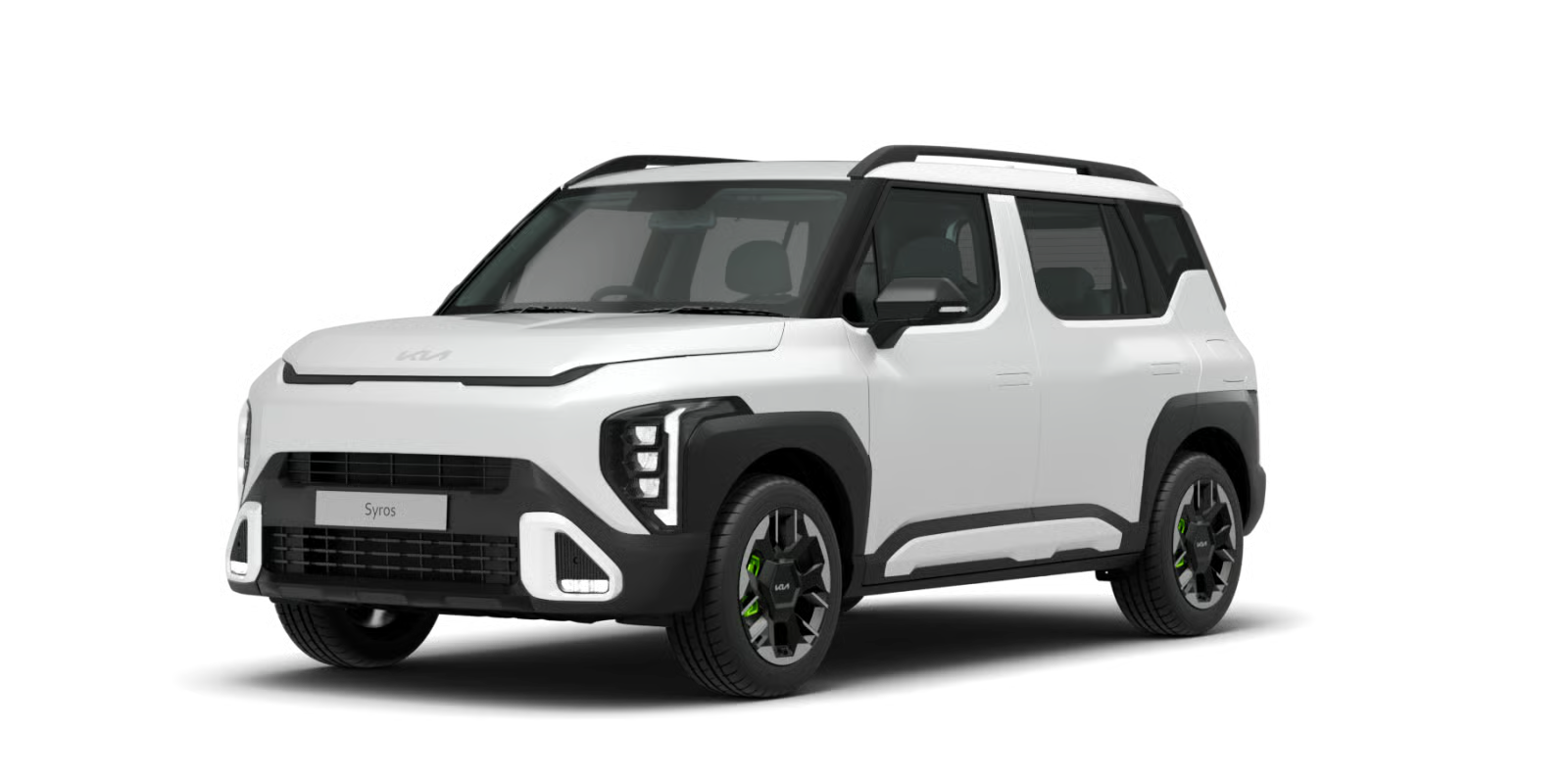
Kia Cars
₹13.50 - 20.00 Lakh