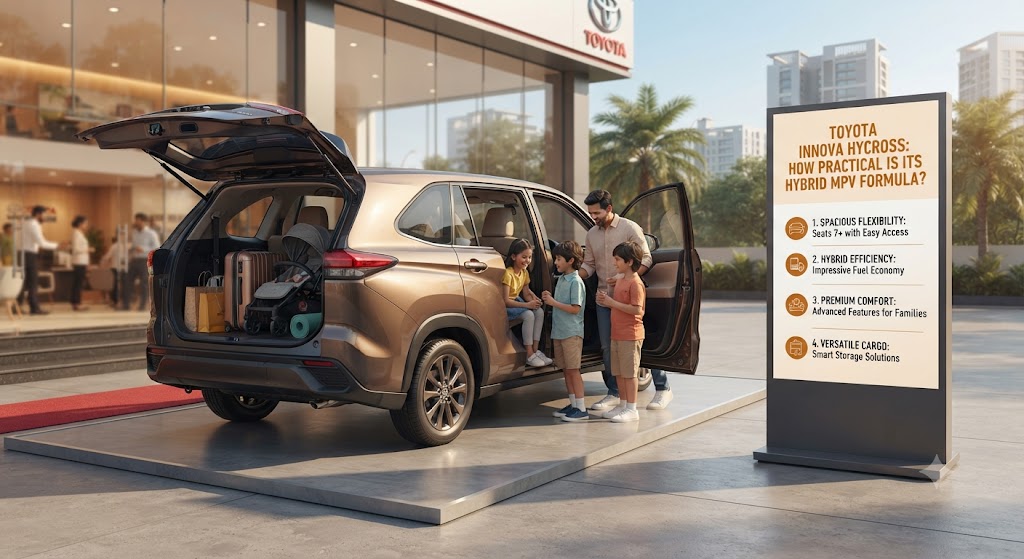
The Toyota Innova HyCross takes a different approach to the traditional family MPV. Instead of relying on a diesel engine and body-on-frame construction like the earlier Innova generations, it combines a monocoque platform, petrol and strong-hybrid powertrains, three-row seating and SUV-inspired styling.
The result is an MPV designed to appeal to buyers who want family space without giving up modern technology and fuel-efficiency-focused powertrain options.
Toyota has also achieved an important sales milestone with the model. In April 2026, the company announced that cumulative Innova HyCross sales in India had crossed 2 lakh units since its launch in November 2022. Toyota highlighted the model's self-charging hybrid technology, comfort and reliability as key elements of its appeal.
But how practical is this hybrid MPV formula for everyday Indian buyers?
A Three-Row Layout Remains the Biggest Advantage
The most important reason to consider the Innova HyCross is its cabin.
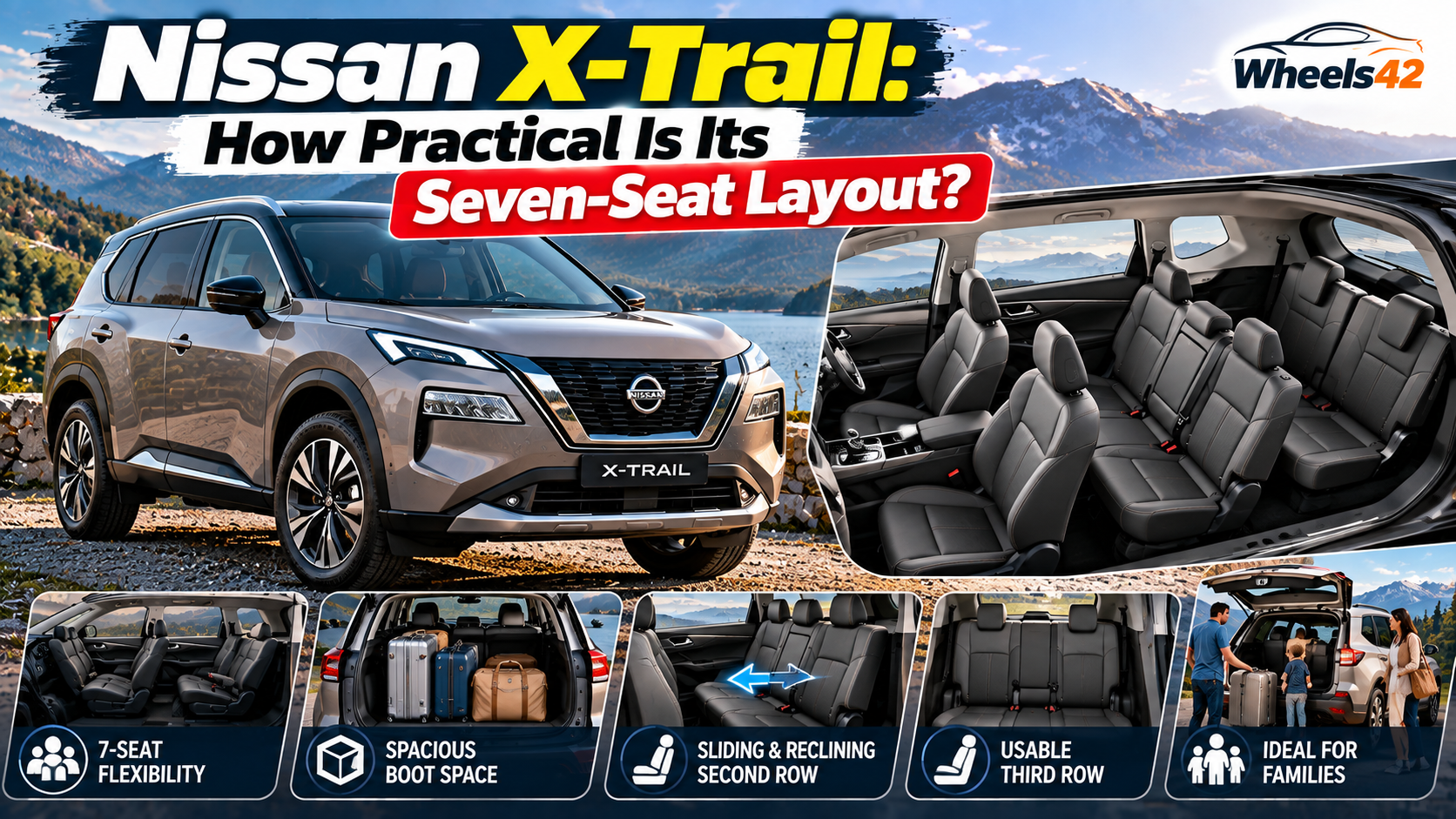
Toyota offers the MPV in 7- and 8-seat configurations, depending on the variant. The higher hybrid versions are available as seven-seaters, with the second row getting captain seats.
This gives the HyCross a clear family-oriented character.
The second row can provide a comfortable environment for adults, while Toyota has also designed the third row to be more usable than the occasional jump seats found in some larger SUVs.
The third row can also be folded to create additional luggage space when all seven or eight seats aren't required.
For families travelling with grandparents, children and luggage, this flexibility can be more useful than simply having a large five-seat SUV.
The Hybrid System Is Designed for City Use
The strongest part of the HyCross formula is its 2.0-litre fifth-generation self-charging strong-hybrid system.
The hybrid version uses a 1,987cc four-cylinder petrol engine with an electric motor and e-drive transmission. Toyota lists a maximum system output of 137kW, or 186PS.
Unlike a plug-in hybrid, the HyCross does not need to be connected to an external charger.
Its battery is charged through the vehicle's hybrid system, including regenerative braking. This makes the ownership experience closer to a conventional petrol car from a refuelling perspective.
For buyers who regularly drive in congested urban traffic, this can be particularly relevant because the vehicle can operate in EV mode under suitable conditions.
Toyota says the hybrid system can operate the vehicle in electric mode for a significant portion of typical driving, helping reduce petrol consumption.
Fuel Efficiency Is a Major Part of the Formula
The strong hybrid's biggest practical argument is fuel efficiency.
Current specification data lists an official fuel-economy figure of around 23.24kmpl for the strong-hybrid version, while the regular 2.0-litre petrol version is rated at around 16.3kmpl.
Actual mileage will depend on traffic, driving style, passenger load, weather and road conditions.
Still, the difference between the petrol and hybrid versions demonstrates why Toyota has positioned the strong hybrid as an important part of the HyCross range.
For someone covering a lot of kilometres every month, particularly in city traffic, the hybrid powertrain can potentially reduce fuel expenditure compared with a conventional petrol MPV.
What About the Regular Petrol Version?
Toyota hasn't made the hybrid the only choice.
The Innova HyCross is also available with a 2.0-litre petrol engine and Direct Shift CVT on select variants.
The petrol engine produces around 174PS, while the hybrid version is rated at 186PS.
The conventional petrol option may appeal to buyers who want the HyCross's space and comfort without paying the additional premium associated with hybrid technology.
However, buyers who drive extensively in urban conditions may find the strong-hybrid powertrain more aligned with the MPV's efficiency-focused character.
A More Car-Like Driving Experience
One of the biggest changes compared with the previous-generation Innova Crysta is the HyCross's construction.
The Innova HyCross uses a monocoque platform, rather than the body-on-frame architecture associated with the previous generation. This gives it a more car-like driving character.
Its dimensions remain substantial, measuring approximately 4,755mm long, 1,850mm wide and 1,790mm tall, with a 2,850mm wheelbase and around 185mm of ground clearance.
The relatively long wheelbase is important for a three-row vehicle because it creates the foundation for a spacious passenger compartment.
At the same time, the size means buyers should remember that the HyCross is a large vehicle. Narrow streets, tight parking areas and crowded urban environments can require more attention than they would with a compact SUV.
Comfort Is One of Its Strongest Areas
Toyota has equipped higher variants with a number of features aimed specifically at passengers.
Depending on the variant, the Innova HyCross can offer:
-
Powered second-row Ottoman seats
-
Long-slide second-row seats
-
Ventilated front seats
-
Multi-zone air conditioning
-
Rear AC vents
-
Panoramic roof
-
Rear sunshades
-
Power-adjustable driver seat
-
Connected touchscreen system
-
JBL audio system
-
Power tailgate
The top variants also feature powered Ottoman second-row seats, which can transform the second row into a more lounge-like space.
For long-distance family travel, these features can be more meaningful than purely cosmetic equipment.
Safety Is Another Practical Strength
The Innova HyCross has also gained a 5-star Bharat NCAP safety rating.
Toyota's safety package includes six airbags, ABS with EBD, vehicle stability control, hill-start assist and other electronic safety systems. Higher variants add Toyota Safety Sense technologies.
Toyota Safety Sense can include features such as:
This combination makes the HyCross more than simply a large family transporter.
Is the Hybrid System Practical for Long Trips?
Yes, particularly because it is a self-charging hybrid.
A major advantage is that owners don't have to plan charging stops or install a home charger simply to use the hybrid system.
For a family that regularly travels between cities, the experience remains similar to a conventional petrol vehicle: refuel when necessary and continue the journey.
The hybrid system can be particularly useful when travelling through towns and cities, where repeated acceleration, braking and low-speed driving provide more opportunities for the electric system to assist.
On open highways, the petrol engine becomes more involved, so the efficiency advantage can vary according to driving conditions.
What About Space When All Seats Are Occupied?
This is where buyers should evaluate their actual requirements.
The HyCross provides three rows, but carrying seven or eight passengers and a large amount of luggage simultaneously is naturally more demanding than using it as a five-seat vehicle.
For a family that normally uses the vehicle with five or six occupants, the ability to fold or adjust the rear seats provides useful flexibility.
Toyota's focus on long-slide seating and foldable rear-seat configurations also helps owners change the cabin according to the trip.
The Hybrid MPV Formula: Who Is It For?
The Innova HyCross makes the most sense for buyers who prioritise space, comfort, fuel efficiency and long-distance usability.
It can suit:
-
Large families
-
Frequent highway travellers
-
Chauffeur-driven owners
-
Buyers who regularly carry multiple passengers
-
Urban users covering high annual kilometres
-
Buyers looking for a strong-hybrid MPV
-
Families wanting premium second-row comfort
The Toyota Innova HyCross demonstrates why the MPV formula can still be relevant when combined with modern technology.
Its strongest practical qualities are its three-row cabin, flexible seating, strong-hybrid powertrain, comfortable second row, large dimensions and extensive safety equipment

 Khyati Sharma 2026-10-01