Electric vehicles (EVs) are becoming increasingly popular as people look for alternatives to petrol and diesel cars. They are often promoted as cleaner vehicles because they do not release exhaust gases while driving. However, does that mean an electric car produces absolutely no emissions throughout its entire life cycle?
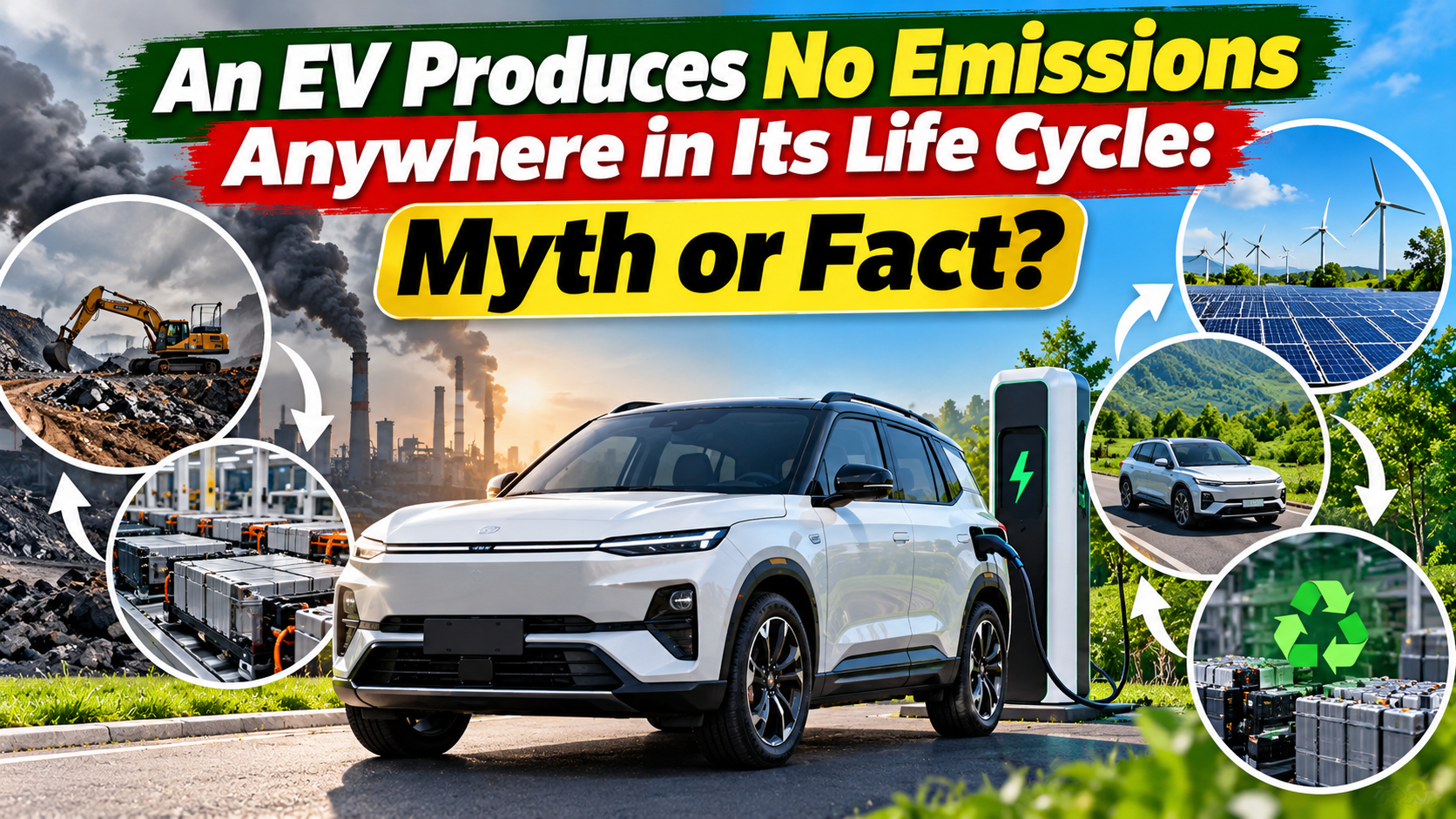
The answer is myth. Electric vehicles produce no tailpipe emissions while operating in electric mode, but emissions can occur during electricity generation, raw material extraction, battery manufacturing, vehicle production, transportation and end-of-life processing.
Despite these impacts, electric vehicles can produce significantly lower greenhouse gas emissions over their lifetime than comparable petrol or diesel vehicles, particularly when they are charged using electricity generated from renewable sources. The exact benefit depends on the electricity mix, vehicle efficiency, battery size, manufacturing processes and total distance driven.
Petrol vs Diesel vs CNG vs Electric Cars: How to Choose the Right Fuel Type
Myth or Fact: Do Electric Vehicles Produce Zero Life-Cycle Emissions?
Myth. An electric vehicle does not produce exhaust emissions during normal electric driving, but its complete life cycle can still generate greenhouse gases and other pollutants.
A vehicle's life cycle begins before it reaches the showroom. Raw materials must be extracted, components manufactured, the vehicle assembled and transported, and the car eventually recycled or disposed of.
For a petrol or diesel vehicle, emissions also arise when fuel is extracted, refined, transported and burned in the engine. Electric vehicles have a different emissions profile because they use electricity instead of directly burning petrol or diesel.
Therefore, comparing only exhaust emissions gives an incomplete picture. A fair comparison considers emissions from manufacturing, energy production, driving and the end of the vehicle's life.

1. Electric Vehicles Produce No Tailpipe Emissions
One of the biggest advantages of a battery-electric vehicle is that it has no exhaust pipe through which to release combustion gases.
Unlike conventional cars, a battery-electric vehicle does not burn petrol or diesel to generate power. Its electric motor uses energy stored in a rechargeable battery.
This means a fully electric car produces no tailpipe emissions of carbon dioxide, nitrogen oxides or exhaust-related particulate matter while driving.
The benefit is particularly important in congested cities, where large numbers of vehicles contribute to roadside air pollution.
However, zero tailpipe emissions do not mean zero environmental impact. Electricity must be generated, batteries must be manufactured, and the vehicle itself requires materials and energy to produce.
It is also important to distinguish battery-electric vehicles from conventional hybrids and plug-in hybrids. A hybrid vehicle can produce exhaust emissions when its combustion engine operates, while a battery-electric vehicle does not have a combustion engine.
Hatchback vs Sedan vs SUV: Which Car Type Suits You Best?
2. Electricity Generation Can Produce Emissions
Electric cars require electricity to charge their batteries. The environmental impact of that electricity depends on how it is generated.
Electricity can come from several sources, including coal, natural gas, solar, wind, hydroelectric and nuclear power. These sources have different greenhouse gas emissions across their life cycles.
When an EV is charged using electricity generated largely from coal, its associated emissions can be higher than when it is charged using a cleaner electricity mix.
For example, electricity generated by a coal-fired power station produces carbon dioxide during combustion. These emissions are not released from the car itself, but they are associated with the energy used to operate it.
Renewable electricity sources such as solar and wind generally have much lower life-cycle greenhouse gas emissions than fossil-fuel-based electricity. Nevertheless, manufacturing solar panels, wind turbines and supporting infrastructure also requires energy and materials.
As electricity grids become cleaner, the emissions associated with charging electric vehicles can decrease without requiring owners to replace their cars.
3. Battery Manufacturing Has an Environmental Cost
The battery is one of the most important components of an electric vehicle, and its production can be energy-intensive.
Many modern EVs use lithium-ion batteries that require materials such as lithium, graphite, nickel, manganese or cobalt, depending on the battery chemistry. Lithium iron phosphate (LFP) batteries, for example, do not use nickel or cobalt in their cathodes.
Extracting and processing these materials requires energy, water and industrial infrastructure. Mining operations can also affect land, ecosystems and local water resources if they are not managed responsibly.
Battery manufacturing requires electricity for material processing, electrode production, cell assembly and other stages. If factories rely on carbon-intensive electricity, manufacturing emissions can increase.
Consequently, an electric vehicle can have higher manufacturing emissions than a comparable petrol car, particularly because of its battery.
However, manufacturing is only one part of the vehicle's life cycle. During driving, an EV generally avoids the direct fuel-combustion emissions associated with a petrol or diesel car. Over time, these operational savings can offset the additional emissions from battery production.
The size of the battery also matters. A larger battery generally requires more materials and energy to manufacture, although the exact environmental impact depends on its chemistry, production method and supply chain.

4. Manufacturing a Car Also Produces Emissions
Battery production is not the only source of emissions associated with electric vehicles.
Producing the body, chassis, tyres, glass, seats, electronics and other components requires industrial processes. Steel and aluminium production can be particularly energy-intensive.
The same is true for conventional petrol and diesel vehicles. Both types of cars require raw materials, factory operations, component manufacturing and transportation.
A fair environmental comparison therefore examines the complete manufacturing process for each vehicle rather than attributing all manufacturing emissions exclusively to EVs.
The carbon intensity of the factory's electricity, the use of recycled materials, manufacturing efficiency and the type of vehicle all influence the final result.
Manufacturers can reduce these impacts by using lower-carbon electricity, improving production efficiency and increasing the use of recycled materials.
Company-Fitted vs Aftermarket Accessories: Which Is Better?
5. EVs Can Have Lower Lifetime Emissions Than Petrol Cars
Although electric vehicles have manufacturing-related emissions, they can still deliver substantial life-cycle emissions savings.
A major reason is that electric motors convert electrical energy into motion more efficiently than conventional combustion engines convert fuel energy into movement.
An EV also avoids the emissions associated with burning petrol or diesel during driving. Its electricity-related emissions may be lower than the combined fuel-production and combustion emissions of a comparable conventional vehicle.
Research from organisations such as the International Energy Agency and the International Council on Clean Transportation has found that battery-electric cars generally produce lower life-cycle greenhouse gas emissions than comparable combustion-engine vehicles, although the size of the advantage varies by region and assumptions.
The emissions benefit depends on factors including the electricity mix, vehicle size, battery capacity, annual mileage and how long the vehicle remains in service.
For example, an EV charged on a relatively clean electricity grid may achieve a substantial emissions reduction. An EV charged on a coal-intensive grid may deliver a smaller benefit, but it can still outperform a comparable petrol vehicle over its life cycle under many conditions.
6. EV Life-Cycle Emissions Compared With Petrol Cars
|
Life-cycle stage
|
Battery-electric vehicle
|
Petrol vehicle
|
|
Raw material extraction
|
Battery minerals and vehicle materials require mining and processing
|
Oil extraction and vehicle materials require energy and resources
|
|
Manufacturing
|
Battery production can increase initial manufacturing emissions
|
Engine, transmission and vehicle production generate emissions
|
|
Energy supply
|
Emissions depend on electricity generation
|
Oil extraction, refining and fuel transportation generate emissions
|
|
Driving
|
No tailpipe emissions; electricity generation can cause emissions
|
Fuel combustion produces exhaust emissions
|
|
Maintenance
|
Fewer powertrain components generally reduce some maintenance needs
|
Engine oil changes and other engine-related maintenance are required
|
|
End-of-life
|
Battery reuse and recycling can recover valuable materials
|
Vehicle recycling can recover metals; fuel-system components require processing
|
7. Electric Vehicles and Air Pollution
Greenhouse gas emissions are not the only environmental concern associated with road transport.
Petrol and diesel vehicles release pollutants such as nitrogen oxides, carbon monoxide and combustion-related particulate matter. These pollutants can affect human health and contribute to poor air quality.
Battery-electric vehicles eliminate exhaust emissions during driving, which can improve local air quality, particularly in heavily trafficked urban areas.
However, EVs are not entirely free from particulate emissions. Tyres and road surfaces wear during driving, and vehicles generate non-exhaust particles through tyre wear and resuspension of road dust.
Regenerative braking can reduce conventional brake wear because the electric motor helps slow the vehicle and recover energy. The extent of the reduction depends on the driving conditions and braking system.
Vehicle weight also matters. Some electric cars are heavier than comparable petrol models because of their batteries, which can influence tyre wear. The actual effect depends on vehicle design, tyres, driving style and maintenance.
EVs can therefore reduce important sources of urban air pollution, but they do not eliminate every form of transport-related pollution.
How to Choose Between Two Similar Car Models: A Decision Framework
8. Battery Recycling Can Reduce Environmental Impact
Battery recycling is an important part of improving the sustainability of electric vehicles.
When an EV battery reaches the end of its useful automotive life, it may still retain enough capacity for less demanding applications, depending on its condition and safety.
Such batteries may be repurposed for stationary energy storage before being recycled.
Recycling can recover valuable materials, including lithium, nickel, cobalt, copper and aluminium, depending on the battery chemistry and recycling process. Recovering these materials can reduce the need for some new mining and processing.
However, battery recycling itself requires energy, infrastructure and careful handling. Recovery rates and economic viability vary according to the battery chemistry, recycling technology and condition of the material.
Manufacturers and recycling companies are developing systems to improve collection, material recovery and safe battery processing.
A well-managed recycling system can help reduce the environmental footprint of EVs while supporting a more circular economy.
9. Are Electric Vehicles Better for the Environment in India?
India's electricity mix is an important factor when assessing EV emissions.
Coal remains a significant source of electricity generation in the country, which means charging an EV is not automatically emissions-free. However, India also generates electricity from solar, wind, hydroelectric and other lower-carbon sources.
As renewable electricity expands, the average emissions associated with charging electric vehicles can decline.
Electric vehicles may be particularly beneficial in Indian cities because they eliminate exhaust emissions from the vehicle itself. This can help reduce roadside exposure to combustion-related pollutants.
The overall climate benefit still depends on the vehicle, battery size, charging source and distance travelled. A small, efficient EV may have a different life-cycle footprint from a large electric SUV with a much bigger battery.
For buyers, choosing an appropriately sized vehicle, maintaining efficient driving habits and using cleaner electricity where available can help reduce environmental impact.

10. How Can EV Owners Reduce Their Environmental Footprint?
Electric vehicle owners can take several practical steps to make their cars more environmentally friendly.
-
Charge using cleaner electricity: Where practical, use electricity from renewable sources or a renewable-energy-backed charging plan.
-
Choose a suitable battery size: Avoid buying a vehicle with substantially more battery capacity than your daily driving needs require.
-
Drive efficiently: Smooth acceleration and sensible speeds can reduce energy consumption.
-
Maintain tyres properly: Correct tyre pressure helps improve efficiency and can reduce unnecessary tyre wear.
-
Keep the vehicle for longer: Extending the useful life of a vehicle can help spread its manufacturing emissions over more kilometres.
-
Support responsible recycling: Use authorised channels for battery servicing, reuse and end-of-life recycling.
These measures cannot eliminate all emissions, but they can reduce the environmental impact of owning and operating an EV.
Conclusion: Do Electric Vehicles Produce Zero Life-Cycle Emissions?
The claim that an EV produces no emissions anywhere in its life cycle is a myth. Although battery-electric vehicles have no tailpipe emissions while driving, emissions can arise from electricity generation, battery manufacturing, raw material extraction, vehicle production and recycling.
However, zero tailpipe emissions and zero life-cycle emissions are two different things. Electric vehicles generally offer lower life-cycle greenhouse gas emissions than comparable petrol and diesel cars, particularly when charged using cleaner electricity and driven over a long service life.
Their environmental benefits can improve further as electricity grids become cleaner, battery manufacturing becomes more efficient and recycling systems recover more materials.
The most accurate conclusion is that electric vehicles are not completely emission-free, but they can be a significantly lower-emission option for road transport. Understanding their entire life cycle helps buyers make better-informed decisions instead of relying on the misleading idea that EVs have no environmental impact at all.

 Khyati Sharma 2026-09-04