
 Khyati Sharma 2026-09-20
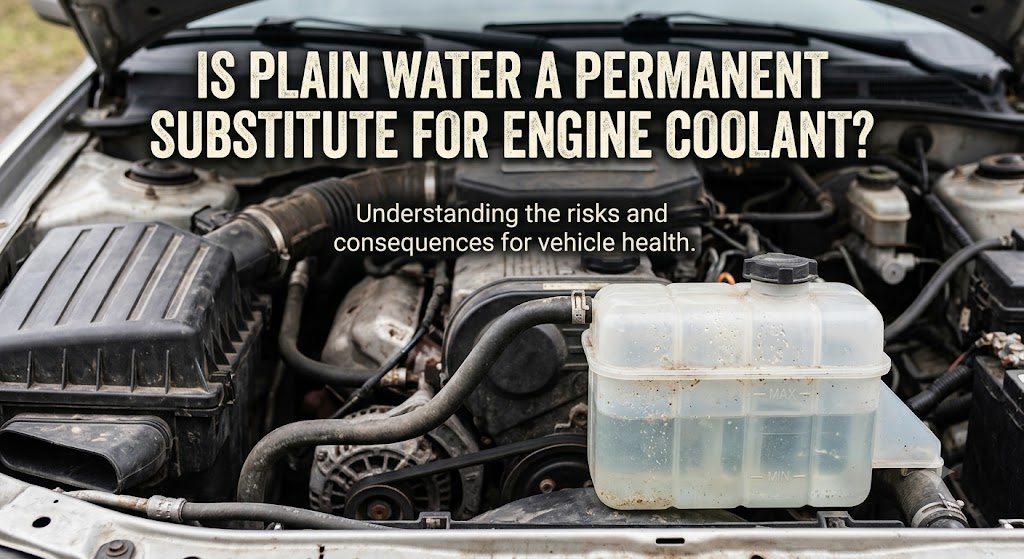
Engine coolant, also known as antifreeze or radiator coolant, plays a vital role in maintaining the engine's operating temperature. It circulates through the engine and radiator, carries away excess heat and helps protect internal components from damage.
Some drivers believe that water is enough because it transfers heat effectively. While water does have excellent heat-transfer properties, using it alone over an extended period can cause problems that may lead to expensive repairs.
A car engine produces a significant amount of heat during combustion. If this heat is not managed effectively, engine temperatures can rise beyond safe operating limits.
The cooling system helps prevent this by circulating coolant through passages in the engine and cylinder head. The heated liquid then travels to the radiator, where airflow helps remove excess heat before the coolant returns to the engine.
The cooling system typically includes a radiator, water pump, thermostat, cooling fan, hoses, coolant reservoir and various internal passages.
New Car Dealer Negotiation Tips That Actually Work
Engine coolant performs several important functions:
Heat transfer: Carries excess heat away from the engine.
Corrosion protection: Helps protect metal components inside the radiator, engine and cooling passages.
Temperature protection: Provides protection against freezing and boiling under the conditions specified for the coolant and cooling system.
Deposit prevention: Helps reduce scale and deposits that can restrict coolant flow.
Component protection: Supports the durability of the water pump, seals and other cooling-system components.
Plain water can transfer heat, but it does not provide the complete package of protection required by most modern vehicles.

Water may appear to be a simple and inexpensive solution, but using it as the only cooling fluid introduces several risks.
1. Plain Water Can Cause Corrosion
One of the biggest disadvantages of using plain water is the lack of dedicated corrosion inhibitors.
A vehicle's cooling system contains different metals and materials, including aluminium, steel, iron, copper alloys and rubber components. Depending on the system design and water quality, untreated water can contribute to corrosion and deterioration.
Over time, corrosion can affect the radiator, engine passages and other cooling-system components. Rust particles and corrosion products may circulate through the system, potentially affecting coolant flow and heat transfer.
Coolants contain specially formulated additives that help protect compatible metals and other materials. These additives vary according to the coolant technology, so using the correct specification is essential.
Replacing coolant with plain water removes this important layer of protection.
2. Mineral Deposits Can Build Up
Tap water often contains dissolved minerals such as calcium and magnesium. When water is heated repeatedly, these minerals can contribute to scale formation.
Deposits may accumulate on internal surfaces and restrict the cooling system's ability to transfer heat effectively. In severe cases, they can interfere with coolant circulation and contribute to overheating.
The risk depends on water quality, operating conditions and how long the system is exposed to untreated water.
Distilled or demineralised water contains fewer dissolved minerals and is generally preferred when a vehicle's manufacturer calls for water to be mixed with concentrated coolant. However, distilled water alone still does not provide the necessary corrosion and freezing protection.
How to Compare Car Variants: Base vs Mid vs Top Trim
3. Water Has Limited Boiling Protection
Water boils at approximately 100°C at standard atmospheric pressure. However, a car's cooling system is pressurised, which raises the boiling point of the liquid.
The exact boiling temperature depends on system pressure, coolant composition and operating conditions. A suitable coolant mixture can provide additional boiling protection compared with plain water under equivalent conditions.
This matters because an engine operates under changing loads and temperatures. Driving uphill, carrying heavy loads, travelling in hot weather or sitting in traffic can place extra demands on the cooling system.
If the cooling liquid boils and forms vapour pockets, heat transfer may become less effective. This can contribute to overheating and potentially damage engine components.
Using the recommended coolant mixture helps the cooling system operate within its intended temperature range.
4. Plain Water Provides No Freeze Protection
Water freezes at approximately 0°C under normal atmospheric pressure. In cold conditions, water inside the cooling system can freeze and expand.
This expansion can damage radiators, hoses, the engine block or other components, depending on the system and circumstances.
Engine coolant formulated with the appropriate antifreeze provides protection against freezing at temperatures specified by the product and its concentration.
Even in regions where severe winters are uncommon, a vehicle may encounter cold conditions during travel or overnight parking at higher elevations.
Freeze protection is therefore an important consideration when selecting the correct coolant.
5. The Water Pump and Other Components Need Protection
The cooling system depends on the water pump to circulate liquid through the engine and radiator. Coolant formulations are designed to work with the materials and operating conditions specified for the vehicle.
Using plain water for extended periods may increase the risk of corrosion and deposits affecting the pump, seals and other components.
Not every vehicle will develop immediate damage after water is added, but prolonged use can increase maintenance risks and compromise the cooling system's long-term reliability.
|
Feature |
Plain water |
Recommended engine coolant |
|
Heat transfer |
Excellent |
Good, but varies with formulation and concentration |
|
Corrosion protection |
No dedicated inhibitor package |
Contains corrosion inhibitors |
|
Boiling protection |
Limited; depends on system pressure |
Formulated to improve boiling protection |
|
Freeze protection |
None below its freezing point |
Provides protection according to concentration |
|
Mineral scale risk |
Can be high with hard tap water |
Formulated to reduce deposit-related problems |
|
Water-pump and seal compatibility |
Not designed as a complete protective fluid |
Formulated for compatible cooling-system materials |
|
Long-term use |
Generally unsuitable as a permanent replacement |
Suitable when the correct specification and mixture are used |
|
Emergency use |
May be acceptable temporarily in suitable circumstances |
Preferred for normal operation |
Yes, plain water may be used temporarily in certain emergencies if the cooling system has lost fluid and the correct coolant is unavailable. However, this is not appropriate in every situation.
The priority is to protect yourself and avoid causing further damage to the engine.
If the engine temperature rises above its normal range, the temperature warning appears or steam comes from under the bonnet, stop in a safe location as soon as possible and switch off the engine. Follow the instructions in the owner's manual.
Never open the radiator cap or coolant reservoir cap while the engine is hot or the system is pressurised. Hot coolant and steam can escape forcefully and cause severe burns. Allow the engine to cool completely before any inspection, and seek roadside assistance if you are unsure what to do.
If a coolant leak is severe, simply adding water may not solve the problem. The liquid could escape again, and continuing to drive may cause serious engine damage.
When the vehicle is safe to inspect and the manufacturer's instructions permit it, water may be used temporarily to restore the level in an emergency. The type of water and whether it is suitable depend on the vehicle and circumstances.
Once the emergency has been resolved, have the cooling system checked for leaks or other faults. Restore the correct coolant concentration and specification as soon as practical, following the manufacturer's guidance.
Petrol vs Diesel vs CNG vs Electric Cars: How to Choose the Right Fuel Type

Not all engine coolants are identical. Manufacturers specify coolant formulations based on the engine, cooling-system materials and service requirements.
Coolants may use different inhibitor technologies, including inorganic additive technology, organic acid technology and hybrid formulations. Their colours can vary, and colour alone is not a reliable way to determine compatibility.
Using an incompatible coolant or mixing different formulations without confirmation can reduce protection or create other cooling-system problems.
Before buying coolant, check the owner's manual or the manufacturer's official maintenance information for:
The required coolant specification or approval.
Whether the vehicle requires a premixed coolant or a concentrate.
The recommended mixing ratio, if applicable.
The correct replacement interval.
Any special filling or bleeding procedure.
If the vehicle requires concentrated coolant, use the specified type of water for dilution. If it requires premixed coolant, it is generally ready to use and should not be diluted unless the manufacturer specifically instructs otherwise.
Do not assume that a coolant is suitable simply because its colour matches the fluid already in the reservoir.
New Car vs Used Car: Which One Should You Buy?
Regular inspection can help identify cooling-system problems before they cause significant engine damage.
Check the Coolant Level
Check the coolant reservoir when the engine is completely cold and the vehicle is parked on a level surface, following the owner's manual. The level should be within the marked range.
If the coolant repeatedly falls below the recommended level, have the system inspected for leaks or other faults. Repeatedly topping it up without investigating the cause may allow a serious problem to continue.
Inspect Hoses and Connections
Look for visible leaks, damaged hoses, loose connections or dried coolant residue. Any inspection should be performed with the engine switched off and cool.
If you notice a persistent sweet smell, visible fluid leakage or steam, arrange a professional inspection.
Follow the Coolant Replacement Schedule
Coolant additives gradually lose effectiveness, even when the vehicle is driven relatively little. Follow the manufacturer's replacement interval, which may be based on time, mileage or both.
Do not assume that coolant lasts forever simply because the vehicle has covered fewer kilometres than expected.
Monitor the Temperature Gauge
Pay attention to the engine temperature gauge and any coolant temperature warnings. If the engine overheats, do not continue driving in an attempt to reach your destination.
Overheating can damage the cylinder head, head gasket and other expensive engine components.
Use the Correct Mixture
If concentrated coolant is specified, prepare the mixture according to the manufacturer's instructions. Adding excessive concentrate or too much water can reduce the coolant's ability to provide the intended protection.
For many vehicles, a 50:50 mixture of compatible antifreeze concentrate and distilled or demineralised water is common, but it is not a universal rule. Always use the concentration recommended for your vehicle and climate.
The claim that plain water can permanently replace engine coolant is a myth. Although water can help transfer heat and may be useful temporarily in certain emergencies, it lacks the corrosion inhibitors, freeze protection and other properties provided by a properly specified coolant.
Long-term use of plain water can contribute to corrosion, mineral deposits and cooling-system problems. Depending on operating conditions, it may also provide insufficient boiling or freezing protection.
The best approach is to use the coolant specified by the vehicle manufacturer, maintain the correct mixture and inspect the cooling system regularly. If your car overheats or loses coolant repeatedly, address the underlying problem rather than relying on frequent top-ups.










Maruti
₹12.37 - 22.91 Lakh