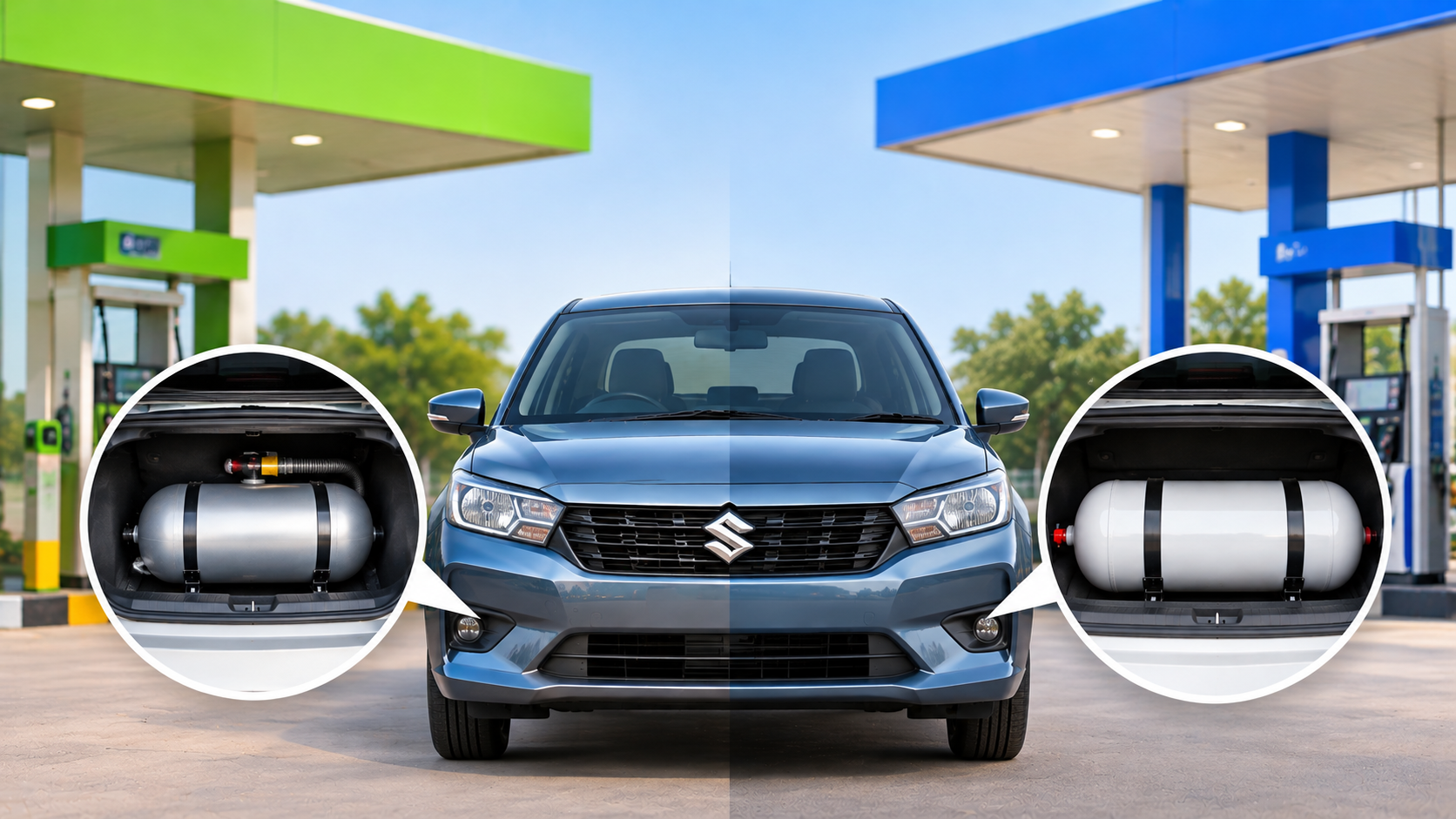
Many vehicle owners believe that Liquefied Petroleum Gas (LPG) and Compressed Natural Gas (CNG) can be used in the same vehicle because both are gaseous fuels and are considered alternatives to petrol and diesel. However, this is a common misconception.
Although LPG and CNG are both used in automobiles, they have different chemical compositions, storage requirements, operating pressures, fuel systems and combustion characteristics. A vehicle designed to run on CNG cannot simply be refuelled with LPG, and an LPG-powered vehicle cannot directly use CNG without an appropriately engineered conversion.
Using the wrong fuel or an incompatible filling connection can create serious safety risks and damage vehicle components.
Understanding the differences between LPG and CNG is important for anyone planning to buy a gas-powered vehicle, convert an existing petrol car or reduce everyday fuel expenses.
Hatchback vs Sedan vs SUV: Which Car Type Suits You Best?
What Is LPG?
Liquefied Petroleum Gas, commonly known as LPG, is a fuel primarily consisting of propane, butane or a mixture of both.
LPG is stored in liquid form under moderate pressure inside specially designed tanks. When released through the fuel system, it changes into vapour and mixes with air before combustion takes place inside the engine.
LPG is used in domestic cooking, industrial applications and specially designed automotive fuel systems.
In vehicles, LPG requires a dedicated storage tank, fuel lines, pressure regulators, injectors or mixers and electronic control equipment, depending on the system design.
One important advantage of LPG is its relatively high energy density by volume compared with CNG when stored under normal automotive conditions.
However, LPG systems require components specifically designed to handle liquefied petroleum gas safely.

What Is CNG?
Compressed Natural Gas, or CNG, is primarily composed of methane. Unlike LPG, it is not stored as a liquid under normal automotive filling conditions.
CNG is compressed to high pressure and stored inside specially manufactured cylinders installed in the vehicle.
In India, automotive CNG systems commonly operate at a nominal service pressure of approximately 200 bar, subject to the applicable cylinder and system specifications.
During operation, the stored gas passes through pressure-regulating equipment before entering the engine's fuel delivery system.
CNG is commonly used in factory-fitted passenger cars, taxis, buses, auto-rickshaws and commercial vehicles.
It is popular among Indian vehicle owners because it can offer lower running costs than petrol, depending on local fuel prices and vehicle efficiency.
Petrol vs Diesel vs CNG vs Electric Cars: How to Choose the Right Fuel Type
LPG vs CNG: What Are the Main Differences?
Although both fuels are used in vehicles, their physical and chemical properties are different.
The biggest difference is how they are stored. LPG is stored as a liquid under moderate pressure, whereas CNG is stored as a compressed gas under much higher pressure.
This difference affects the design of the fuel tank, pipes, valves, regulators, injectors and refuelling equipment.
The following comparison explains the major differences between LPG and CNG.
|
Comparison
|
LPG
|
CNG
|
|
Full form
|
Liquefied Petroleum Gas
|
Compressed Natural Gas
|
|
Main composition
|
Propane and butane
|
Mainly methane
|
|
Storage condition
|
Liquid under pressure
|
Compressed gas
|
|
Typical automotive delivery pressure
|
Around 10 bar
|
Around 200 bar
|
|
Storage tank
|
LPG-approved pressure tank
|
High-pressure CNG cylinder
|
|
Fuel delivery
|
Liquid withdrawal or vapour delivery, depending on system
|
High-pressure gas followed by pressure regulation
|
|
Energy density by volume
|
Generally higher
|
Generally lower
|
|
Refuelling equipment
|
Dedicated LPG dispenser
|
Dedicated CNG dispenser
|
|
Fuel system
|
LPG-specific regulator, valves and injectors
|
CNG-specific regulator, valves and injectors
|
|
Common applications
|
Cars and three-wheelers
|
Cars, taxis, buses and commercial vehicles
|
1. LPG and CNG Have Different Chemical Compositions
One of the biggest reasons LPG and CNG cannot be used interchangeably is their chemical composition.
LPG mainly contains propane and butane. These hydrocarbons have different physical properties from methane, which is the primary component of CNG.
CNG is predominantly methane, although its exact composition can vary depending on the natural gas source and supply.
Because the two fuels have different chemical characteristics, their combustion behaviour, air-fuel requirements and energy content are not identical.
Vehicle manufacturers design fuel injection systems and engine calibration according to the properties of the intended fuel.
For example, an LPG engine management system is calibrated to deliver the correct amount of LPG for efficient combustion. A CNG system requires different fuel delivery and pressure regulation.
Simply replacing one fuel with another without changing the appropriate components and calibration can result in poor engine performance, incorrect combustion and potentially dangerous operating conditions.
2. LPG and CNG Require Different Storage Tanks
Another important difference is their storage method.
LPG is stored as a liquid inside a specially designed pressure vessel. Its tank must be suitable for the characteristics and operating pressure of liquefied petroleum gas.
CNG, on the other hand, is stored as a compressed gas inside specially manufactured high-pressure cylinders.
CNG cylinders are engineered to withstand much higher pressures than typical LPG automotive tanks.
This means that the two storage systems cannot be substituted for each other.
An LPG tank is not designed to store CNG at its required high pressure. Similarly, a CNG cylinder and its associated valves are not automatically suitable for LPG storage and liquid-fuel handling.
Using an incorrect cylinder can create a serious risk of leakage, equipment failure or fire.
Vehicle owners should always use the storage equipment specifically approved for their fuel system.

3. LPG and CNG Operate at Different Pressures
Pressure is another major factor that makes these fuels incompatible.
Automotive LPG systems generally operate at a much lower pressure than CNG systems.
CNG is compressed to approximately 200 bar under typical Indian automotive filling conditions. LPG automotive systems commonly use delivery pressures around 10 bar, although actual pressure depends on the equipment and operating conditions.
The difference is significant.
A CNG system includes high-pressure components designed to handle compressed natural gas safely. LPG systems use components designed for liquefied petroleum gas and its pressure characteristics.
The pressure regulators, pipes, valves, seals and filling connections are therefore designed differently.
Using an LPG component in a CNG system or a CNG component in an LPG system without specific approval can compromise the entire fuel installation.
Pre-Delivery Inspection (PDI): A Checklist Before You Take Delivery
4. LPG and CNG Need Different Fuel Injection Systems
Both fuels require specialised equipment to supply the correct quantity of gas to the engine.
However, their fuel delivery systems are not identical.
An LPG system may include:
A CNG system generally includes:
These components work together to maintain the correct fuel pressure and supply the required quantity of gas to the engine.
Since LPG and CNG have different storage and delivery requirements, their fuel systems must be designed accordingly.
Does a Full CNG Tank Always Hold the Same Quantity at Every Refill? Myth Explained
5. Can an LPG Car Be Refilled at a CNG Station?
No. An LPG-powered vehicle cannot simply be refilled at a CNG station.
The CNG dispenser is designed to supply compressed natural gas through a specific high-pressure connection.
An LPG vehicle has a different refuelling connection, storage tank and fuel system.
Even if both vehicles use gaseous fuels for combustion, their refuelling equipment is not interchangeable.
Trying to connect an incompatible filling nozzle or modify the filling arrangement can cause dangerous pressure-related problems.
The same rule applies in reverse. A CNG-powered vehicle cannot be filled with LPG using an LPG dispenser.
Always refuel a vehicle with the fuel specified for its approved system.
6. Can a CNG Vehicle Be Converted to LPG?
Technically, a vehicle may be converted from one gaseous fuel system to another if an appropriate conversion system is available and the vehicle is technically suitable.
However, this is not a simple fuel replacement.
A proper conversion may require changes to:
-
Fuel storage tank
-
Fuel filling connection
-
Fuel pipes
-
Pressure regulators
-
Fuel injectors
-
Electronic control unit
-
Safety valves
-
Fuel system calibration
The engine must also be evaluated to ensure that it can operate correctly with the new fuel.
In India, vehicle owners should use approved retrofitment systems and authorised installation facilities. The conversion must comply with applicable vehicle regulations and approval requirements.
The Automotive Research Association of India (ARAI) provides type-approval certification for CNG and LPG vehicle retrofitment systems.
A roadside mechanic or an unqualified installer should never be allowed to modify a vehicle's high-pressure gas system.

7. Does LPG Provide Better Mileage Than CNG?
Fuel efficiency is another area where vehicle owners often become confused.
LPG and CNG have different energy densities, so the quantity of fuel consumed by an engine can vary.
LPG generally contains more energy per unit volume than CNG stored under typical automotive conditions. However, this does not automatically mean an LPG vehicle will always deliver better mileage.
Actual fuel economy depends on several factors:
For example, a CNG vehicle may offer an attractive running cost because CNG prices can be lower than petrol prices in many Indian cities.
An LPG vehicle may offer different performance and fuel consumption characteristics depending on its engine and fuel system.
Therefore, buyers should compare the actual running cost per kilometre instead of judging efficiency only by the quantity of fuel consumed.
Manual vs Automatic Car: Pros and Cons Explained
8. Which Fuel Is More Suitable for Indian Vehicle Owners?
Both LPG and CNG have advantages, but their suitability depends on the vehicle, local fuel availability and driving requirements.
CNG has a strong presence in several Indian cities, particularly in areas with established natural gas distribution networks.
It is widely used by taxis, private cars, buses and commercial vehicles.
LPG, also known as Auto LPG when supplied as automotive fuel, is another alternative for petrol-powered vehicles. However, its availability as an automotive fuel varies by location.
Before choosing either fuel, buyers should consider the following:
Fuel availability: Check whether authorised LPG or CNG filling stations are conveniently available around your home and regular travel routes.
Vehicle compatibility: Choose a factory-fitted vehicle or an officially approved retrofitment system.
Initial installation cost: Compare the cost of the vehicle, conversion equipment and associated installation expenses.
Running expenses: Calculate fuel costs using local prices and realistic vehicle mileage.
Maintenance: Check the availability of trained technicians, replacement components and authorised service facilities.
Safety: Ensure that the fuel storage tank, pipes, valves and other components meet the required standards.
9. Is LPG Safer Than CNG or Vice Versa?
Both LPG and CNG can be used safely in vehicles when the systems are correctly designed, installed, inspected and maintained.
However, they have different physical properties that influence their behaviour in the event of a leak.
CNG is lighter than air and generally rises and disperses when released outdoors.
LPG vapour is heavier than air and can accumulate in low-lying areas, creating a potential fire hazard if it reaches an ignition source.
CNG is stored at much higher pressure, which makes the condition and certification of its cylinders and high-pressure components particularly important.
LPG systems also require properly maintained tanks, valves, seals and fuel lines.
For both fuels, vehicle owners should follow basic safety precautions:
-
Never use domestic LPG cylinders in automotive fuel systems.
-
Never install an unapproved gas cylinder.
-
Do not modify fuel lines or filling connections.
-
Get the fuel system inspected by qualified technicians.
-
Check cylinders and associated equipment according to their prescribed inspection schedules.
-
Do not ignore the smell of gas or signs of leakage.
-
Avoid smoking or creating sparks near a suspected gas leak.
-
Follow the manufacturer's instructions during refuelling and maintenance.
According to Indraprastha Gas Limited's safety guidance, LPG cylinders are not suitable for CNG use. This highlights why selecting the correct storage equipment is essential.
Should You Buy a New or Used Car in India? Compare the Real Cost of Ownership
10. Common Mistakes Vehicle Owners Should Avoid
Some vehicle owners assume that all gaseous automotive fuels work in the same way. This misunderstanding can lead to incorrect decisions during vehicle conversion and maintenance.
Here are some common mistakes to avoid.
Mistake 1: Assuming LPG and CNG use identical tanks
They do not. Their storage vessels are designed for different pressures and fuel characteristics.
Mistake 2: Using the same filling nozzle
LPG and CNG use different refuelling connections and dispensing equipment.
Mistake 3: Believing that only the fuel needs to be changed
Changing fuel requires a compatible fuel delivery system, storage equipment and engine calibration.
Mistake 4: Choosing an unapproved conversion kit
A cheap conversion kit may not meet the required safety and vehicle compatibility standards.
Mistake 5: Ignoring regular inspections
Gas fuel systems contain specialised components that require proper inspection and maintenance.
Mistake 6: Comparing mileage without checking fuel prices
The cheapest fuel per kilogram or litre does not automatically provide the lowest running cost. The correct comparison is the total cost per kilometre.
Conclusion: LPG and CNG Are Not Interchangeable Vehicle Fuels
The belief that LPG and CNG are interchangeable vehicle fuels is incorrect. Although both are gaseous automotive fuels and can serve as alternatives to petrol, their chemical compositions, storage methods, operating pressures and fuel delivery systems are significantly different.
LPG is primarily made up of propane and butane and is stored as a liquid under pressure. CNG mainly contains methane and is stored as a compressed gas inside high-pressure cylinders.
These differences require dedicated tanks, regulators, injectors, valves and refuelling connections.
Vehicle owners should never attempt to fill an LPG vehicle with CNG or a CNG vehicle with LPG without a properly engineered and approved conversion.
For anyone considering an alternative-fuel vehicle, the best choice depends on fuel availability, running costs, vehicle compatibility, maintenance requirements and safety.

 Khyati Sharma 2026-11-07