

 Khyati Sharma 2026-09-23
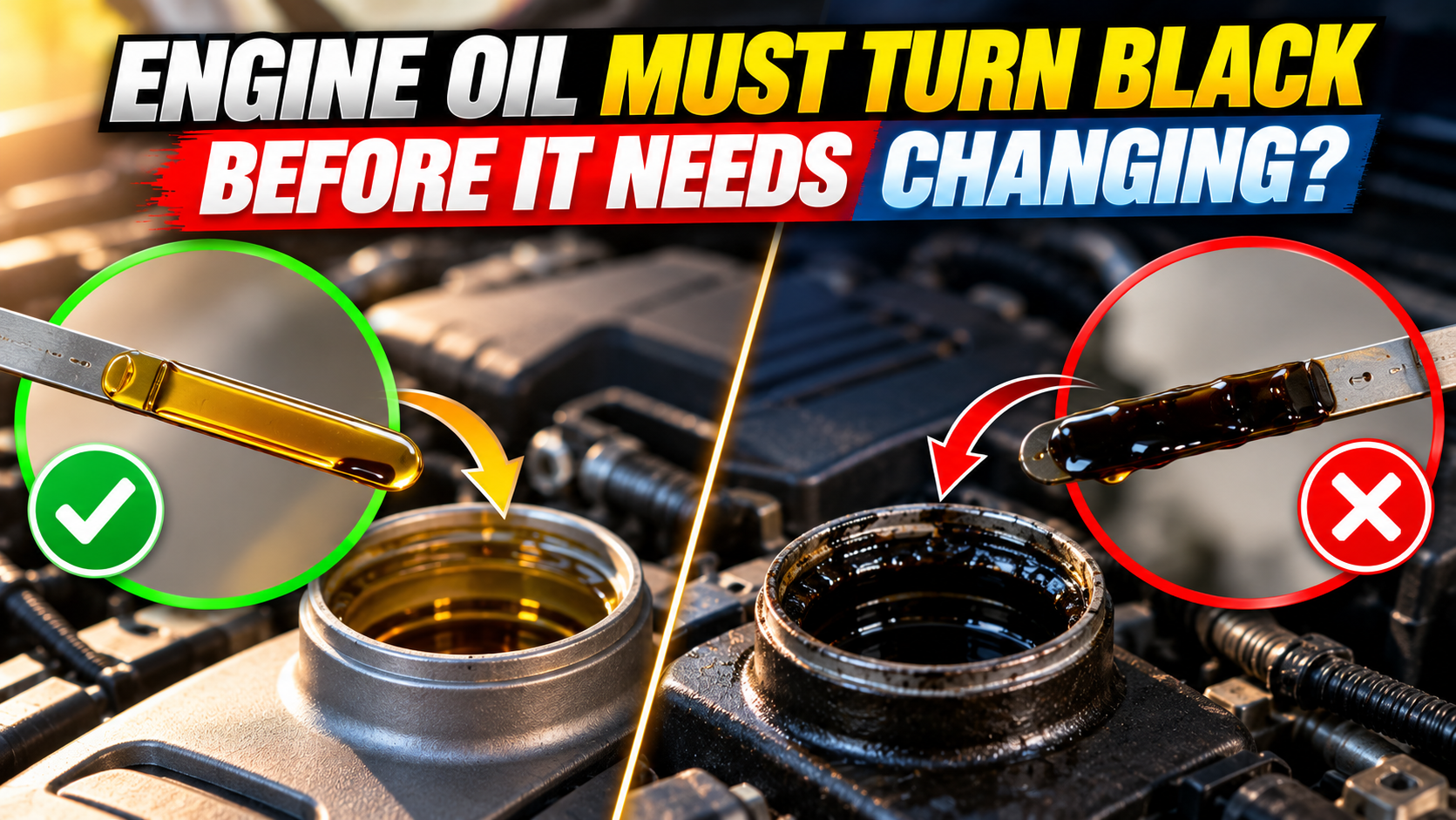
Many car owners believe that engine oil should be changed only after it becomes black. According to this common belief, fresh engine oil is golden or amber in colour, so dark oil must mean that it has become dirty, lost its effectiveness and needs replacing. While this assumption may sound reasonable, it does not tell the complete story.
Engine oil plays a critical role in protecting an engine. It lubricates moving parts, reduces friction, helps carry heat away, suspends contaminants and protects internal components against wear. During normal operation, the oil is exposed to high temperatures, combustion by-products and tiny particles that can gradually change its appearance.
As a result, engine oil can turn dark relatively quickly, even when it is still performing its intended job. Some diesel engines, for example, can darken their oil much sooner than drivers expect.
The truth is that engine oil does not need to turn black before it should be changed. Its colour alone cannot reliably determine whether it is still suitable for use. The correct oil-change interval, the manufacturer's recommendations, driving conditions, oil level and signs of contamination are far more useful indicators.
How to Compare Car Variants: Base vs Mid vs Top Trim

Fresh engine oil is generally golden, amber or light brown, although its original colour depends on the formulation and additives used by the manufacturer. As it circulates through an engine, it comes into contact with heat, combustion by-products and microscopic contaminants.
These substances gradually affect its appearance. Darkening can be a normal part of the oil's operation rather than proof that it has failed.
1. Engine oil collects dirt and combustion by-products
During combustion, small amounts of soot and other by-products can enter the crankcase. The engine oil carries many of these contaminants towards the oil filter, helping prevent them from accumulating on internal engine surfaces.
As contaminants build up in the oil, its colour may become darker. This is particularly noticeable in many diesel engines, where soot can darken the oil relatively quickly.
Dark oil does not automatically mean that the oil filter has failed or that the engine is damaged. However, excessive contamination should not be ignored.
2. Oil additives help keep the engine clean
Engine oils contain additives designed to perform different jobs. Detergents help limit deposits, while dispersants help keep certain contaminants suspended so they can be carried through the lubrication system.
Because the oil is collecting and managing contaminants, its colour may change during normal use. In other words, darkening can occur while the oil is still performing important functions.
Nevertheless, additives gradually become depleted, and the oil can accumulate contaminants beyond what it can manage effectively. This is why following the recommended oil-change interval remains essential.
3. High temperatures affect engine oil
Engine oil operates in a hot environment. Repeated heating and cooling, demanding driving conditions and prolonged exposure to high temperatures can gradually change its properties.
Under severe conditions, oil may oxidise, become thicker or form deposits. These changes are not always visible simply by looking at the dipstick.
Oil that looks relatively clean may still have deteriorated, while dark oil may remain serviceable. Colour alone cannot reliably distinguish between these situations.
Best Time of the Year to Buy a New Car in India
Not necessarily. Black oil can be normal in many engines, especially diesel engines and vehicles used in demanding driving conditions.
The important question is not simply whether the oil is dark, but whether it remains suitable for the engine and whether the prescribed service interval has been reached.
Consider two examples. A diesel car's oil may become dark soon after an oil change because it is carrying soot and other combustion-related contaminants. Meanwhile, oil in a petrol car may remain relatively light even as it approaches its recommended replacement interval.
In both cases, the oil's appearance does not provide enough information to make a reliable maintenance decision.
Waiting for oil to turn completely black can therefore lead to incorrect maintenance habits. Drivers may delay an oil change when the manufacturer's recommended interval has already been reached, or replace oil unnecessarily because it looks dark despite being within its service life.
|
Oil appearance |
What it may indicate |
Recommended action |
|
Golden or amber |
Fresh oil or oil with limited use |
Check level and service schedule |
|
Light or medium brown |
Normal use and gradual contamination |
Follow the recommended oil-change interval |
|
Dark brown or black |
Soot, contaminants or normal operation in some engines |
Assess service history and interval; colour alone is insufficient |
|
Milky or creamy |
Possible coolant contamination or moisture-related issue |
Arrange prompt professional inspection |
|
Gritty or visibly metallic |
Possible abnormal wear or contamination |
Stop relying on colour checks and seek professional diagnosis |
|
Unusually thick, sludgy oil |
Possible severe degradation, deposits or maintenance problems |
Have the engine and lubrication system inspected |
If the oil appears milky, contains metallic particles or has an unusual sludge-like consistency, do not assume it is harmless. These conditions can indicate a problem requiring attention. The cause should be diagnosed rather than determined by colour alone.
The most reliable approach is to follow the vehicle manufacturer's recommended service schedule. The interval depends on the engine design, the specified oil grade, the oil specification, driving conditions and the vehicle's maintenance system.
Some vehicles specify service intervals by distance, time or whichever comes first. Others use an oil-life monitoring system to estimate when servicing is required.
For example, a manufacturer may prescribe an interval based on a particular number of kilometres or months. That interval should be followed even if the oil still looks relatively clean.
Driving conditions also matter
Frequent short trips, repeated stop-and-go traffic, extended idling, dusty roads, heavy loads and extreme temperatures can place additional demands on engine oil. Some manufacturers specify shorter service intervals for these conditions.
Drivers who use their cars mainly for short urban journeys should not assume that low monthly mileage automatically means the oil can remain in the engine indefinitely. The oil may not always reach its normal operating temperature, and moisture or fuel contamination can become concerns in some circumstances.
Check the owner's manual to determine whether your vehicle has a separate schedule for severe operating conditions.

Although oil colour is not a reliable standalone indicator, other signs can point towards a lubrication or engine problem.
Low oil level: If the dipstick shows a level below the minimum mark, follow the manufacturer's instructions and top up with the correct oil where appropriate. Investigate repeated oil loss.
Oil pressure warning: If the oil-pressure warning light stays on while the engine is running, stop safely and switch off the engine. Continuing to drive with low oil pressure can cause serious damage.
Unusual engine noise: Knocking, ticking or other new noises may indicate a problem requiring prompt diagnosis.
Milky oil: This can indicate coolant contamination, although short-trip moisture can sometimes create a light deposit beneath the oil filler cap. A technician should determine the cause.
Visible metal particles: Metallic debris can indicate abnormal wear and should be investigated.
Oil leaks: Puddles, fresh oily deposits or a falling oil level may indicate a leak that needs repair.
These symptoms do not all mean that an oil change alone will solve the problem. Some require immediate investigation of the engine, cooling system or lubrication system.
Ex-Showroom vs On-Road Price: What's the Real Difference?
Good maintenance is more effective than judging oil by its colour.
Use the correct oil specification. Select the viscosity grade and manufacturer-required specification listed in the owner's manual. A more expensive oil is not automatically the correct choice if it does not meet the required specification.
Check the oil level regularly. Follow the vehicle manufacturer's procedure, including any instructions about parking on level ground and allowing time for the engine to settle after shutdown.
Replace the oil filter as recommended. The filter helps capture contaminants, but it has a service limit too. Follow the prescribed maintenance procedure when changing engine oil.
Avoid delaying scheduled servicing. A car that runs well and has clean-looking oil may still need an oil change based on time or distance.
Use reliable products and service providers. Poor-quality or counterfeit lubricants can compromise engine protection. Buy oil from reputable sources and retain service records.
Investigate repeated oil loss. If you need to top up frequently, check for leaks, excessive consumption or another underlying problem rather than treating top-ups as a permanent solution.
1. Should I change engine oil as soon as it turns black?
No. Dark oil is common in many engines and does not automatically mean it has reached the end of its useful life. Follow the manufacturer's service schedule and investigate any unusual symptoms.
2. Why does diesel engine oil turn black quickly?
Diesel engines can introduce soot and other combustion by-products into the oil. The oil's dispersant additives help manage these contaminants, which can cause the oil to darken relatively quickly.
3. Can engine oil be bad even if it looks clean?
Yes. Oil can lose some of its protective properties or become contaminated without an obvious change in colour. Appearance alone cannot confirm oil quality.
4. Is milky engine oil dangerous?
It can be a warning sign of coolant contamination or another issue. Arrange a professional inspection, particularly if the engine is losing coolant, overheating or showing other unusual symptoms.
5. How often should I change my car's engine oil?
Follow the time- and distance-based interval specified by your vehicle manufacturer. The correct schedule varies by model, engine, oil specification and operating conditions.
6. Does synthetic oil stay clean longer?
Some synthetic oils are formulated to offer strong resistance to heat and oxidation, but their service life still depends on the specification, engine, driving conditions and manufacturer's requirements. Synthetic oil should not be left in service beyond the prescribed interval simply because it looks clean.
The belief that engine oil must turn black before it needs changing is a myth. Oil can darken as it collects soot and other contaminants during normal engine operation, and this is particularly common in diesel engines. Conversely, oil that looks clean may still need replacement according to the manufacturer's maintenance schedule.
For reliable engine protection, monitor the oil level, use the correct specification, replace the oil filter as recommended and follow the prescribed service intervals. Pay attention to warning lights, unusual noises, leaks, milky oil or visible metallic particles, as these may indicate problems that need more than a routine oil change.















Toyota
₹7.43 - 14.93 Lakh