
 Khyati Sharma 2026-09-02
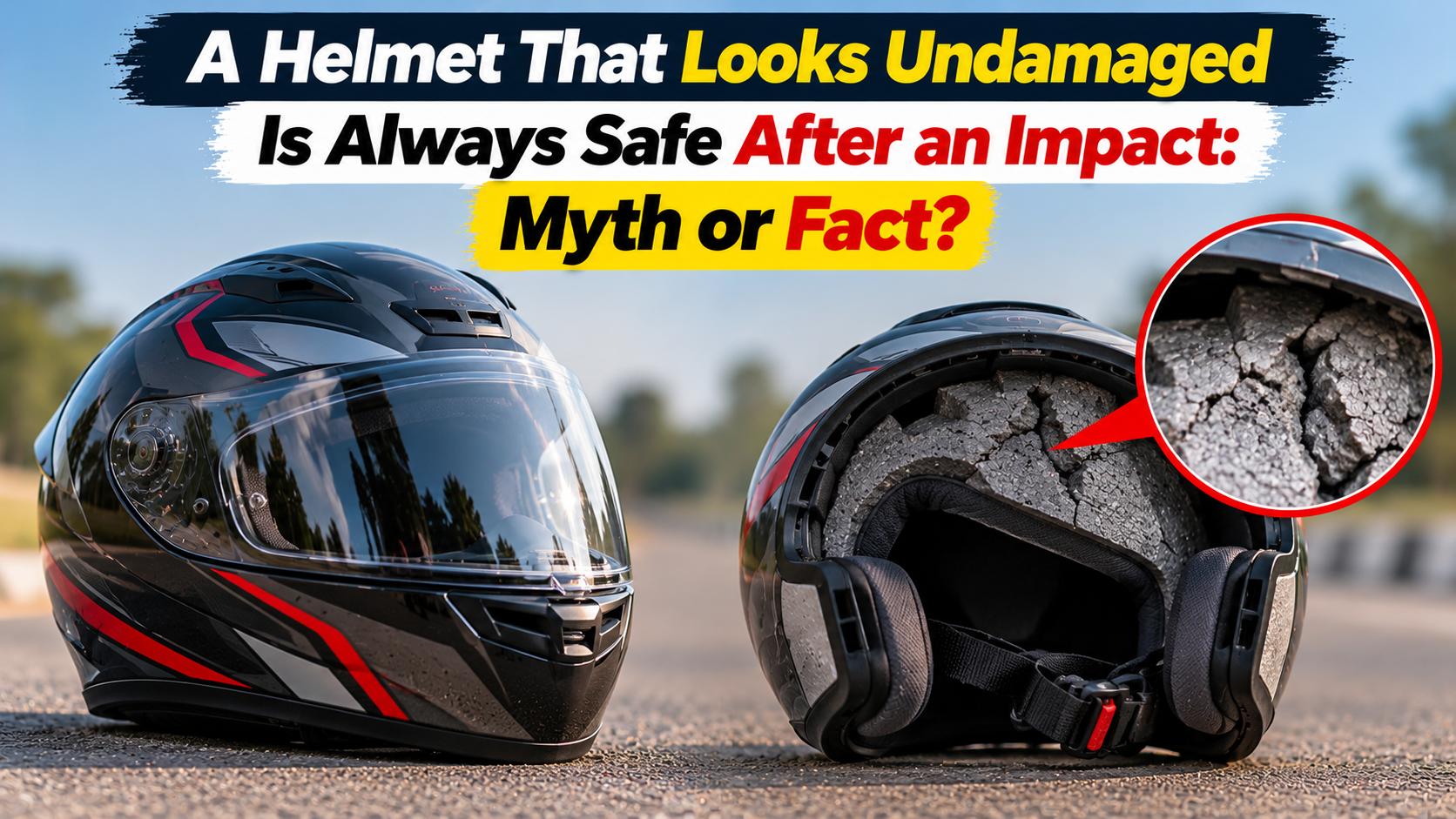
Myth or Fact? Many motorcycle and scooter riders believe that a helmet is safe to use again as long as its outer shell has no cracks, dents or visible scratches after an accident. If the helmet still looks new, they may assume it has retained its original protective ability.
However, a helmet's appearance does not always reveal its actual condition. The outer shell may remain intact even when the energy-absorbing material inside has been compressed or damaged. This hidden damage can reduce the helmet's ability to protect the rider's head during another collision.
Verdict: Myth. A helmet that looks undamaged is not necessarily safe after an impact. If your helmet was worn during a crash and experienced an impact, the safest approach is to replace it according to the manufacturer's instructions, even if there is no obvious external damage.
How to Choose Between Two Similar Car Models: A Decision Framework
A motorcycle helmet consists of several components that work together to protect the rider. The outer shell, energy-absorbing liner, comfort padding, retention system and chin strap all contribute to its overall performance.
The outer shell is designed to resist penetration, distribute impact forces and help manage contact with the road or another object. Beneath it is an energy-absorbing liner, commonly made from expanded polystyrene (EPS) foam.
During a collision, this liner can compress to absorb energy and help slow the movement of the head. This process helps reduce the force transmitted to the skull and brain.
The problem is that compression may not be visible from the outside. A helmet can have a smooth, unbroken shell while its internal liner has sustained damage.
The chin strap and other components can also be affected by an impact. Even if the shell appears normal, damage to the retention system could compromise how securely the helmet stays on the rider's head.
That is why a simple visual inspection cannot always establish whether a helmet remains safe after a crash.

A helmet does more than provide a hard surface around the head. It is designed to manage the energy produced during an impact.
When a rider falls from a motorcycle, the head may strike the road, a kerb, another vehicle or a fixed object. Without suitable protection, the head can stop suddenly, exposing the brain to potentially dangerous forces.
A helmet helps by combining a protective outer shell with an energy-absorbing liner. The shell helps spread the impact over a wider area, while the liner compresses to absorb energy and increase the time over which the head slows down.
However, the energy-absorbing liner has limits. Once it has been significantly compressed during an impact, it may not provide the same protection in a subsequent collision.
This is one reason many motorcycle helmet manufacturers recommend replacing a helmet after an impact sustained while riding. The helmet may have done its job during the first accident, but that does not mean it is ready to protect the rider again.
Hidden damage matters because the next accident may occur without warning. A rider who continues using a compromised helmet may assume they have the same level of protection as before, even though the helmet's protective capacity could have been reduced.
There are several possible forms of damage.
Compressed inner foam
The EPS liner can compress during a significant impact. This damage may be difficult to see without removing or damaging the helmet's structure. Compressed foam may no longer absorb energy as intended.
Fine cracks in the shell
Small cracks or structural weaknesses may not be obvious during a quick inspection. Scratches in the paint are not necessarily structural damage, but a rider cannot reliably determine the helmet's condition from appearance alone.
Damaged straps and fastening mechanisms
A chin strap or fastening mechanism may be weakened by impact or wear. If the helmet comes off during a crash, it cannot provide the intended protection at the moment it is needed.
Damaged internal components
The liner, internal fittings and other components can be affected even when the outer shell looks acceptable. Some damage requires specialised inspection to identify.
The safest response after a significant impact while wearing a helmet is to stop using it and follow the manufacturer's replacement guidance.
Not necessarily. It is important to distinguish between a helmet that has experienced a crash while being worn and one that has been accidentally dropped while empty.
If a rider falls and the helmet strikes the road while protecting their head, replacement is generally recommended even when the exterior looks undamaged.
An empty helmet falling from a low height onto the floor is a different situation. Depending on the helmet design, the height and surface involved, and the manufacturer's guidance, a minor accidental drop may not require replacement.
However, a significant fall onto a hard surface, visible shell damage, suspected liner damage or uncertainty about the impact should be treated seriously. Follow the helmet manufacturer's instructions and contact its support team if you need guidance.
Do not assume that every dropped helmet is ruined, but equally, do not assume that a helmet is safe simply because you cannot see damage.
|
Common belief |
The actual fact |
|
A helmet is safe if its outer shell has no cracks. |
Internal foam or other components may be damaged without visible shell damage. |
|
A helmet can be reused after protecting a rider in a crash. |
A helmet involved in an impact while being worn should generally be replaced according to manufacturer guidance. |
|
Scratches are the only sign of helmet damage. |
Hidden liner compression and damage to straps or fittings may not be obvious. |
|
A helmet dropped while empty always needs replacement. |
A minor low-height drop may not require replacement, but the impact circumstances and manufacturer guidance matter. |
|
A helmet that looks new offers the same protection as before. |
Appearance alone cannot confirm that its protective structure remains intact after an impact. |
|
Any helmet can be repaired after a crash. |
Structural shell or energy-absorbing liner damage generally means the helmet should be replaced, not repaired for reuse. |
|
An old helmet is always safe if it has never been in a crash. |
Materials, fit, straps and other components can deteriorate; follow the manufacturer's service-life and replacement guidance. |
If you have been involved in a motorcycle or scooter accident, do not judge your helmet's condition solely by its appearance.
Follow these steps:
Stop using the helmet if it was involved in an impact while being worn. Arrange a replacement before riding again.
Check the manufacturer's instructions. Different helmet designs may have specific rules for impact and replacement.
Inspect for obvious damage. Look for cracks, dents, compressed foam, damaged straps and broken fastening mechanisms, but remember that hidden damage may still be present.
Contact the manufacturer if you are unsure. Ask whether the helmet should be replaced and whether a crash-replacement programme is available.
Buy a suitable certified replacement. Choose a helmet that meets the applicable safety standards and fits securely.
Do not attempt structural repairs. Glue, tape or improvised repairs cannot reliably restore a damaged shell or energy-absorbing liner.
If the accident involved a possible head injury, seek appropriate medical attention. A helmet can reduce the risk of injury but cannot eliminate it.

Good helmet care helps maintain its condition, although it cannot restore a helmet that has sustained a damaging impact.
Store the helmet in a cool, dry place away from direct sunlight and excessive heat.
Avoid dropping it or placing it where it can fall onto a hard surface.
Use only cleaning products approved by the manufacturer.
Do not apply unapproved paints, adhesives or solvents that could damage helmet materials.
Check the chin strap, buckle, padding and visor regularly.
Make sure the helmet fits correctly and stays securely in place.
Follow the manufacturer's replacement recommendations, including any guidance on age or service life.
A helmet should also be replaced if it has cracks, damaged straps, deteriorated components or no longer fits securely. Do not wait for a serious accident to discover that your protective equipment is no longer suitable.
Company-Fitted vs Aftermarket Accessories: Which Is Better?
There is no single replacement interval that applies to every helmet. The correct guidance depends on the manufacturer, the materials used, the helmet's condition and how it has been stored and maintained.
Some manufacturers recommend replacement after a specified number of years of use. Others provide separate guidance for helmets that have experienced an impact.
A helmet that has not been involved in a crash may still need replacement as its materials, fit or retention system deteriorate. Conversely, a helmet's relatively young age does not make it safe to reuse after a damaging impact.
Always check the manufacturer's instructions for the exact model you own. When a helmet has been involved in a crash while being worn, do not rely on its age or appearance as evidence that it remains safe.
The claim that a helmet is always safe after an impact if it looks undamaged is a myth. A helmet's outer shell can appear normal while its internal energy-absorbing liner or other protective components have been compromised.
If your helmet has experienced an impact while being worn in a crash, replace it according to the manufacturer's instructions, even if you cannot see any damage. For an accidental drop while the helmet was empty, assess the circumstances and follow the manufacturer's guidance rather than assuming every drop requires replacement.
Your helmet is an important piece of safety equipment, not something to judge by appearance alone. A properly fitted, certified helmet in good condition offers much better protection than one whose structural integrity is uncertain.











Maruti
₹6.26 - 11.76 Lakh