.avif)

 Khyati Sharma 2026-09-03
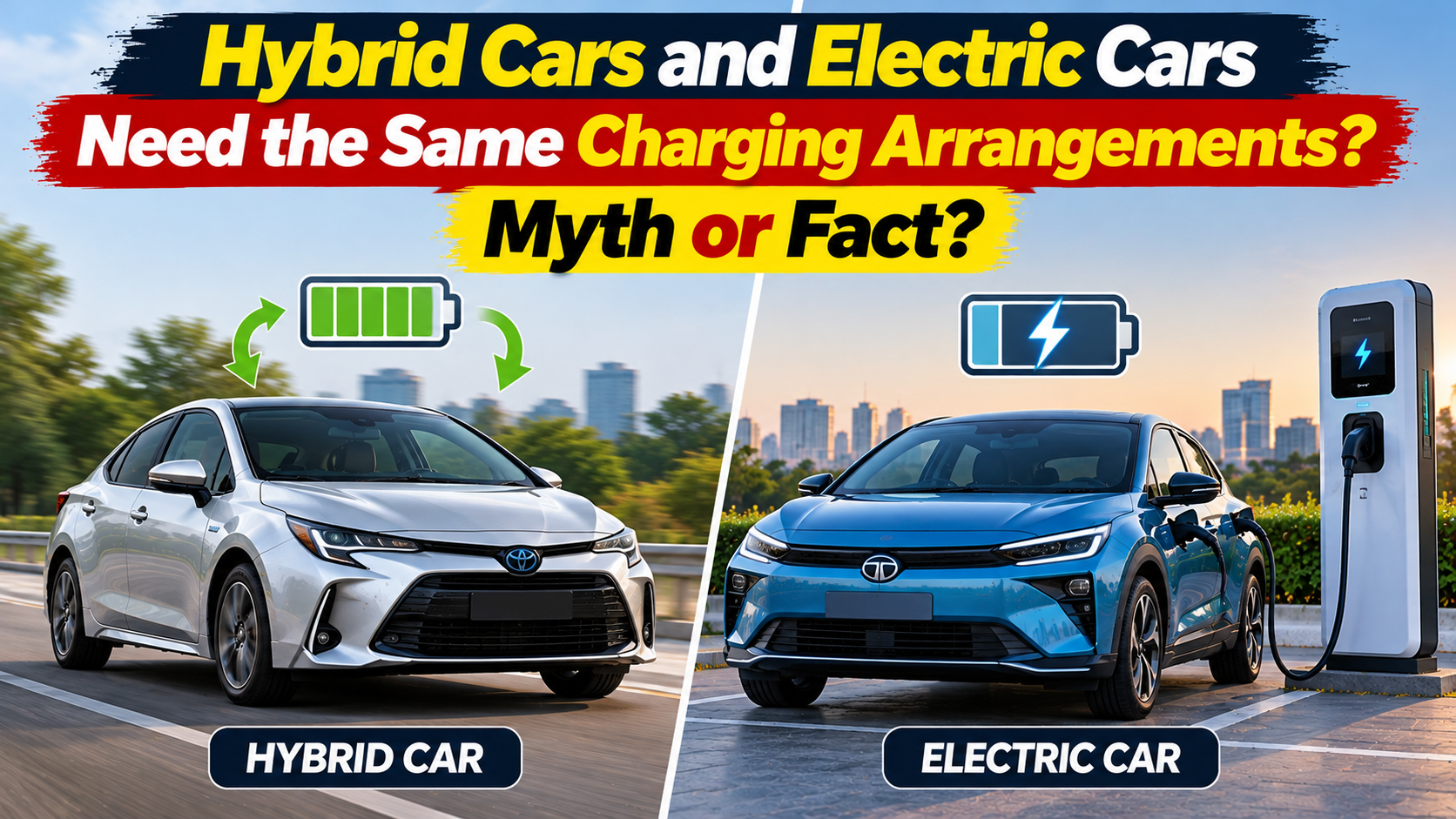
Myth or Fact? Hybrid cars and electric cars both use electric motors and batteries, which can make their charging requirements seem similar. However, the two technologies work differently, and not every hybrid car needs to be plugged into an external power source. While a fully electric car depends on external charging, a conventional hybrid usually recharges its battery while driving.
Understanding these differences can help buyers choose the right vehicle, estimate running costs and decide whether they need a home charging point.
Hybrid cars and fully electric cars do not generally require the same charging arrangements. A conventional hybrid electric vehicle (HEV) uses a petrol or diesel engine alongside an electric motor. Its battery is charged through regenerative braking and energy generated by the engine, so it does not normally need an external charging point.
A battery electric vehicle (BEV), on the other hand, runs entirely on electricity stored in a rechargeable battery. Owners must connect it to a suitable external power source to replenish its battery.
There is one important exception: a plug-in hybrid electric vehicle (PHEV). It combines an engine with an electric motor and has a charging port, allowing its battery to be charged using an external electricity supply.
According to the US Department of Energy's Alternative Fuels Data Center, conventional hybrids recharge through regenerative braking and the engine, whereas plug-in hybrids can use an external power source.
Hatchback vs Sedan vs SUV: Which Car Type Suits You Best?
A conventional hybrid car is designed to manage its battery without requiring the driver to plug it into a charger. It combines a combustion engine, an electric motor and a relatively small battery pack.
The system automatically decides when to use electric assistance, when to run the engine and when to recover energy. Depending on the model, the vehicle may use electric power during low-speed driving, assist the engine during acceleration or switch the engine off when the car stops.
There are two main ways a conventional hybrid replenishes its battery.
Regenerative braking
When a hybrid slows down, its electric motor can operate as a generator. Instead of allowing all the vehicle's kinetic energy to be lost as heat through braking, the system converts some of that energy into electricity and stores it in the battery.
This process is particularly useful in stop-and-go traffic, where vehicles repeatedly slow down and accelerate. The amount of energy recovered depends on driving conditions, battery capacity and the vehicle's regenerative braking system.
Energy from the engine
The combustion engine can also help recharge the hybrid battery. The vehicle's control system manages the flow of energy between the engine, motor and battery according to driving requirements.
As a result, drivers do not normally need a separate wall charger, dedicated home charging unit or public EV charging station for a conventional hybrid.

A battery electric vehicle, commonly called an EV or BEV, does not have a petrol or diesel engine to provide propulsion. It relies on an electric motor powered by a high-voltage traction battery.
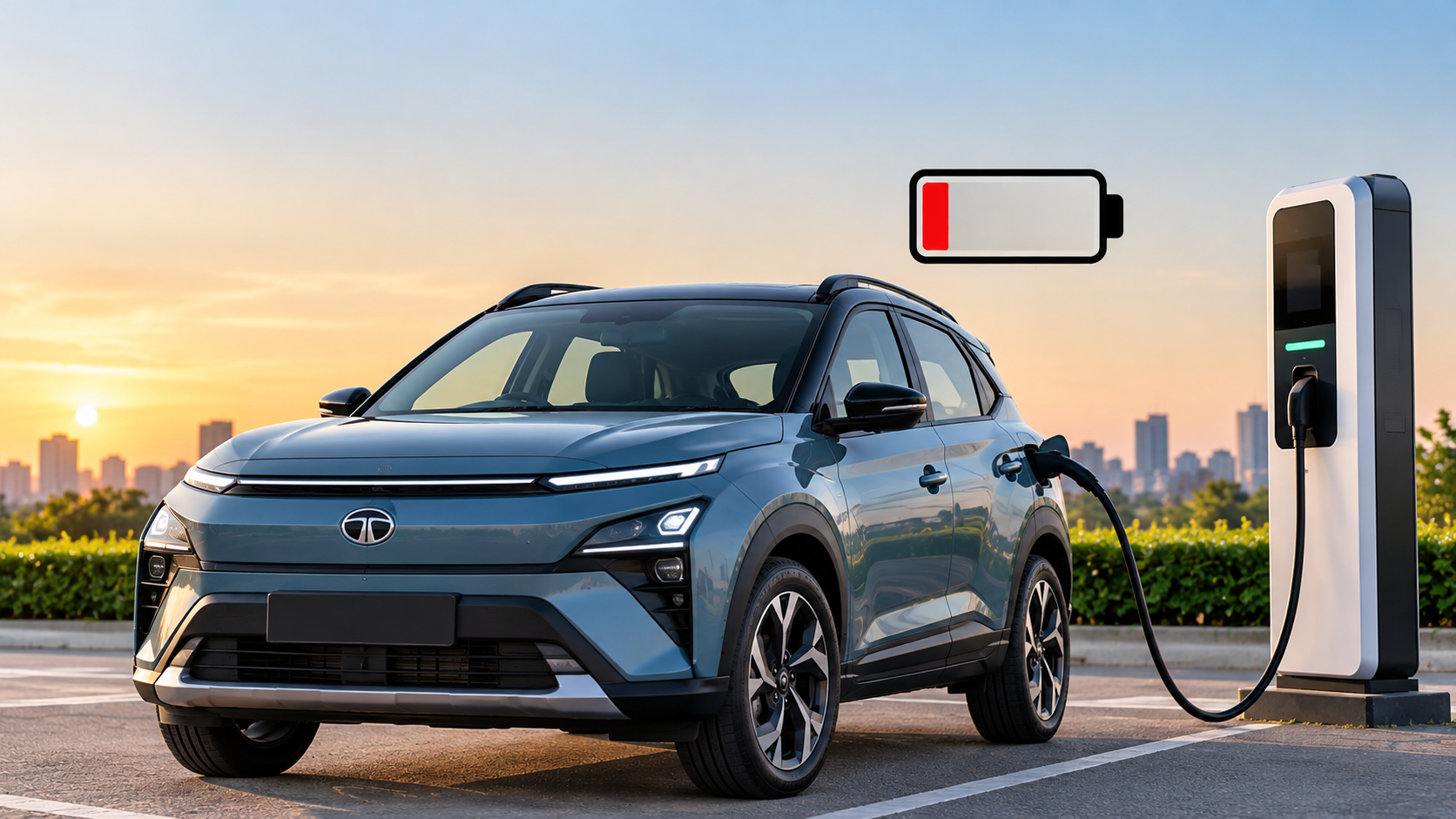
When the battery's charge level falls, the driver must connect the vehicle to an external electricity supply. This can be done at home, at a workplace or at a compatible public charging station.
The main charging options include:
Home charging: Owners can charge their vehicle using suitable domestic electrical equipment or a dedicated home charger, depending on the vehicle and electrical installation.
Public AC charging: These chargers are often found at offices, shopping centres, hotels and public parking facilities.
DC fast charging: Compatible EVs can use suitable fast-charging stations to replenish their batteries more quickly, depending on the vehicle's charging capability and the station's output.
Charging time varies according to battery size, starting charge level, charger power, temperature and the vehicle's maximum charging rate. A larger battery generally requires more energy to fill, although charging speed also plays a significant role.
Unlike a conventional hybrid, a fully electric car cannot continue driving indefinitely by refuelling a petrol or diesel tank. It needs access to electricity to restore its driving range.
Petrol vs Diesel vs CNG vs Electric Cars: How to Choose the Right Fuel Type
Plug-in hybrids sit between conventional hybrids and fully electric cars. They have both a combustion engine and an electric motor, but their batteries are designed to store more energy than those of most conventional hybrids.
A PHEV includes a charging port and can be connected to an external electricity supply. Depending on the model, it may cover a portion of daily journeys using electric power alone before the engine becomes necessary.
The driver can still use the combustion engine when the battery's usable electric range is depleted. However, regular charging is important if owners want to make the most of the vehicle's electric driving capability.
If a PHEV is rarely plugged in, it will generally rely more heavily on fuel. That can reduce the fuel-saving benefits the vehicle was designed to deliver.
For this reason, a plug-in hybrid may need some of the same charging arrangements as an EV, even though it can also run on conventional fuel. The US Department of Energy explains that PHEVs can use electricity from an external source, the engine and regenerative braking.
|
Feature |
Conventional hybrid (HEV) |
Plug-in hybrid (PHEV) |
Fully electric car (BEV) |
|
Petrol or diesel engine |
Yes |
Yes |
No |
|
Electric motor |
Yes |
Yes |
Yes |
|
External charging port |
Usually no |
Yes |
Yes |
|
Requires external charging |
No |
Recommended |
Yes |
|
Battery charging while braking |
Yes |
Yes |
Yes |
|
Can refuel at a fuel station |
Yes |
Yes |
No |
|
Can drive using electric power alone |
Some models, under certain conditions |
Yes, within its electric capability |
Yes, exclusively |
|
Home charger useful |
Not normally required |
Useful |
Useful |
|
Public charging access |
Not normally required |
Optional but beneficial |
Essential for replenishing the battery |
For most conventional hybrid owners, installing a home charging point is unnecessary. The car's battery-management system takes care of charging while the vehicle is running.
This can be an advantage for buyers who live in apartments, park on the street or do not have convenient access to a private parking space with electricity.
A plug-in hybrid is different. Although it can still use its engine, charging at home can help owners complete short daily trips with less petrol or diesel consumption. A compatible household supply may be sufficient for some vehicles, while others may benefit from a dedicated charger.
Fully electric car owners can also benefit from home charging. They can often replenish the battery overnight and begin the next day with a higher charge level. However, the equipment required depends on the vehicle, the available electrical supply and local installation requirements.
Before installing any charger, owners should check the manufacturer's guidance and use a qualified electrician or approved installer. A standard household socket should not automatically be assumed to be suitable for every charging situation.

Charging arrangements can influence the cost of owning a vehicle, but the cheapest option depends on how and where it is driven.
A conventional hybrid consumes petrol or diesel, although its electric motor and energy-recovery systems can help reduce fuel use. Owners do not normally pay for traction-battery charging separately because the system manages it while driving.
A plug-in hybrid can use electricity for some journeys and fuel for others. Its running costs depend significantly on how frequently it is charged, the distance travelled in electric mode, electricity tariffs and fuel prices.
A fully electric car uses electricity for propulsion. Its energy cost per kilometre may be lower than that of a comparable fuel-powered vehicle, particularly when charged at home on a suitable tariff. However, public fast charging, installation expenses, local electricity prices and driving efficiency can affect the overall cost.
|
Cost factor |
Conventional hybrid |
Plug-in hybrid |
Fully electric car |
|
Petrol or diesel expense |
Yes |
Yes, depending on use |
No |
|
Electricity expense for traction charging |
Not normally a separate external cost |
Yes, when externally charged |
Yes |
|
Home charger installation |
Not normally needed |
May be useful |
May be useful |
|
Public charging fees |
Not normally needed |
Optional |
May be needed |
|
Running cost depends on driving style |
Yes |
Yes |
Yes |
The right choice depends on your daily travel, parking arrangements and access to charging facilities.
How Many Airbags Do You Really Need? A Safety Primer
A conventional hybrid may suit you if:
You want improved fuel efficiency without changing your refuelling routine.
You do not have a private parking space with an electrical connection.
Your driving includes frequent traffic and stop-start journeys.
You prefer a vehicle that does not require regular external charging.
A plug-in hybrid may suit you if:
You can charge at home or work.
Many of your daily journeys are within the vehicle's electric driving range.
You want electric driving for shorter trips but still need an engine for longer journeys.
You are willing to charge the vehicle regularly to maximise its electric benefits.
A fully electric car may suit you if:
You can access reliable home, workplace or public charging.
Your regular travel fits within the vehicle's practical driving range.
You want to avoid petrol or diesel consumption for driving.
You are comfortable planning longer journeys around charging stops where necessary.
In India, buyers should consider local charging availability, apartment parking rules, highway travel patterns and the vehicle's service support before making a decision.
Myth 1: Every hybrid car must be plugged in
Fact: Conventional hybrids charge their batteries using regenerative braking and energy from the engine. External charging is not normally required.
Myth 2: A plug-in hybrid must always be charged to run
Fact: Most plug-in hybrids can also operate using their combustion engines when their electric driving range is depleted. However, regular charging helps owners take advantage of their electric capability.
Myth 3: Electric cars can recharge fully just by braking
Fact: Regenerative braking recovers some energy, but it does not replace the need to connect a fully electric car to an external power source.
Myth 4: All charging points work with every electric vehicle
Fact: Charging connectors, supported charging standards and vehicle capabilities vary. Drivers should check compatibility before using a charger.
Myth 5: A hybrid and an EV have identical running costs
Fact: Their costs depend on fuel or electricity prices, efficiency, charging habits, maintenance, purchase price and driving conditions.
The claim that hybrid cars and electric cars need the same charging arrangements is a myth. Conventional hybrids recharge their batteries internally through regenerative braking and engine-generated energy, so they do not normally require a charging station.
Fully electric cars need external electricity to replenish their traction batteries. Plug-in hybrids can also connect to a charger, but they retain a combustion engine for additional flexibility.
Before buying a vehicle, understand which type of hybrid or electric powertrain it uses. That distinction will help you choose the right car for your driving routine, parking facilities, budget and charging access.