Khyati Sharma 2026-09-24
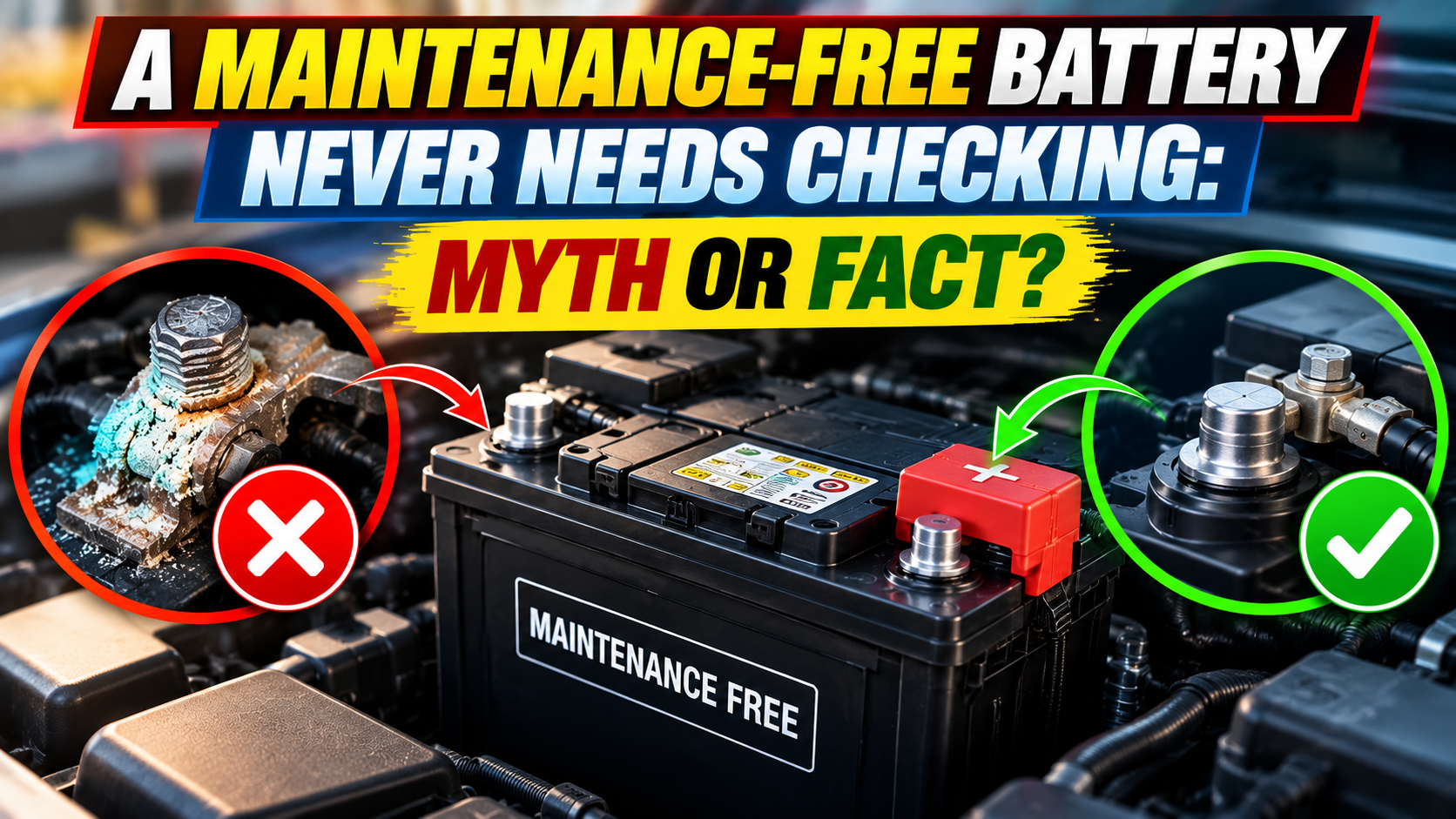
Modern cars are designed to make everyday ownership easier, and the maintenance-free battery is a good example. Unlike older batteries that often required regular electrolyte-level checks and the addition of distilled water, many modern automotive batteries are designed to operate without routine fluid top-ups under normal conditions.
However, the term maintenance-free can be misleading. Some drivers believe that once a maintenance-free battery is installed, it never needs inspection until the car refuses to start. This assumption can lead to unexpected breakdowns, starting problems and unnecessary inconvenience.
The truth is that a maintenance-free battery still needs periodic checking, even if it does not require regular water refilling. Its terminals can corrode, its charge can fall, extreme temperatures can affect its performance, and its internal condition can deteriorate with age.
A battery may also appear to be working normally while its ability to deliver sufficient starting power is gradually declining. Checking its condition helps drivers identify potential problems before they become serious.
Company-Fitted vs Aftermarket Accessories: Which Is Better?
A maintenance-free battery is an automotive battery designed to reduce or eliminate routine electrolyte top-ups during normal use. Many conventional maintenance-free batteries use lead-acid technology, including sealed or valve-regulated designs, while others use enhanced designs that reduce water loss.
These batteries are commonly used to start petrol and diesel vehicles and supply electrical power when the engine is switched off. They also help stabilise the vehicle's electrical system.
The phrase maintenance-free generally refers to reduced routine servicing, particularly the need to add distilled water. It does not mean the battery is immune to wear, discharge, corrosion or damage.
Different battery types have different inspection requirements. An ordinary flooded lead-acid battery, an AGM battery and a lithium-based auxiliary battery should not automatically be treated as interchangeable. Owners should follow the vehicle and battery manufacturer's instructions for the specific battery installed.

Even a battery designed to operate without regular fluid top-ups can develop problems. Periodic inspection helps identify these issues early.
1. Battery terminals can corrode
Corrosion can develop around the battery terminals and cable connections. It may appear as a white, bluish or greenish deposit, depending on the materials involved.
Corrosion can interfere with electrical connections and contribute to slow cranking, starting difficulties or intermittent electrical problems. Loose connections can cause similar symptoms.
Drivers should inspect the terminals periodically and have corrosion or loose connections addressed safely. Avoid touching deposits with bare hands or attempting cleaning without understanding the correct procedure.
2. The battery can lose charge
A maintenance-free battery can still become discharged. Short trips, long periods of inactivity, leaving lights on and electrical faults can reduce its charge.
Modern vehicles also use electrical power when parked for functions such as security systems and onboard electronics. If a car remains unused for several weeks, its battery may gradually lose enough charge to cause starting problems.
If the vehicle is parked for extended periods, follow the manufacturer's guidance on battery charging or maintenance equipment.
3. Battery performance declines with age
Like other automotive components, batteries have a limited service life. Their ability to store energy and deliver the current needed to start an engine gradually declines.
A battery may continue to start the vehicle for a while even after its performance has begun to deteriorate. A professional battery test can help assess its condition and identify whether replacement may be approaching.
4. Heat and cold affect performance
High temperatures can accelerate battery ageing, while low temperatures can reduce the available starting power of a battery.
In hot regions, including parts of India, prolonged heat under the bonnet can contribute to faster deterioration. During cold weather, a weakened battery may struggle to start the engine because the battery delivers less power while the engine may require more effort to crank.
Regular checks are especially useful when a battery is ageing or the vehicle operates in demanding conditions.
5. The charging system may be faulty
A weak battery is not always the original cause of a starting problem. An alternator or other charging-system fault may prevent the battery from receiving the correct charge while driving.
Similarly, a faulty electrical component may draw excessive current when the vehicle is parked. Replacing the battery without investigating the underlying issue may simply lead to the same problem again.
A proper diagnosis should consider the battery, charging system, electrical connections and possible parasitic drain.
Petrol vs Diesel vs CNG vs Electric Cars: How to Choose the Right Fuel Type
|
Feature |
Maintenance-free battery |
Traditional serviceable flooded battery |
|
Routine water top-ups |
Usually not required under normal use |
May be required according to the manufacturer's instructions |
|
Electrolyte access |
Often sealed or not intended for user servicing |
Usually has accessible cells or designated filling points |
|
Terminal inspection |
Still necessary |
Still necessary |
|
Charge and condition checks |
Recommended |
Recommended |
|
Sensitivity to extreme temperatures |
Yes |
Yes |
|
Risk of discharge |
Yes |
Yes |
|
Need for correct charging |
Yes |
Yes |
|
Replacement when worn or damaged |
Required when testing and condition indicate it |
Required when testing and condition indicate it |
Drivers can perform a basic visual inspection, but electrical testing is best handled with appropriate equipment and training.
Step 1: Inspect the battery case
Look for cracks, swelling, leakage or other visible damage. A swollen or leaking battery may be unsafe and should be assessed by a qualified technician.
Do not continue using a visibly damaged battery without professional advice.
Step 2: Check the terminals and cables
Look for corrosion, loose connections or damaged insulation. Poor connections can prevent the starter motor from receiving enough current even when the battery itself is reasonably healthy.
Turn the vehicle off before inspecting the battery, and follow the owner's manual. Avoid shorting the terminals with tools or jewellery.
Step 3: Notice how the engine starts
Slow cranking, repeated clicking or difficulty starting can indicate a weak battery, but these symptoms may also be caused by starter-motor problems, poor connections or charging-system faults.
If starting becomes noticeably slower, arrange a battery and electrical-system test rather than waiting for a complete failure.
Step 4: Check the battery's condition
A multimeter can measure battery voltage, but voltage alone does not establish the battery's full health or ability to deliver starting current. Readings depend on charge level, temperature and whether the battery has recently been charged or used.
A professional battery tester can assess relevant performance measures and help determine whether the battery is still serviceable.
Step 5: Test the charging system if needed
If the battery repeatedly loses charge, ask a technician to check the alternator or relevant charging system and investigate any abnormal electrical drain. Vehicles with start-stop systems or intelligent charging may require model-specific diagnostic procedures.

A maintenance-free battery may show several warning signs before it stops working.
The engine cranks more slowly than usual.
The car needs repeated jump-starts.
Battery warning lights appear on the dashboard.
Headlights or electrical accessories behave unusually, especially when starting.
The battery case is swollen, cracked or leaking.
Corrosion or loose connections are visible at the terminals.
The battery repeatedly becomes discharged after the car has been parked.
The battery is ageing and has not been tested recently.
These symptoms do not always mean the battery itself is faulty. The starter motor, alternator, wiring or other electrical components may be responsible. A diagnosis can prevent unnecessary replacement.
How to Choose Between Two Similar Car Models: A Decision Framework
There is no single inspection schedule that suits every vehicle and battery. Follow the vehicle manufacturer's service schedule and the battery manufacturer's guidance.
As a practical habit, inspect the battery visually during routine vehicle checks and have its condition tested during scheduled servicing, especially as it gets older. Consider an earlier test if you notice slow starting, frequent short trips, long periods of inactivity or repeated discharge.
Before long journeys or periods when the car must be dependable, a battery check can provide additional reassurance. Vehicles used in extreme heat or with heavy electrical demands may benefit from more frequent attention.
Do not rely on a fixed replacement interval alone. Battery life varies with climate, driving patterns, charging performance, battery type and usage.
Avoid leaving electrical accessories on. Headlights, interior lights and other accessories can discharge the battery when the engine is off.
Take care with repeated short trips. Short journeys may not allow the battery to recover all the energy used during starting, particularly when electrical demand is high.
Keep the battery secure. Excessive vibration can contribute to damage. Make sure the battery is mounted correctly.
Keep connections in good condition. Have loose or corroded terminals inspected and repaired safely.
Investigate repeated discharge. A battery that repeatedly goes flat may have a charging-system fault, an electrical drain or an ageing internal condition.
Use the correct replacement battery. Follow the manufacturer's requirements for battery size, capacity, technology and any required registration or configuration. Some modern vehicles need a specific AGM or EFB battery for start-stop operation.
Use compatible charging equipment. If charging is required, use a charger suitable for the battery type and follow the manufacturer's instructions. Do not attempt to charge a damaged or leaking battery.
1. Does a maintenance-free car battery need checking?
Yes. It may not require routine electrolyte top-ups, but it can still lose charge, develop terminal corrosion, deteriorate with age or be affected by a charging-system fault.
2. Do I need to add water to a maintenance-free battery?
Usually not. Many maintenance-free batteries are not designed for routine water addition. Never open or refill a sealed battery unless the manufacturer explicitly allows it and provides instructions.
3. How do I know if my maintenance-free battery is weak?
Slow engine cranking, repeated discharge and starting problems can indicate a weak battery. A battery test is the best way to assess its condition, although other electrical faults may cause similar symptoms.
4. Can a maintenance-free battery go flat?
Yes. Leaving electrical accessories on, infrequent driving, electrical faults and natural self-discharge can drain the battery.
5. How long does a maintenance-free car battery last?
Battery life varies with its type, climate, vehicle usage and charging system. Rather than relying on a guaranteed lifespan, follow the recommended inspection schedule and test the battery if its performance changes.
6. Should I replace a battery as soon as it becomes weak?
Not necessarily. A technician should test the battery and charging system to determine the cause. Replacement may be appropriate if the battery cannot hold sufficient charge or meet the vehicle's starting requirements.
The claim that a maintenance-free battery never needs checking is a myth. These batteries reduce routine servicing, particularly the need for water top-ups, but they remain vulnerable to discharge, corrosion, extreme temperatures, ageing and charging-system problems.
Periodic visual inspections, attention to starting performance and suitable battery testing can help identify problems before they leave a driver stranded. If the battery repeatedly loses charge or the engine struggles to start, investigate the cause instead of assuming that a maintenance-free design guarantees trouble-free operation.
The bottom line: maintenance-free means less routine maintenance—not zero maintenance. A quick check at the right time can help protect your vehicle's reliability and reduce the risk of an unexpected breakdown.