
 Khyati Sharma 2026-09-03
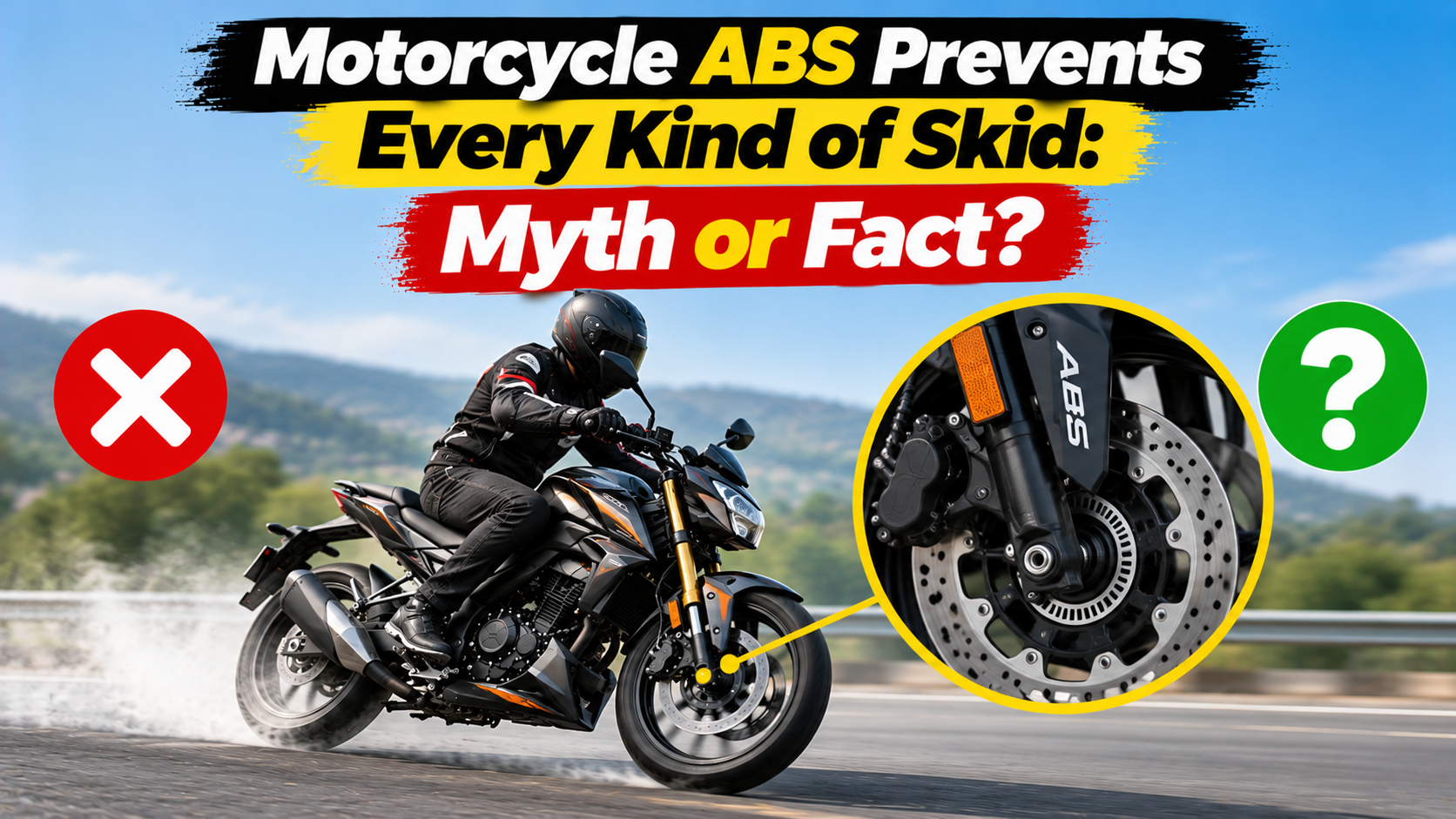
Motorcycle safety technology has improved significantly over the years, and Anti-lock Braking System (ABS) is one of the most important developments in motorcycle braking. It helps riders maintain control during hard braking by reducing the risk of wheel lock-up.
However, some riders believe that a motorcycle equipped with ABS cannot skid under any circumstances. This is a misconception. Although ABS can help prevent wheel lock-up during braking, it cannot eliminate every type of skid or compensate for every riding mistake.
Tyre grip, road conditions, motorcycle speed, cornering angle, braking technique and mechanical condition all influence how safely a motorcycle can stop. Even a motorcycle with advanced ABS can lose traction if the available grip is exceeded.
A Helmet Is Unnecessary for a Short Neighbourhood Ride: Myth or Fact?
ABS stands for Anti-lock Braking System. It is an electronic safety system designed to reduce the likelihood of a wheel locking when a rider applies the brakes too aggressively or when available tyre grip suddenly decreases.
During braking, a wheel can slow down so rapidly that it stops rotating while the motorcycle is still moving. This is known as wheel lock-up. A locked wheel can lose its ability to provide the expected grip and directional control, potentially causing the motorcycle to skid.
ABS helps address this problem by monitoring wheel speed and adjusting brake pressure when the system detects that a wheel is approaching lock-up.
The technology is particularly useful during emergency braking, when riders may apply more braking force than the road surface can handle.
However, ABS is a rider-assistance system, not an automatic crash-prevention device. It can help manage braking forces, but it cannot create additional grip between the tyres and the road.

A typical motorcycle ABS system uses wheel-speed sensors, a control unit and a hydraulic modulator.
The sensors monitor how quickly the wheels rotate. When the control unit detects a rapid change in wheel speed that indicates possible lock-up, the modulator adjusts hydraulic brake pressure to reduce the risk.
This process can repeat rapidly while the rider continues braking. The system may release and reapply pressure several times per second to help maintain wheel rotation and available traction.
On many motorcycles, ABS operates independently at the front and rear wheels. The exact configuration depends on the motorcycle and its braking system.
When ABS activates, riders may feel pulsing through the brake lever or pedal, and they may hear mechanical noises. These sensations can be normal during system intervention, depending on the model.
On motorcycles with conventional ABS, riders should follow the manufacturer's emergency-braking instructions. Many systems are designed for firm, continuous brake application rather than repeatedly pumping the controls.
ABS is designed primarily to manage wheel lock-up during braking. It does not control every factor that can cause a motorcycle to lose traction.
Several situations can still lead to a skid, even when the motorcycle is equipped with ABS.
1. Skidding While Cornering
Cornering is one of the most challenging situations for motorcycle braking. When a motorcycle leans into a turn, its tyres must provide grip for both turning and braking.
If the rider applies too much braking force while leaned over, the tyre may exceed its available grip. This can cause the motorcycle to slide or lose its intended line.
Conventional ABS may not fully account for the additional demands created by cornering. Some advanced motorcycles use cornering ABS, which incorporates information such as lean angle to adjust braking more appropriately while turning.
Cornering ABS can improve control, but it still cannot guarantee that a skid will never occur. Riders should reduce speed before entering a bend and avoid abrupt braking or steering inputs while leaned over.
2. Loose Gravel, Sand and Uneven Roads
Loose surfaces can make braking more difficult because the tyre may not maintain consistent contact with a firm road surface.
Gravel, sand, mud and uneven terrain can cause the tyres to lose grip or move unexpectedly. ABS may help manage wheel lock-up, but its effectiveness depends on the system design and the surface conditions.
In some circumstances, ABS may increase stopping distance on loose surfaces compared with certain non-ABS braking situations. Riders should therefore avoid assuming that ABS will always stop the motorcycle in a shorter distance.
When travelling on loose or uneven roads, reduce speed, increase following distance and use smooth controls appropriate to the motorcycle and surface. Follow the manufacturer's guidance for off-road riding and any available ABS modes.

3. Engine-Braking Skids
Motorcycle ABS generally controls braking pressure through the braking system. It may not prevent a rear-wheel skid caused by excessive engine braking or abrupt downshifting.
If a rider shifts down too aggressively, releases the clutch abruptly or experiences a sudden change in engine torque, the rear wheel can slow sharply and lose traction.
This type of skid is not necessarily caused by the rear brake itself. It can happen even when the rider is not pressing the rear-brake pedal.
Some motorcycles include additional systems, such as a slipper clutch or electronic engine-braking control, to help manage this behaviour. These features are separate from conventional ABS, and their availability varies by model.
Smooth downshifting and appropriate gear selection remain important, even on motorcycles equipped with ABS.
4. Wet Roads and Sudden Changes in Grip
Wet roads often provide less tyre grip than clean, dry surfaces. Oil, mud, painted road markings, metal covers and standing water can make the situation more unpredictable.
ABS can help reduce the risk of wheel lock-up during braking, but it cannot restore grip that the tyre does not have. If a rider enters a slippery patch while braking, turning or accelerating, the motorcycle may still move away from the intended path.
The safest response is to ride at a speed suitable for the conditions, maintain a generous following distance and avoid sudden changes in braking, throttle or steering.
5. Worn Tyres and Poor Maintenance
ABS cannot compensate for tyres that are badly worn, damaged or incorrectly inflated.
Tyres are the only parts of the motorcycle that directly contact the road. Their condition has a major influence on braking performance and stability.
Worn tread, unsuitable tyres, incorrect tyre pressure and damaged components can reduce the grip available to the ABS system. A malfunctioning sensor or warning light can also indicate that the system requires inspection.
Riders should check tyre pressure according to the owner's manual, inspect tread and damage regularly, and have ABS warnings or braking problems checked by an authorised service centre.
|
Situation |
What ABS can do |
What ABS cannot guarantee |
|
Hard braking on a straight road |
Help prevent wheel lock-up and preserve available traction |
A crash-free stop or a specific stopping distance |
|
Wet road braking |
Reduce the risk of a wheel locking during braking |
Complete protection against slipping on oil, paint or standing water |
|
Cornering |
Conventional ABS may help with braking-related wheel lock; cornering ABS can provide additional support |
Prevention of every slide or loss of control while leaned over |
|
Loose gravel or sand |
Help manage wheel lock, depending on system design and conditions |
Shorter stopping distances in every situation |
|
Engine-braking skid |
Conventional brake ABS may have limited or no control over the cause |
Prevention of every rear-wheel slide caused by abrupt downshifting |
|
Worn tyres or poor tyre pressure |
Continue to monitor wheel behaviour if the system is functioning |
Restore missing tyre grip or compensate for poor maintenance |
|
Sudden obstacle avoidance |
Help manage braking |
Replace rider judgement, safe speed or the need for evasive action |
Not necessarily. ABS is primarily designed to help prevent wheel lock-up and preserve control during braking, rather than guarantee the shortest possible stopping distance in every situation.
On suitable paved surfaces, ABS can help many riders brake more effectively during emergency stops because it reduces the risk of locking a wheel. Its benefits can be especially valuable when a rider reacts suddenly to a hazard.
However, stopping distance depends on many factors, including speed, tyre condition, road surface, braking technique and the motorcycle's design.
On loose gravel or certain uneven surfaces, ABS may produce a longer stopping distance than some braking techniques on a motorcycle without ABS. Riders should not interpret the presence of ABS as permission to ride faster or follow other vehicles more closely.
The correct lesson is that ABS provides an additional layer of protection, but safe speed and sufficient stopping space remain essential.
Standard ABS typically uses wheel-speed information to identify possible wheel lock-up and adjust brake pressure.
Cornering ABS adds further information, often from an inertial measurement unit (IMU), to estimate the motorcycle's lean angle and movement. This helps the system adjust braking intervention when the motorcycle is turning.
Cornering ABS can provide better support during braking while leaned over than conventional ABS. However, the level of assistance depends on the system and the conditions.
Neither system can overcome the physical limits of tyre grip. If the rider brakes too aggressively, turns too sharply or encounters a very slippery surface, the motorcycle can still lose traction.
Riders should not deliberately test the limits of either system on public roads.

Even with ABS, riders should practise safe braking habits and maintain their motorcycles correctly.
Look ahead: Identify traffic changes, potholes, pedestrians and hazards early.
Maintain following distance: Leave enough room to respond if the vehicle ahead stops suddenly.
Brake progressively: Use the braking technique recommended for the motorcycle and road conditions.
Keep the motorcycle stable: Whenever possible, reduce speed before entering a corner and avoid abrupt inputs while leaned over.
Do not pump ABS brakes unnecessarily: Follow the manufacturer's instructions, which commonly recommend maintaining firm, continuous pressure during emergency braking.
Check the ABS warning light: If the warning remains illuminated contrary to the owner's manual, arrange a professional inspection.
Maintain tyres and brakes: Check tyre pressure, tread, brake pads, fluid and other components according to the service schedule.
Practise safely: Learn how ABS behaves in a controlled training environment rather than experimenting in traffic.
These habits help riders use ABS as intended while reducing avoidable risks.
Myth: Motorcycle ABS prevents every kind of skid.
Motorcycle ABS is an important safety feature that helps prevent wheel lock-up during braking. It can improve stability and help riders retain control during hard stops, particularly when they might otherwise apply excessive brake pressure.
However, it cannot prevent every skid. Cornering, loose surfaces, sudden changes in grip, engine-braking effects, worn tyres and other factors can still cause traction loss. Conventional ABS and advanced cornering ABS also have different capabilities.
The safest approach is to combine ABS with good riding technique, appropriate speed, well-maintained tyres and brakes, and careful judgement.