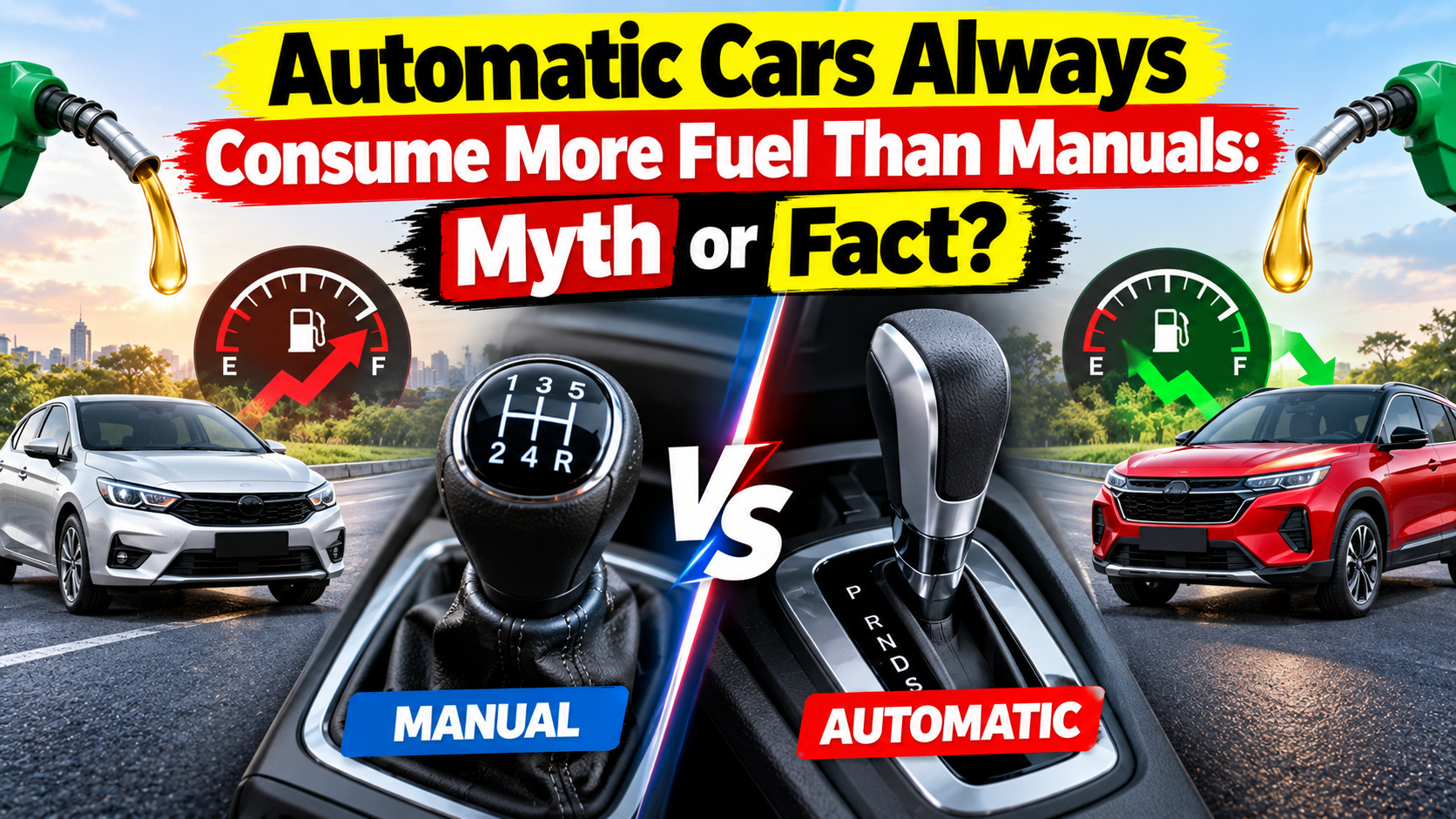
The Truth: Myth. Automatic cars do not always consume more fuel than manual cars. While older automatic transmissions were often less fuel-efficient than manual gearboxes, modern automatic transmissions have improved significantly. Technologies such as continuously variable transmissions (CVTs), dual-clutch transmissions (DCTs) and advanced torque-converter automatics can deliver fuel economy comparable to, or sometimes better than, manual transmissions.
The actual fuel consumption of a car depends on several factors, including its engine, transmission design, vehicle weight, driving conditions, traffic, maintenance and driving style. Therefore, choosing between an automatic and a manual car based only on mileage can lead to the wrong decision.
Manual vs Automatic Car: Pros and Cons Explained
What Is the Difference Between Automatic and Manual Cars?
A manual car requires the driver to select gears using a gear lever and operate a clutch pedal. The driver decides when to change gears according to vehicle speed, engine load and driving conditions.
An automatic car changes gears without requiring the driver to operate a clutch pedal or manually select every gear during normal driving. Depending on the transmission type, the system uses hydraulic, mechanical or electronic controls to select suitable gear ratios.
Both systems transfer engine power to the wheels, but they manage gear changes differently. This difference can affect fuel economy, acceleration, driving comfort and maintenance costs.
In the past, many automatic transmissions used fewer gear ratios and had greater mechanical losses than comparable manual gearboxes. As a result, manual cars often delivered better fuel economy.
Modern automatic transmissions have changed this situation. More gear ratios, improved electronic controls and efficient transmission designs have helped reduce energy losses and keep engines operating closer to their most efficient range.
How Many Airbags Do You Really Need? A Safety Primer

Why Do People Think Automatic Cars Consume More Fuel?
The belief that automatic cars always use more fuel comes partly from older vehicle technology.
Traditional automatic gearboxes sometimes lost more energy through their torque converters and hydraulic systems. They could also keep the engine running at higher revolutions per minute than necessary under certain conditions.
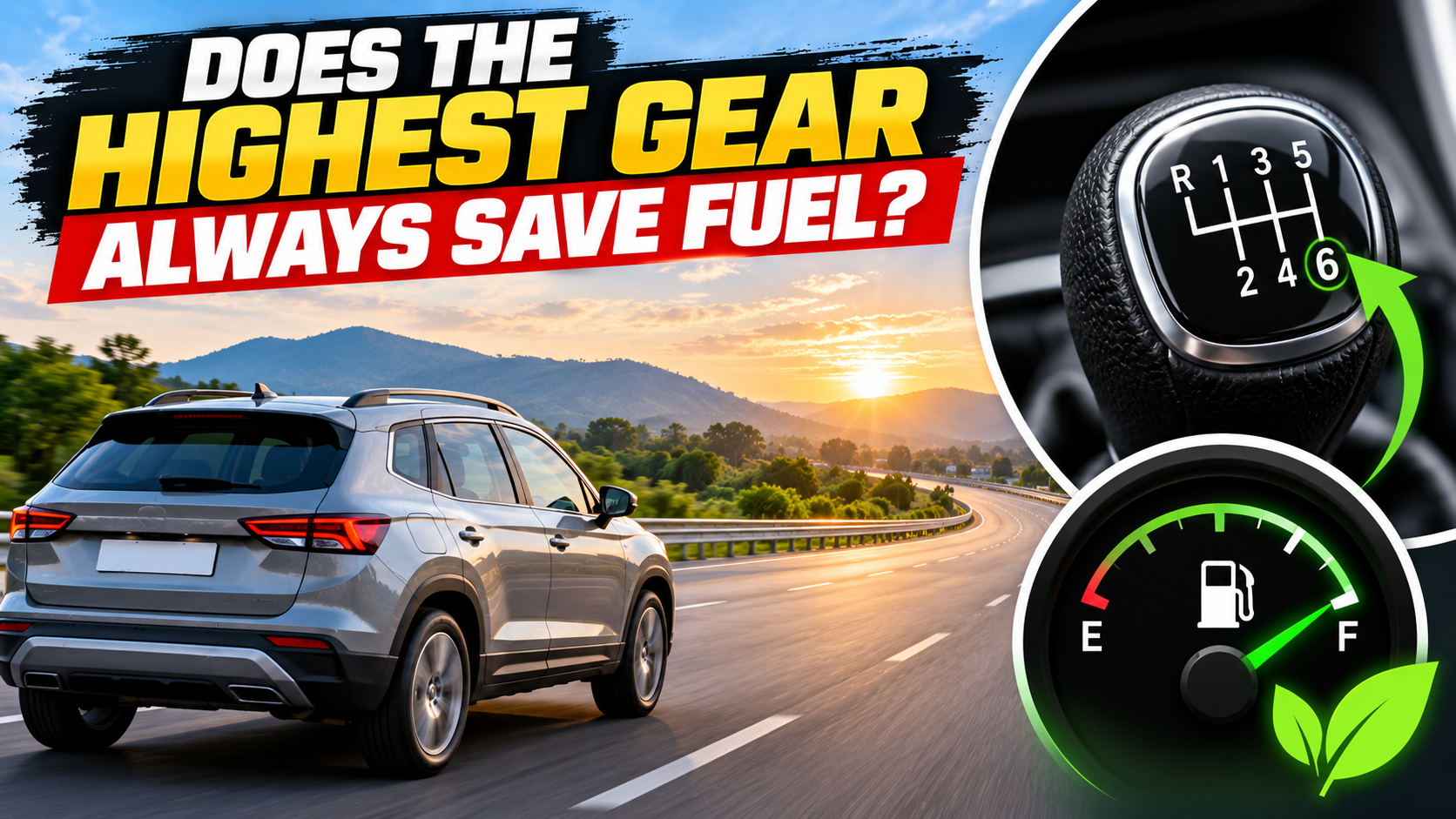
Manual transmissions allowed skilled drivers to choose gears directly, making it possible to keep engine speed low during steady driving.
However, modern automatic transmissions can make gear changes more precisely than many drivers. Their control systems consider factors such as accelerator input, vehicle speed, engine load and driving conditions.
Some automatic cars also have more gear ratios than their manual counterparts, allowing the engine to operate efficiently during acceleration and highway cruising.
The result is that fuel economy depends on the particular car and gearbox combination rather than whether a vehicle is automatic or manual.
Automatic vs Manual Cars: Fuel Efficiency Comparison
|
Transmission Type
|
How It Works
|
General Fuel-Economy Characteristics
|
|
Manual
|
Driver selects gears and operates the clutch
|
Can be efficient with appropriate gear selection and smooth driving
|
|
Torque-converter automatic
|
Uses a torque converter and automatic gear selection
|
Modern versions can deliver competitive fuel economy
|
|
CVT
|
Continuously varies the transmission ratio within its operating range
|
Can help keep the engine in an efficient operating range
|
|
Dual-clutch transmission (DCT)
|
Uses two clutches to manage alternating gear changes
|
Can provide efficient power transfer and quick shifts
|
|
Automated manual transmission (AMT)
|
Uses automated mechanisms to operate a manual-style gearbox
|
Can offer good fuel economy, although shift smoothness varies
|
Can Automatic Cars Deliver Better Mileage Than Manuals?
Yes. Some automatic cars can deliver better fuel economy than their manual equivalents.
Modern automatic transmissions use electronic control systems to determine when to change gears. They can respond to engine load, road speed and accelerator position to select an appropriate ratio.
In highway driving, an automatic transmission with suitable gearing may keep the engine at relatively low revolutions per minute while maintaining cruising speed. This can reduce fuel consumption.
A CVT can also keep the engine operating within an efficient range during steady driving, depending on its design and calibration.
However, these advantages are not universal. A particular automatic version may consume more fuel than the corresponding manual model because of its transmission design, weight, gearing or engine calibration.
The best way to compare two versions is to examine their official fuel-efficiency figures and, where possible, real-world mileage reports from comparable driving conditions.

How Does City Traffic Affect Automatic and Manual Mileage?
Driving conditions can influence fuel consumption more than the transmission type alone.
In congested city traffic, vehicles repeatedly accelerate, slow down and stop. This pattern increases fuel consumption because the engine must repeatedly supply energy to move the vehicle.
Manual drivers may need to operate the clutch frequently and change gears repeatedly. Poor clutch control, unnecessary acceleration and driving in an unsuitable gear can reduce efficiency.
Automatic cars can be more convenient in stop-and-go traffic because they manage gear changes without constant clutch operation. However, they still consume fuel during acceleration and may use additional energy to operate certain transmission systems.
A vehicle equipped with an automatic start-stop system may reduce fuel use during some stationary periods, depending on conditions and system operation.
Neither transmission guarantees better city mileage. Smooth acceleration, anticipating traffic, maintaining tyre pressure and avoiding unnecessary idling can help improve fuel economy in both types of cars.
How to Set a Realistic Car Buying Budget (On-Road Price Explained)
Which Transmission Is Better for Highway Driving?
On highways, fuel economy depends on cruising speed, engine efficiency, gearing, aerodynamics and traffic conditions.
A manual transmission can be efficient when the driver selects an appropriate gear and avoids unnecessarily high engine speeds. However, a modern automatic can also perform well by selecting a suitable cruising gear and adjusting ratios when additional power is required.
Driving at very high speeds generally increases fuel consumption because aerodynamic drag rises significantly with speed. This can have a larger effect on mileage than the choice between manual and automatic transmissions.
For highway journeys, drivers should maintain a steady, legal speed, avoid sudden acceleration and use cruise control when appropriate and safe.
A well-designed automatic transmission can be particularly convenient on long trips because it reduces the need for manual gear changes while maintaining efficient engine operation.
Petrol vs Diesel vs CNG vs Electric Cars: How to Choose the Right Fuel Type
What Other Factors Affect Car Mileage?
Transmission type is only one part of the fuel-efficiency equation. Several other factors influence how much fuel a car consumes.
1. Engine Technology
Engine size, combustion design, turbocharging, fuel injection and engine management systems all affect fuel efficiency.
A smaller engine is not automatically more efficient in every situation. The vehicle's weight, engine tuning and driving requirements also matter.
2. Vehicle Weight
A heavier car generally needs more energy to accelerate. If two otherwise similar vehicles have different weights, the lighter vehicle may have an advantage in some driving conditions.
Additional passengers, luggage and roof-mounted equipment can also increase fuel consumption.
3. Driving Style
Sudden acceleration, harsh braking and frequent unnecessary speed changes can waste energy.
Smooth driving allows the vehicle to maintain momentum and reduces the need for repeated acceleration. Looking ahead and anticipating traffic can improve efficiency in both manual and automatic cars.
4. Tyre Pressure
Underinflated tyres increase rolling resistance, which means the engine needs to use more energy to move the car.
Check tyre pressure regularly and follow the manufacturer's recommended figures. The correct pressure is usually specified in the owner's manual or on a label inside the driver's door area.
5. Vehicle Maintenance
Dirty air filters, worn spark plugs, incorrect engine oil and other maintenance problems can affect engine performance and fuel economy.
Regular servicing helps keep the vehicle operating as intended. Drivers should follow the manufacturer's maintenance schedule rather than replacing components unnecessarily.
6. Air Conditioning and Accessories
Air conditioning can increase fuel consumption because the system requires energy to operate. The effect varies according to outside temperature, vehicle design and how heavily the system is used.
Use climate control sensibly, but do not compromise safe visibility or passenger comfort merely to save a small amount of fuel.
How to Compare Car Variants: Base vs Mid vs Top Trim
Automatic vs Manual Cars: Which Is Cheaper to Own?
Fuel economy is important, but the total cost of ownership includes more than petrol or diesel consumption.
The initial purchase price, servicing, insurance, repairs, transmission maintenance and resale value can all affect the long-term cost.
Manual cars may be less expensive to purchase in some vehicle ranges. However, clutch wear and replacement can add costs, particularly when a vehicle is driven frequently in heavy traffic.
Automatic transmissions vary widely. AMTs, CVTs, DCTs and torque-converter automatics have different designs and maintenance requirements. Repair costs depend on the vehicle, transmission technology, parts availability and the nature of the fault.
|
Ownership Factor
|
Manual Car
|
Automatic Car
|
|
Driving convenience
|
Requires clutch and gear operation
|
Easier in stop-and-go traffic
|
|
Purchase price
|
May be lower for some models
|
May carry a higher price, depending on model
|
|
Fuel economy
|
Can be very efficient
|
Can match or outperform manuals in some models
|
|
Maintenance
|
Clutch and gearbox maintenance may be required
|
Requirements depend on transmission type
|
|
Repair costs
|
Vary by vehicle and fault
|
Some transmission repairs can be expensive
|
|
Highway comfort
|
Requires manual gear changes
|
Convenient for long-distance driving
|
|
Resale value
|
Depends on model and market demand
|
Depends on model, transmission and buyer preferences
|
How to Improve Mileage in Both Automatic and Manual Cars
Regardless of the transmission, a few driving habits can help reduce fuel consumption.
-
Accelerate smoothly instead of pressing the accelerator aggressively.
-
Maintain a steady speed when road and traffic conditions allow.
-
Anticipate traffic and avoid unnecessary braking.
-
Check tyre pressure at recommended intervals.
-
Remove unnecessary heavy items from the car.
-
Service the engine and transmission according to the manufacturer's schedule.
-
Use the recommended engine oil and fuel grade.
-
Avoid prolonged idling when it is safe and appropriate to switch off the engine.
-
Avoid excessive speeds and unnecessary rapid acceleration.
-
Monitor fuel economy over several refills rather than relying on a single trip.
For manual cars, selecting the appropriate gear and avoiding unnecessary high engine speeds can improve efficiency. For automatic cars, use the normal driving mode recommended for everyday conditions unless the situation calls for another mode.
Do not shift into neutral while moving simply to save fuel. Follow the vehicle manufacturer's instructions and maintain control of the car.
How Many Airbags Do You Really Need? A Safety Primer
Final Verdict: Myth or Fact?
Myth. Automatic cars do not always consume more fuel than manual cars.
Older automatic transmissions often had a fuel-efficiency disadvantage, but modern technology has narrowed the gap. Depending on the vehicle, an automatic transmission may deliver mileage comparable to or better than a manual gearbox.
The actual result depends on the engine, transmission design, vehicle weight, traffic, driving habits and maintenance condition. Therefore, buyers should compare the official fuel-economy figures for the exact variants they are considering and look for reliable real-world results.
Choose a manual if you prefer direct gear control and find it suitable for your driving needs. Choose an automatic if convenience, particularly in heavy traffic, is a priority. Either can be economical when properly maintained and driven sensibly.

 Khyati Sharma 2026-09-14