Khyati Sharma 2026-09-07
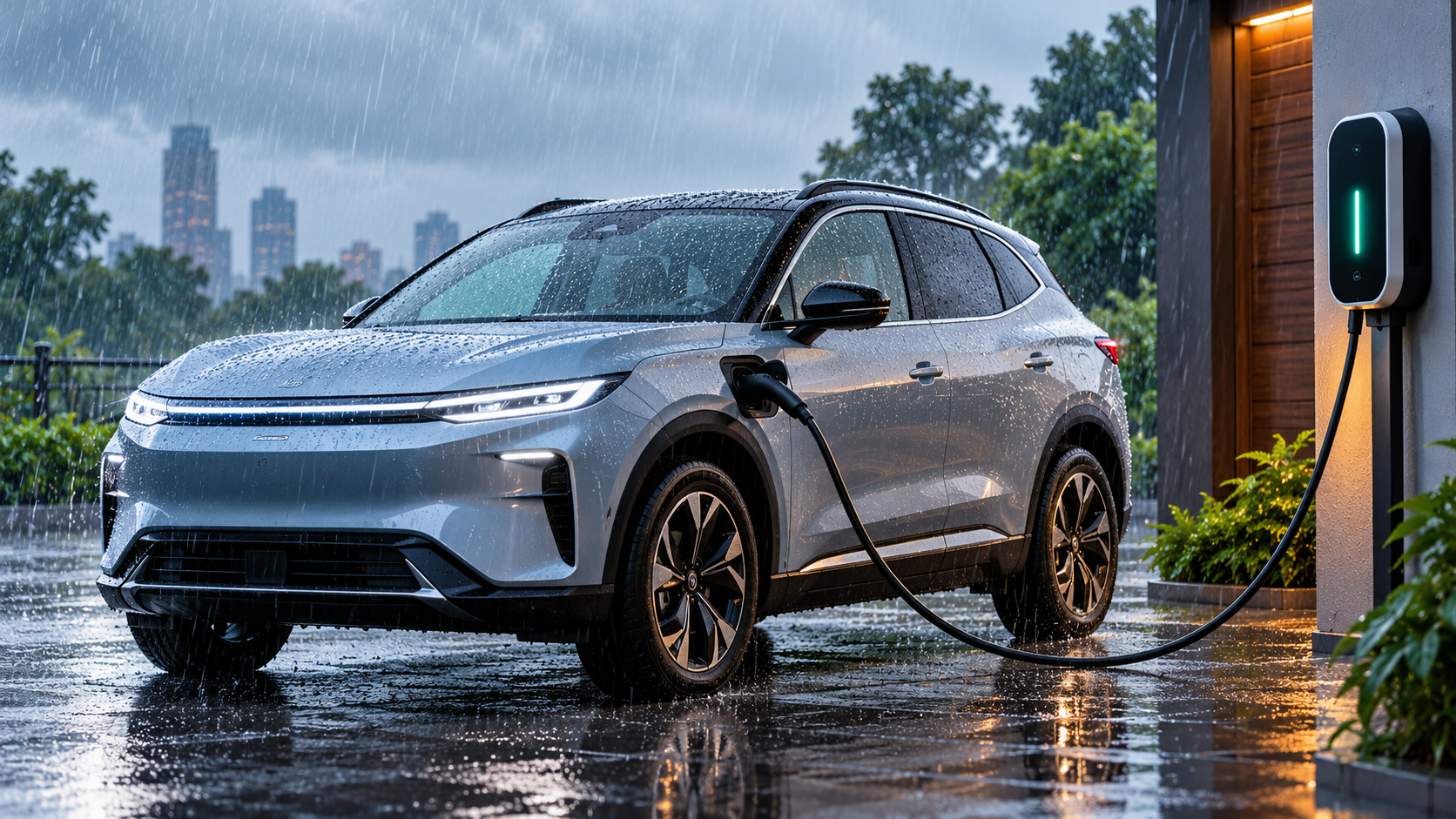
Electric vehicles are designed to operate in rainy weather, and charging them in the rain is generally safe when the vehicle and charging equipment are used according to the manufacturer's instructions. However, flooding, damaged charging cables, and unsafe electrical installations can create serious risks.
Electric cars and other vehicles (EVs) are becoming increasingly popular in India, with more buyers choosing electric cars, SUVs, and two-wheelers for their daily transportation needs. Despite their growing popularity, several myths about EV safety continue to create confusion among potential owners.
One common belief is that an electric vehicle cannot be driven or charged when it rains because water and electricity are a dangerous combination. This concern is understandable, especially because EVs use high-voltage battery packs and electric motors instead of conventional petrol or diesel engines.
However, modern electric vehicles are engineered with protective enclosures, insulation, sealed electrical connections, and sophisticated safety systems. These features allow them to operate in normal wet-weather conditions when properly maintained.
So, is it dangerous to drive an EV through rain? Can you plug an electric car into a charger during a downpour? What happens if water reaches the battery?
Let's separate the facts from the myths and understand how electric vehicles handle rainy weather.
Hatchback vs Sedan vs SUV: Which Car Type Suits You Best?
Yes, driving an electric vehicle in normal rainy weather is generally safe. Modern EVs are designed to handle everyday environmental conditions, including rain, wet roads, and water splashes.
The high-voltage battery and other critical electrical components are protected by specially designed enclosures. Electrical connectors are also engineered to provide appropriate protection against moisture under specified operating conditions.
When an EV is manufactured, its electrical systems are designed and tested to meet applicable safety and environmental requirements. These protections help prevent rainwater from reaching sensitive electrical components during normal use.
However, this does not mean an EV is waterproof under every circumstance. Driving through deep floodwater, exposing damaged electrical components to water, or ignoring manufacturer warnings can create dangerous situations.
The same principle applies to conventional vehicles. Heavy rain reduces visibility, decreases tyre grip, and can cause dangerous road conditions regardless of the vehicle's powertrain.

One of the biggest concerns among EV owners is whether rainwater can enter the battery pack and cause an electrical short circuit.
Electric vehicle batteries are generally housed in robust enclosures mounted within the vehicle's structure, often underneath the floor. These enclosures are designed to protect battery cells and associated electrical components from environmental exposure.
Several protective features help achieve this.
1. Sealed Battery Enclosures
The battery pack uses a specially designed housing, seals, and joints to limit water and dust intrusion. The level of protection depends on the vehicle's design and its specified ingress-protection rating.
These enclosures are intended to withstand the conditions described by the manufacturer, including ordinary wet-weather exposure.
2. Insulated High-Voltage Components
High-voltage cables and electrical connections use insulation and protective coverings to reduce the risk of unintended electrical contact.
Connectors are designed for their intended operating environments, and some incorporate additional sealing and locking mechanisms.
3. Battery Management System
An EV's battery management system monitors important battery parameters, such as temperature, voltage, and current. Depending on the vehicle, other systems monitor electrical faults and insulation conditions.
If a serious fault is detected, the vehicle may restrict operation or disconnect high-voltage components.
However, these systems are not a substitute for proper maintenance or protection against flooding and physical damage.
4. Charging Safety Mechanisms
EV charging systems incorporate controls designed to manage the electrical connection between the vehicle and the charging equipment. Charging should only proceed when the relevant safety conditions are satisfied.
Drivers should never assume that every charging cable, connector, or electrical outlet is safe simply because it is being used for an EV.
How to Compare Car Variants: Base vs Mid vs Top Trim
Yes, you can generally charge an electric car in the rain when using compatible charging equipment that is installed and operated according to the manufacturer's instructions.
EV charging connectors and charging equipment are designed with safety measures appropriate to their intended use. Many charging systems are built to withstand specified outdoor conditions, including rain.
This means that ordinary rainfall does not automatically make EV charging unsafe.
However, the condition and suitability of the charging equipment matter considerably.
Before charging in wet weather, keep these points in mind:
Use the manufacturer's recommended charger or a compatible, certified charging unit.
Check the charging cable and connector for visible damage before use.
Make sure the charging point is suitable for outdoor installation if it is exposed to rain.
Keep the connector and charging inlet free from dirt, standing water, and contamination.
Follow the charging equipment's instructions for connecting and disconnecting the cable.
Never handle exposed electrical contacts or attempt to repair a wet or damaged charger yourself.
A properly installed outdoor charger can be suitable for rainy conditions. An improvised connection or damaged electrical equipment is a different matter.
What About Public EV Charging Stations?
Public charging stations are commonly installed in parking areas, shopping centres, offices, and roadside locations. Some are exposed to outdoor weather, while others are protected by roofs or canopies.
If a public charging station is designed for outdoor use and appears to be in good condition, rain alone is not generally a reason to avoid it.
However, do not use a charger if its cable is cut, its connector is visibly damaged, its electrical housing is broken, or water appears to have entered components that should remain protected.
If the station displays a fault or safety warning, choose another charger and report the problem to the operator.
An EV battery is designed to resist water intrusion under specified conditions, but water entering a damaged or inadequately protected battery pack can create serious problems.
Potential consequences include electrical faults, corrosion, insulation failures, and damage to battery components. In some circumstances, battery damage can also create a fire risk.
This is why driving through floodwater is particularly dangerous. Deep water can expose a vehicle to conditions beyond those for which its battery enclosure and other systems were designed.
After a vehicle has been submerged or exposed to significant flooding, drivers should not assume it is safe merely because the car still starts or appears to operate normally.
Warning signs such as unusual smells, smoke, hissing sounds, warning messages, or abnormal battery behaviour require immediate attention. Move away from the vehicle if there are signs of a serious electrical or battery fault and contact emergency services when necessary.
A flood-exposed EV should be assessed by an appropriately qualified service professional before being driven or charged again.

Manual vs Automatic Car: Pros and Cons Explained
This is where drivers need to be especially careful.
Although electric cars can handle ordinary rain and wet roads, they are not automatically safe in deep standing water.
Floodwater can conceal potholes, damaged road surfaces, open drains, and other hazards. It can also affect the vehicle's electrical systems, braking performance, tyres, and underbody components.
The risk depends on the water depth, current, vehicle design, ground clearance, and manufacturer's restrictions.
Electric vehicles should not be assumed to have a greater safe wading depth than petrol or diesel cars simply because their batteries are enclosed.
Never drive through moving floodwater or water of unknown depth. Even a relatively shallow-looking flooded road can be dangerous, particularly when the road surface is hidden.
If a route is flooded, choose a safer alternative. If water begins rising around a stationary vehicle, prioritise personal safety and follow local emergency guidance rather than attempting to protect the car.
|
Factor |
Electric vehicle |
Petrol or diesel vehicle |
|
Driving in normal rain |
Generally safe when maintained properly |
Generally safe when maintained properly |
|
Electrical protection |
High-voltage systems are designed with protective enclosures and insulation |
Uses a conventional electrical system, including a battery and ignition or control electronics |
|
Charging in rain |
Possible with suitable, properly installed charging equipment |
Does not require external charging for normal operation |
|
Deep floodwater |
Can damage battery and electrical systems; avoid unsafe water |
Can damage the engine, intake, electronics, and other components |
|
Wet-road braking |
Depends on tyres, brakes, speed, and vehicle systems |
Depends on tyres, brakes, speed, and vehicle systems |
|
Heavy-rain visibility |
Requires appropriate speed, lighting, and windscreen maintenance |
Requires appropriate speed, lighting, and windscreen maintenance |
Electric car owners can follow a few simple practices to make rainy journeys safer.
1. Check Your Tyres
Tyres play a major role in maintaining grip on wet roads. Worn tread can increase the risk of losing traction and aquaplaning, when a layer of water reduces contact between the tyres and the road.
Check tyre pressure and tread condition regularly, following the vehicle manufacturer's recommendations.
2. Reduce Your Speed
Wet roads can increase stopping distances and make sudden steering or braking more dangerous.
Drive at a speed appropriate for the visibility, road surface, traffic, and rainfall. Leave additional distance between your vehicle and the one ahead.
3. Avoid Deep Water
Do not assume that an EV can safely cross a flooded road because its battery is sealed. Water may reach components that are not designed for submersion.
Avoid flooded underpasses, submerged bridges, and roads where the depth or current is uncertain.
4. Check the Brakes
Water can temporarily affect braking response. After travelling through ordinary shallow water, follow the vehicle manual's advice on braking and safe operation.
If the brakes feel abnormal or a warning appears, stop somewhere safe and arrange a professional inspection.
5. Use Lights and Windscreen Wipers
Heavy rain can sharply reduce visibility. Use the appropriate lights, maintain clean windows, and ensure your windscreen wipers are in good condition.
Avoid unnecessary journeys during severe weather when visibility or road conditions are dangerous.
Manual vs Automatic Car: Pros and Cons Explained
Charging in wet weather is generally safe with appropriate equipment, but good practices remain essential.
Use a suitable charging point: Outdoor charging equipment must be rated for its intended environment and installed correctly.
Inspect cables and connectors: Do not use equipment with cracked housings, exposed wires, damaged insulation, or loose connections.
Keep connections properly protected: Follow the equipment manufacturer's instructions regarding water exposure. Do not force a connector into a wet or contaminated charging inlet.
Avoid standing water: Never place charging equipment or electrical connections in standing floodwater, and do not approach damaged electrical equipment in a flooded area.
Do not use improvised wiring: Avoid makeshift adapters, unsuitable extension leads, and unapproved electrical connections.
Follow warning messages: If the car or charger displays a fault, stop the charging process according to the instructions and contact the relevant service provider.
If you suspect electrical damage or flooding, do not touch potentially damaged high-voltage components. Seek professional assistance.
|
Myth |
Fact |
|
EVs cannot be driven in the rain |
Modern EVs are designed for normal wet-weather driving |
|
Charging an EV in the rain always causes an electric shock |
Suitable, properly installed charging systems are designed with electrical safety protections |
|
Rainwater will automatically damage an EV battery |
The battery enclosure is designed to resist water intrusion under specified conditions |
|
EVs can safely drive through any floodwater |
Flooding can damage the battery and electrical systems and create serious hazards |
|
Petrol cars are always safer than EVs in rain |
Safety depends on the vehicle, road conditions, maintenance, and driving behaviour |
|
A flooded EV is safe if it still starts |
Flood exposure can cause hidden damage and requires professional assessment |
Myth. Modern electric vehicles can generally be driven in normal rainy weather and charged in the rain using suitable charging equipment installed and operated according to the manufacturer's instructions.
Their battery enclosures, insulation, and charging safety systems are designed to protect critical electrical components under specified conditions.
However, this protection has limits. Deep floodwater, damaged charging cables, unsafe electrical installations, and water intrusion following an accident can create serious hazards.
EV owners should therefore distinguish between ordinary rain and dangerous flooding. Maintain the vehicle, inspect charging equipment, follow the owner's manual, and avoid submerged roads.









Mahindra
₹11.39 - 14.95 Lakh