
 Khyati Sharma 2026-09-17
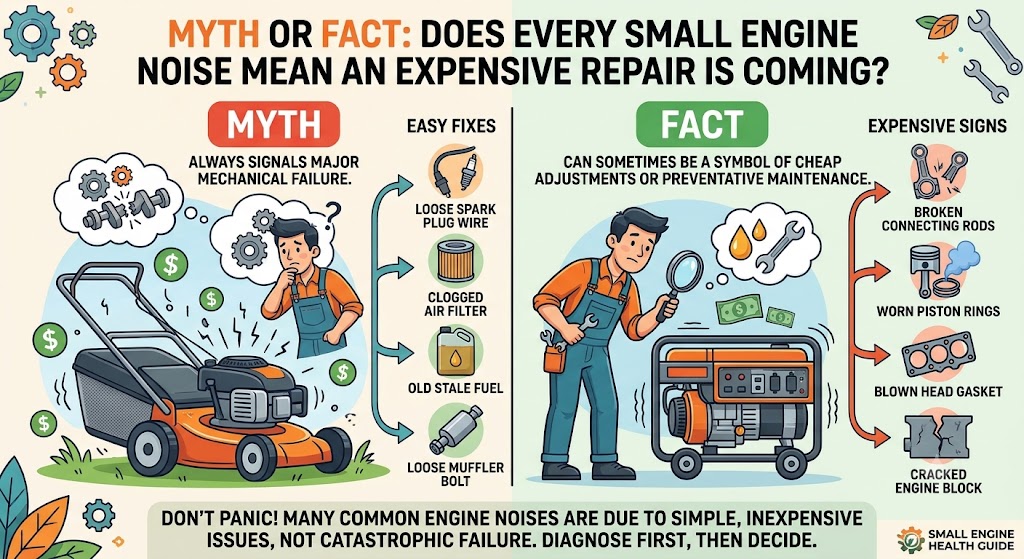
Myth or Fact: Every small engine noise means an expensive repair is coming. Many car owners become worried when they hear an unfamiliar sound from under the bonnet. A slight ticking noise, a brief rattle during startup, or a faint squeal can make drivers imagine costly engine damage. However, not every unusual sound indicates a serious mechanical problem.
Cars contain many moving components, including belts, pulleys, valves, injectors, fans and pumps. Some naturally produce sounds during normal operation. Others may become noisy because of loose parts, wear, low fluid levels or a developing mechanical fault. The important thing is to understand what the noise sounds like, when it occurs and whether it changes over time.
The truth is that a small engine noise does not automatically mean an expensive repair is coming. Some noises have simple explanations, while others are early warning signs that should not be ignored. Identifying the difference can help you avoid unnecessary panic and prevent minor problems from becoming major repairs.
New Car Dealer Negotiation Tips That Actually Work
No. A car engine does not operate silently. Its internal components move rapidly, fuel is injected, and accessories such as the alternator and cooling system operate while the engine is running. These processes can produce normal mechanical sounds.
For example, some modern petrol engines produce a light ticking sound from their fuel injectors. Certain diesel engines are naturally louder than petrol engines. A brief change in engine sound during a cold start may also occur as oil circulates and the engine reaches its normal operating temperature.
However, a sound that suddenly appears, becomes louder or is accompanied by vibration, warning lights, smoke or a loss of power deserves attention.
The key is to distinguish between a familiar operating sound and a new or changing noise. You should never assume that a sound is harmless simply because it is quiet.

A light ticking noise is one of the most common sounds that worries car owners. It may be heard while the engine is idling, particularly when the bonnet is open.
In some vehicles, fuel injectors make a rapid clicking sound as they deliver fuel. Valve-train components may also produce a light mechanical ticking during normal operation. The exact sound depends on the engine design.
A ticking noise can become more noticeable when the engine is cold or when you are standing close to the engine bay. If it has always been present and the vehicle runs smoothly, it may simply be part of normal operation.
However, a new or unusually loud ticking sound can have other causes. Low engine oil, an oil-pressure problem or worn internal components may produce abnormal noises.
What should you do? Check the engine oil level according to the owner's manual and look for warning lights. If the ticking is new, persistent or getting louder, arrange an inspection instead of assuming it is normal.
Some cars produce a short rattling sound when the engine starts, particularly after the vehicle has been parked for several hours.
Possible causes include components that briefly make noise before oil pressure stabilises, a loose heat shield or a worn accessory component. In other cases, the sound may come from a timing-chain tensioner or another part that requires professional attention.
The duration and pattern of the rattle matter. A brief sound that has remained unchanged for a long time is different from a harsh metallic rattle that appears suddenly or lasts longer with every start.
Do not ignore a repeated startup rattle simply because it disappears after a few seconds. Some mechanical problems are easiest to identify during cold starts.
If the noise is loud, metallic or accompanied by an oil-pressure warning, switch off the engine safely and seek professional advice before driving further.
How to Set a Realistic Car Buying Budget (On-Road Price Explained)
A high-pitched squeal from the engine bay does not necessarily mean the engine itself is damaged.
One possible cause is an accessory belt that has become worn, loose or contaminated. The belt may drive components such as the alternator or air-conditioning compressor, depending on the vehicle's design.
A squeal that occurs when starting the engine, accelerating or switching on the air conditioner may help a mechanic identify the source.
Other possibilities include a pulley or bearing that is wearing out. These components can produce noise before they stop functioning correctly.
Although belt-related problems may be less expensive than major internal engine repairs, delaying attention can cause additional issues if a belt fails. The consequences depend on which belt is affected and how the vehicle is designed.
If you hear a repeated squeal, arrange an inspection. Avoid putting your hands near belts or pulleys while the engine is running.
An engine knocking sound deserves more attention than many ordinary ticking or squealing noises.
A light, occasional sound may come from a loose component or another source outside the engine's internal mechanisms. However, a deep metallic knock that increases with engine speed or load can indicate a serious mechanical problem.
Possible causes include abnormal combustion, lubrication problems or worn internal engine components. The exact cause cannot be confirmed from the sound alone.
If the engine develops a loud knock, runs roughly or loses power, stop driving when it is safe to do so. Continuing to operate an engine with a serious internal fault can increase damage and repair costs.
A knocking noise accompanied by an oil-pressure warning is especially concerning. Switch off the engine as soon as it is safe and seek professional assistance.

Drivers sometimes hear clicking sounds while turning the steering wheel or moving around a corner and assume the engine is responsible.
In some vehicles, repeated clicking during tight turns can be associated with a worn constant-velocity (CV) joint in the drive axle. This is a drivetrain component, not an internal engine part.
A clicking sound that occurs when the vehicle is moving, particularly during a turn, can help distinguish this problem from a noise that continues while the vehicle is stationary.
Other possible causes include loose wheel-area components or issues involving the suspension. The sound's location and when it happens are important clues.
If clicking is repeated during turns, have the vehicle inspected. A problem outside the engine can still affect safety and may become more expensive if left unresolved.
Car Waiting Period: How to Get Your New Car Faster
Engine oil lubricates moving parts, reduces friction and helps carry heat away from important components. If the oil level is too low, some engine parts may not receive adequate lubrication.
This can lead to ticking, tapping or more serious mechanical noises, depending on the engine and the severity of the problem.
Low oil does not always mean the engine needs an expensive repair. The level may have dropped because of a leak or oil consumption, but the underlying cause must be identified.
Park the vehicle on a level surface and follow the owner's manual when checking the oil. Many vehicles require the engine to be switched off for a specified period before checking the dipstick; others use an electronic oil-level system.
If the oil is below the recommended level, use only the correct oil specification and follow the manufacturer's instructions. Do not overfill the engine, as excess oil can also cause problems.
Remember that the oil level and oil pressure are different things. If the oil-pressure warning light comes on while the engine is running, stop safely and switch off the engine. Adding oil alone may not resolve an oil-pressure fault.
|
Engine noise or symptom |
Possible explanation |
Recommended action |
|
Light, consistent ticking |
Fuel injectors or normal valve-train operation |
Compare with the vehicle's usual sound; inspect if it changes |
|
Brief startup rattle |
Loose heat shield or a component needing inspection |
Arrange an inspection if repeated, loud or worsening |
|
High-pitched squeal |
Worn belt, pulley or bearing |
Have the accessory system checked |
|
Deep metallic knocking |
Possible serious mechanical or combustion problem |
Stop safely if loud or persistent; seek professional help |
|
Clicking during turns |
Possible CV joint or drivetrain issue |
Arrange a mechanical inspection |
|
Noise with oil-pressure warning |
Possible lubrication or oil-pressure fault |
Switch off safely and seek assistance |
|
Noise with overheating or loss of power |
Possible cooling or engine problem |
Stop safely and do not continue driving if unsafe |
Although not every small sound signals a costly repair, ignoring a developing problem can increase the final bill.
For example, a worn accessory belt may be relatively straightforward to replace. If the noise is actually coming from a failing pulley or bearing, the mechanic may need to repair that component instead. If the problem is ignored and another component is affected, the repair may become more complicated.
The same principle applies to engine lubrication. A low oil level may be manageable when discovered early. Continued driving with insufficient lubrication, however, can damage internal components.
This is why early inspection is often more economical than waiting for a warning light, breakdown or major performance problem.
At the same time, replacing parts without identifying the source of the noise can waste money. Ask the workshop to explain the diagnosis, identify the affected component and provide an estimate before authorising repairs.
Best Time of the Year to Buy a New Car in India
You do not need to be a trained mechanic to notice useful warning signs. A few careful observations can help a professional diagnose the problem more quickly.
First, notice when the sound occurs. Does it happen during a cold start, while idling, when accelerating, when turning or when using the air conditioner?
Second, check the dashboard. An oil-pressure warning, temperature warning or engine warning light can provide important information. Do not continue driving simply because the engine still sounds normal.
Third, look for visible signs. Once the vehicle is safely parked and switched off, check for obvious fluid leaks or loose parts that are easy to see without touching hot or moving components.
Fourth, record the sound if it is safe. A short audio or video recording may help the mechanic understand when the noise occurs. Never lean into a running engine bay or place a phone near moving belts to capture it.
Finally, arrange an inspection when necessary. Explain the sound, when it started, whether it is getting worse and whether the car has experienced any changes in performance.

Regular maintenance can reduce the risk of many noise-related problems, although it cannot prevent every mechanical fault.
Follow the manufacturer's recommended service intervals for engine oil, filters, belts and other maintenance items. Use the correct oil grade and specification for your vehicle, and investigate repeated oil-level drops rather than simply topping up indefinitely.
Pay attention to unusual vibrations, changes in fuel consumption, rough idling and warning lights. These symptoms may provide additional clues about a developing problem.
It is also important to use a qualified mechanic who can diagnose the source of a noise rather than replacing parts based on guesswork.
Routine maintenance does not guarantee that repairs will never be needed. However, it helps identify wear and developing faults before they have a chance to cause more extensive damage.
Car Waiting Period: How to Get Your New Car Faster
Myth: Every small engine noise means an expensive repair is coming.
A light ticking sound, brief rattle or occasional squeal may have a relatively simple explanation, and some engine noises are normal for a particular vehicle. However, a new, persistent or worsening sound can be an early warning of a mechanical problem.
The safest approach is to pay attention to changes rather than panic over every sound. Check for warning lights, monitor oil levels according to the owner's manual and seek professional help when a noise is unusual or accompanied by other symptoms.
If you hear loud metallic knocking, notice an oil-pressure warning or experience overheating, stop driving as soon as it is safe and arrange assistance.














.webp)