
 Khyati Sharma 2026-09-16
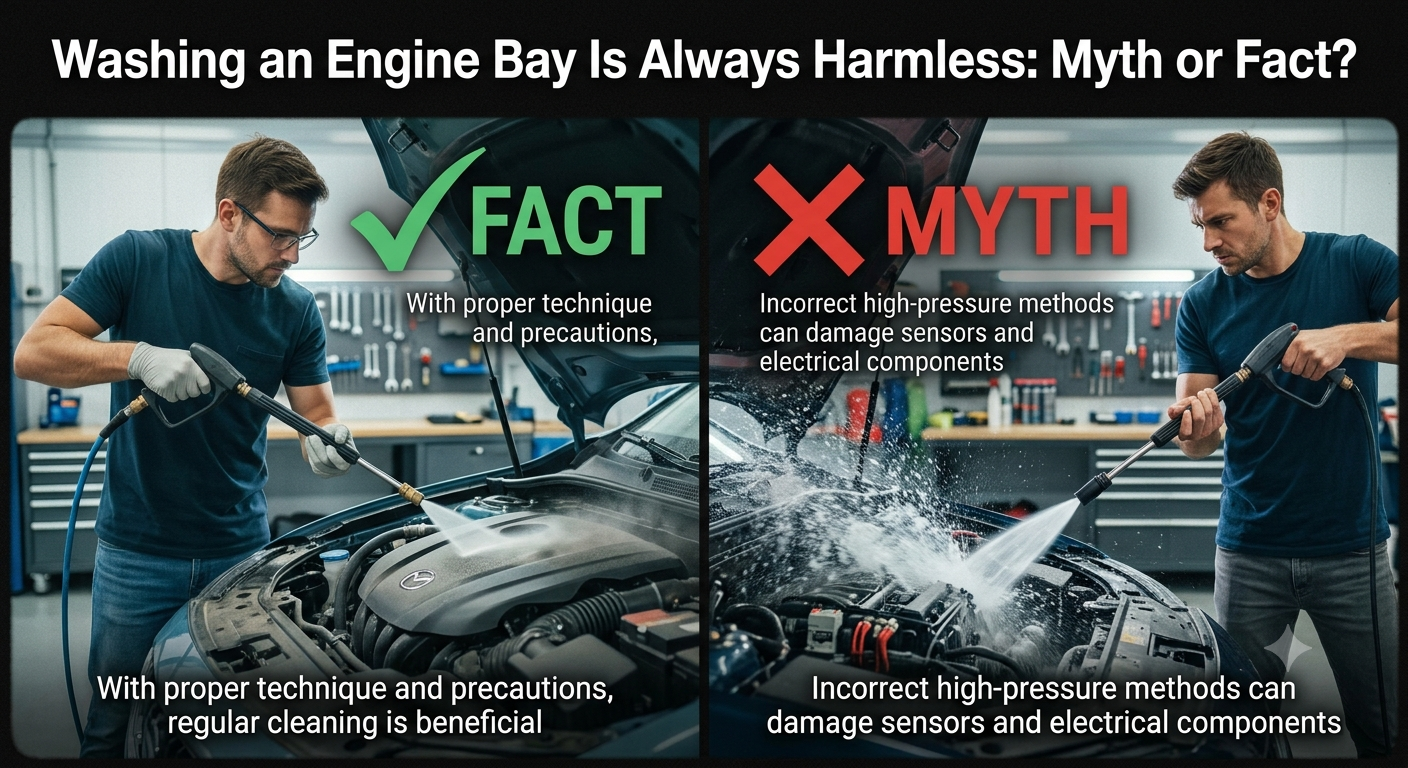
The Truth: Myth. Washing a car's engine bay is not always harmless. Although cleaning the engine compartment can remove dust, grease, oil residue and road grime, using excessive water pressure or the wrong cleaning products can damage sensitive electrical components, electrical connectors, sensors and other parts.
Modern vehicles contain numerous electronic systems under the bonnet, including engine control modules, ignition components, wiring harnesses and sensors. Many are designed to withstand normal driving conditions, rain and splashes, but that does not mean every component can safely tolerate direct water jets or aggressive cleaning.
The good news is that an engine bay can be cleaned safely when the correct method is used. Understanding the risks, preparing the vehicle properly and choosing appropriate cleaning products can help keep the engine compartment clean without creating unnecessary problems.
In this Wheels42 guide, we explain why engine bay washing can be risky, which components need extra protection, how to clean the area safely and when professional cleaning is the better option.
How to Compare Car Variants: Base vs Mid vs Top Trim
The engine bay collects dirt over time. Dust enters through ventilation openings, while oil mist, road grime and other contaminants can accumulate around engine covers, hoses and surrounding components.
Cleaning this area can offer several benefits.
Better appearance: A clean engine compartment can make a used car look better maintained.
Easier inspection: Excessive dirt and grime can hide leaks, damaged hoses or loose connections. Cleaning may make these issues easier to identify.
Removal of contaminants: Appropriate cleaning can remove accumulated dust, grease and residue.
Maintenance checks: A cleaner compartment can make routine visual inspections more convenient.
However, engine bay cleaning is primarily a maintenance and inspection task, not something every car needs at frequent intervals. If the compartment is reasonably clean, a simple visual inspection may be sufficient.
Cleaning should also never be used to conceal an oil leak or another mechanical problem before selling a vehicle.
How to Choose Between Two Similar Car Models: A Decision Framework
The main risk comes from introducing water, pressure or unsuitable chemicals into areas that are not intended to receive them directly.
1. Damage to Electrical Components
Modern cars depend on electronic control systems to manage engine operation, fuel delivery, ignition, emissions and other functions.
Electrical connectors and control units are often designed to resist moisture to a specified level. Nevertheless, damaged seals, exposed connectors or direct high-pressure spraying can allow water to enter places where it should not.
Depending on the component and the amount of moisture involved, this may cause temporary malfunctions, warning lights, starting problems or electrical faults.
2. Problems With Ignition Components
Ignition coils, spark-plug wells and related electrical components require particular care. If water enters an area where it can interfere with ignition, the engine may run roughly, misfire or struggle to start.
Some vehicles have better protection than others, so it is important to follow the manufacturer's cleaning instructions rather than assume every engine can tolerate the same treatment.

3. Water Entering Air Intake Components
The engine air intake is another area that needs attention. Water entering the intake system can cause serious engine damage in extreme cases, particularly if enough liquid reaches the cylinders.
This is different from ordinary moisture on the outside of an air intake housing. The danger arises when water is drawn into the engine in sufficient quantity to interfere with its operation.
Never direct a hose or pressure washer into an air intake opening, and ensure exposed intake components are properly protected before cleaning.
4. Damage From High-Pressure Water
A pressure washer may seem like an effective way to remove stubborn dirt, but its concentrated jet can force water past seals, damage delicate wiring insulation, dislodge clips or affect sensitive components.
It can also push dirt deeper into electrical connectors rather than remove it safely.
For most routine engine bay cleaning, a damp microfibre cloth, soft detailing brush and suitable automotive cleaner are more appropriate than a powerful water jet.
5. Corrosion and Electrical Problems
Water trapped in connectors or around damaged electrical insulation can contribute to corrosion over time. Corrosion may increase electrical resistance and eventually lead to intermittent faults.
The risk depends on the component's design, existing condition, water exposure and how effectively the area dries afterward.
This is one reason why cleaning should be followed by a careful inspection rather than assuming the job is complete once the visible dirt has disappeared.
|
Component |
Potential Risk |
Recommended Precaution |
|
Engine control unit and electronic modules |
Moisture entering connectors or housings |
Follow manufacturer guidance and avoid direct spraying |
|
Electrical connectors and wiring |
Water intrusion, corrosion or loose connections |
Avoid high-pressure jets and inspect damaged seals |
|
Ignition coils and spark-plug wells |
Misfiring or starting problems if water enters |
Keep moisture away and follow vehicle-specific instructions |
|
Air intake and air filter housing |
Water entering the intake system |
Keep intake openings protected and never spray directly into them |
|
Alternator and exposed electrical components |
Water intrusion or electrical malfunction, depending on design |
Use controlled, low-moisture cleaning |
|
Sensors and their connectors |
Potential signal faults or connector problems |
Clean gently without pulling or soaking wiring |
|
Belts and rubber hoses |
Possible effects from unsuitable chemicals or aggressive scrubbing |
Use compatible cleaners and inspect for existing wear |
|
Battery terminals |
Corrosion or electrical issues if moisture and contamination remain |
Follow the owner's manual and use suitable cleaning methods |
Water is not automatically dangerous to every engine compartment. Some vehicles can tolerate carefully controlled rinsing when the manufacturer's procedure is followed.
The important distinction is between a controlled cleaning process and indiscriminately spraying water throughout the engine bay.
A gentle, limited application may be suitable for certain vehicles, while others may require a predominantly dry-cleaning method. Older vehicles, vehicles with damaged seals, modified wiring or aftermarket electrical equipment may need additional precautions.
Avoid the assumption that a waterproof-looking component is completely waterproof. A connector may resist splashes but still be vulnerable to high-pressure water or prolonged exposure.
If the owner's manual advises against washing the engine compartment, follow that instruction. When the correct procedure is unclear, consult an authorised service centre or a qualified detailing professional.
How Many Airbags Do You Really Need? A Safety Primer
For light dirt and dust, a low-moisture cleaning method is generally the most cautious starting point.
Step 1: Switch Off the Engine and Let It Cool
Never begin cleaning immediately after a drive when the engine and surrounding components are hot.
Allow the engine compartment to cool sufficiently before working. Applying cold water to very hot components can create thermal stress, while hot surfaces can also cause burns.
Park on a level surface, switch off the ignition and remove the key or keep the vehicle's start system inactive.
Step 2: Read the Owner's Manual
Check whether the manufacturer provides specific engine compartment cleaning instructions.
Some vehicles have particular precautions for hybrid systems, electric vehicles, exposed terminals or electronic components. Follow the instructions for your exact model rather than relying on a generic cleaning tutorial.
For electric and hybrid vehicles, do not touch high-voltage cables, orange high-voltage components or sealed electrical systems.
Step 3: Remove Loose Dust First
Use a soft detailing brush or a clean microfibre cloth to remove loose dust and debris.
Work gently around plastic covers, hoses and wiring. Avoid pulling connectors, disturbing clips or brushing aggressively against fragile components.
For dry dust, this step may remove much of the visible dirt without needing water at all.

Step 4: Protect Sensitive Areas Where Appropriate
If the manufacturer's instructions permit cleaning, identify any components or openings that require protection.
Pay attention to exposed electrical connectors, air intake openings and aftermarket electrical equipment. Protection must be appropriate for the vehicle and should not involve disturbing or disconnecting safety-critical components unnecessarily.
Do not remove electrical connectors or covers unless the manufacturer's procedure specifically requires it and you know how to refit them correctly.
Step 5: Use an Appropriate Automotive Cleaner
Choose a cleaner specifically intended for engine bay or automotive detailing use. Read the label to confirm compatibility with plastic, rubber, painted surfaces and other materials present in the compartment.
Apply the product in a controlled manner, preferably to a cloth or brush when suitable. Avoid spraying directly into connectors, openings or delicate electrical areas.
Do not use petrol, kerosene, strong solvents or household chemicals as general-purpose engine cleaners. Some products can damage rubber, plastic, protective coatings or painted surfaces.
Step 6: Wipe Away Residue Carefully
Use clean microfibre cloths and a soft brush to remove loosened grime.
If the cleaning product requires rinsing, follow its directions and the vehicle manufacturer's approved procedure. Avoid assuming that a pressure washer or unrestricted hose is safe.
For sensitive or older engine compartments, professional cleaning may be preferable to experimenting with water.
Step 7: Dry and Inspect the Area
Use clean, absorbent cloths to remove remaining moisture from accessible surfaces.
Allow the compartment to dry adequately before starting the vehicle. Inspect for pooled water, displaced covers, loose clips or visible damage.
If you notice water inside a connector or other sensitive component, do not repeatedly attempt to start the vehicle. Follow the manufacturer's guidance or contact a qualified technician.
|
Common Mistake |
Why It Is Risky |
Safer Alternative |
|
Using a high-pressure washer directly on the engine |
May force water past seals or damage components |
Use controlled, low-moisture cleaning |
|
Cleaning a hot engine |
Risk of burns and thermal stress |
Let the engine cool first |
|
Spraying directly into the air intake |
Water may enter the engine |
Keep intake openings protected |
|
Using strong household chemicals |
May damage plastics, rubber or coatings |
Choose a compatible automotive cleaner |
|
Starting the car immediately after soaking it |
Moisture may interfere with electrical or ignition components |
Allow adequate drying and inspect first |
|
Ignoring warning lights after cleaning |
May overlook an electrical or mechanical fault |
Stop and investigate the warning appropriately |
|
Cleaning to hide an oil leak |
Dirt removal does not repair the underlying fault |
Diagnose and repair the leak |
There is no universal schedule for engine bay washing. The appropriate frequency depends on driving conditions, vehicle design and the amount of dirt accumulating under the bonnet.
A vehicle driven mainly on paved city roads may need only occasional light dust removal. Cars frequently driven on muddy roads or in dusty environments may require more frequent inspections and targeted cleaning.
For most owners, the priority should be maintaining a clean enough compartment to inspect important components rather than achieving a showroom appearance.
Avoid unnecessary deep cleaning, particularly if the manufacturer does not recommend it. Regular visual inspections can often identify leaks, damaged hoses, worn belts and other problems without extensive washing.
Company-Fitted vs Aftermarket Accessories: Which Is Better?
Professional cleaning is worth considering if the engine compartment has heavy oil deposits, thick mud or difficult-to-remove contamination.
It may also be the safer option when the vehicle has sensitive electronics, modified wiring, aftermarket accessories or a history of electrical issues.
Before booking, ask the detailer about their cleaning method, the products they use and how they protect electrical components. A professional service should understand that the objective is to remove contamination without introducing moisture-related problems.
If the engine bay contains a significant oil leak, fuel residue or another potentially hazardous substance, address the underlying issue rather than simply washing the area.
Myth. Washing an engine bay is not always harmless.
A carefully controlled cleaning process can remove dirt and make maintenance inspections easier, but excessive water pressure, unsuitable chemicals and moisture entering sensitive components can cause damage.
The safest approach is to check the owner's manual, allow the engine to cool, remove loose dirt with suitable tools, use compatible automotive cleaning products and avoid direct spraying of sensitive electrical areas and air intake openings.
If you are uncertain about your vehicle's water resistance or cleaning requirements, consult a qualified professional. A clean engine bay is useful, but protecting the vehicle's electronics and mechanical components should always come first.