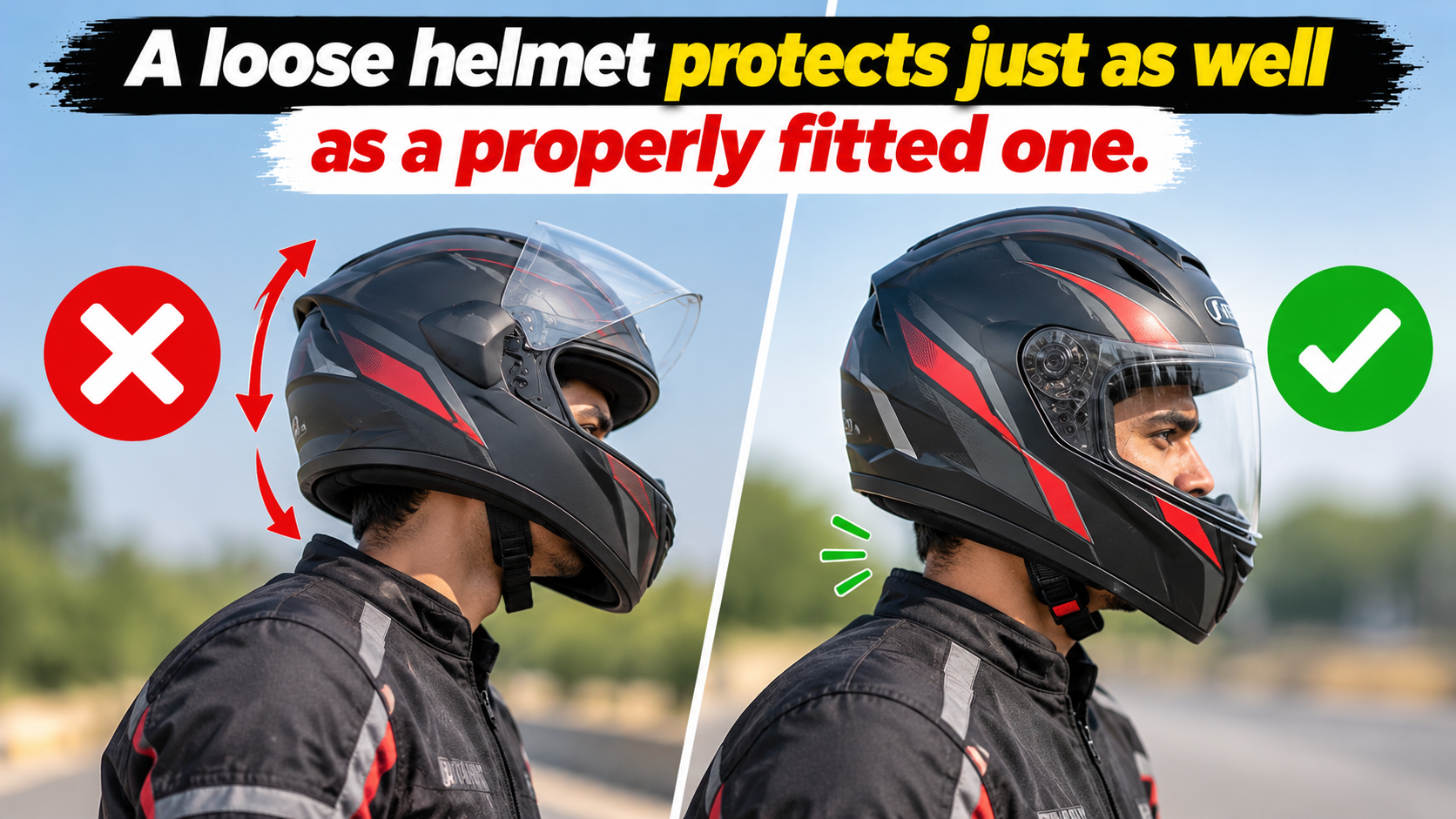
A motorcycle helmet is one of the most important pieces of safety equipment for two-wheeler riders. However, simply wearing a helmet does not guarantee that it will provide the protection it was designed to deliver. The helmet must fit correctly, sit securely on the head and remain fastened throughout the ride.
Some riders choose a helmet that feels loose because it is easier to wear, provides more space around the head or feels comfortable during short journeys. Others may continue using an old helmet after its internal padding becomes compressed. Both situations can affect helmet stability and reduce the effectiveness of its protective design.
The truth is that a loose helmet does not provide the same level of protection as a properly fitted helmet. If it moves excessively, tilts during riding or comes off during a crash, it may fail to protect the head as intended.
How to Choose Between Two Similar Car Models: A Decision Framework
Why a Properly Fitted Helmet Is Important
A motorcycle helmet is designed to manage impact forces through several components working together. These typically include a hard outer shell, an energy-absorbing inner liner, comfort padding and a retention system consisting of a chin strap and fastening mechanism.
When a rider experiences a crash, the helmet's outer shell helps distribute impact forces, while the inner liner compresses to absorb energy. The retention system helps keep the helmet in the correct position during an impact.
All these components must work together for the helmet to provide its intended protection.
A properly fitted helmet sits level on the head, provides even contact around the crown and sides, and does not move excessively when the rider turns or shakes their head. The chin strap must also be fastened correctly.
According to the US National Highway Traffic Safety Administration (NHTSA), a helmet that is too loose may move around or fail to sit fully on the head. Its guidance recommends a snug fit with even pressure rather than excessive movement or uncomfortable pressure points.
This is important because the helmet needs to remain in the right position when the rider encounters sudden braking, road irregularities or a collision.
What Happens When You Wear a Loose Helmet?
A loose helmet can create several safety problems. The exact outcome depends on the degree of looseness, helmet design, strap adjustment and the nature of a crash.
1. The Helmet Can Shift During an Impact
A helmet that moves excessively may not remain centred over the rider's head during a collision. If it shifts away from the intended position, certain areas may receive less effective coverage.
For example, a helmet that slides backwards may expose more of the forehead, while one that tilts forward may interfere with vision and move away from its intended position.
A helmet should not rock freely or rotate substantially on the head. If it does, the rider should check the size, shape and adjustment before using it again.

2. The Helmet May Come Off During a Crash
One of the biggest risks of a loose helmet is that it can be displaced or ejected during a collision.
The chin strap and retention system are designed to help keep the helmet in place. If the strap is left undone, adjusted too loosely or damaged, the helmet may come off when it is needed most.
The World Health Organization's motorcycle helmet safety guidance explains that a loosely fastened helmet can be ejected in a high-impact crash, leaving the head without its intended protection.
Even a helmet that fits reasonably well around the crown can be unsafe if its retention system is not secured correctly.
3. The Protective Coverage Can Be Compromised
Motorcycle helmets are designed to cover specific areas of the head according to their type and safety standard. A full-face helmet, for instance, generally provides coverage for the head and face, including the chin area.
If a loose helmet shifts significantly, its protective coverage may not remain where it was intended to be. The extent of protection depends on the helmet design and the circumstances of the impact.
A helmet should therefore be selected for both its safety certification and its fit. A premium brand or expensive design cannot compensate for an incorrect size.
New Car vs Used Car: Which One Should You Buy?
4. A Loose Helmet Can Affect Riding Comfort and Concentration
Helmet fit also affects everyday riding comfort. Excess movement can cause wind buffeting, pressure from shifting padding and instability at higher speeds.
A helmet that moves around can become distracting, particularly when riding on highways or in windy conditions. A rider may repeatedly adjust it, take a hand off the handlebar or become less focused on traffic.
The solution is not to choose the tightest helmet available. Instead, riders should select a helmet that fits snugly without causing painful pressure points.
Loose Helmet vs Properly Fitted Helmet
|
Feature
|
Loose helmet
|
Properly fitted helmet
|
|
Position on the head
|
May shift or rock excessively
|
Sits level and remains stable
|
|
Chin strap
|
May be too loose or incorrectly adjusted
|
Fastened securely according to the manufacturer's instructions
|
|
Stability during riding
|
Can move in wind or during head movements
|
Remains stable during normal movements
|
|
Protective coverage
|
May shift away from the intended position
|
Designed to remain correctly positioned
|
|
Comfort
|
May feel spacious but can create movement and buffeting
|
Snug, with even pressure and no painful pressure points
|
|
Safety in a crash
|
May be displaced or come off
|
Retention system helps keep it in place
|
|
Recommendation
|
Do not ride until fit is corrected
|
Preferred when properly certified and maintained
|
How to Check Whether Your Helmet Fits Correctly
Choosing the right helmet involves more than checking the size printed on the box. Head shapes vary, and different manufacturers may use different internal shapes and sizing measurements.
Follow these steps when trying a helmet.
Step 1: Measure Your Head
Use a flexible measuring tape to measure the circumference of your head. The tape should pass just above your eyebrows and around the widest part of the back of your head.
Compare the measurement with the manufacturer's size chart. Treat the chart as a starting point, because a helmet's internal shape can affect the fit even when the size appears correct.
If possible, try several sizes and models rather than choosing a helmet based only on its label.
Step 2: Check the Fit Around Your Head
Put the helmet on correctly and fasten the chin strap. The interior padding should make comfortable contact around your head.
The helmet should feel snug without causing sharp pressure points. It should not slide freely from side to side or move excessively when you turn your head.
A new helmet may feel slightly firm because its comfort padding can settle with use. However, it should never cause significant pain, headaches or numbness.
Step 3: Check the Cheek Pads
For a full-face helmet, the cheek pads should contact your cheeks firmly without causing uncomfortable pressure.
If the helmet feels loose around your cheeks but tight on your forehead, the model may not match your head shape. Trying a different model can be more effective than buying a different size of the same helmet.
Some manufacturers offer approved replacement cheek pads or liners for fit adjustment. Use only compatible parts recommended by the manufacturer.
Step 4: Perform a Movement Check
With the chin strap fastened, gently try moving the helmet from side to side and forward and backwards.
The helmet should move your skin with it rather than sliding freely over your head. Excessive movement suggests that the size, shape or adjustment may be incorrect.
Follow the manufacturer's fit-check instructions. Some motorcycle safety guidance also recommends a roll-off check, which assesses whether the helmet can be pulled off the head despite the strap being fastened.
If the helmet moves significantly or comes close to slipping off, do not assume that tightening the strap alone will solve the problem. Try a different size or model if necessary.
Step 5: Check the Chin Strap
The chin strap must be securely fastened every time you ride. It should be snug according to the helmet manufacturer's instructions, without restricting breathing or causing pain.
Do not leave the strap dangling or ride with the buckle only partially engaged. Inspect the strap, buckle and fastening points regularly for wear or damage.
A good fit around the head cannot replace a properly secured retention system.
Does a Tight Helmet Provide Better Protection Than a Loose Helmet?
Not necessarily. The aim is to achieve a snug and stable fit, not an excessively tight fit.
A helmet that is too tight can cause discomfort, pressure points and headaches. If the discomfort distracts the rider, it can also make riding less pleasant and potentially affect concentration.
A helmet that is too loose may shift or come off during a crash. Neither extreme is ideal.
The best fit provides even contact around the head, holds the helmet in its intended position and allows the rider to wear it comfortably for the duration of the journey.
If two helmets have the same certification, the one that fits the rider correctly is generally the more suitable choice. Certification, condition, design and fit should all be considered together.
Why You Should Not Buy a Helmet That Is Too Big
Some buyers deliberately select a larger helmet because they expect it to be more comfortable or want to wear it over a cap, thick head covering or other material.
This is not a good approach unless the helmet manufacturer specifically supports the intended use and the final fit remains correct.
Extra space inside a helmet can allow unwanted movement. Thick caps or other accessories may also alter how the helmet sits and how its retention system works.
Instead, choose a helmet designed for your head shape and intended riding use. If you wear a head covering, check the manufacturer's guidance and ensure that the helmet remains securely fitted.
A helmet should not be selected with extra space for future comfort or to accommodate changes in hairstyle.
A Helmet That Looks Undamaged Is Always Safe After an Impact: Myth or Fact?
What About an Old Helmet That Has Become Loose?
A helmet that once fitted correctly may become loose over time as the comfort padding compresses through regular use. The helmet may begin to rock or move more than it did when new.
If this happens, inspect the interior padding and follow the manufacturer's advice on replacement parts. Some helmets allow compatible cheek pads or liners to be replaced, while others may need to be replaced entirely.
Do not add improvised foam, cloth or other materials inside the helmet to make it fit more tightly. Such changes can affect its intended fit and performance.
Also inspect the outer shell, retention system and buckle for damage. If the helmet has been involved in a crash, follow the manufacturer's replacement guidance even if the outside looks undamaged. The energy-absorbing liner may have sustained damage that is not readily visible.

Helmet Safety Rules in India
In India, Section 129 of the Motor Vehicles Act, 1988 generally requires people above four years of age who drive or ride on a motorcycle in a public place to wear protective headgear meeting the prescribed standards. The law includes a specific exception for Sikh persons wearing a turban and provisions relating to young children.
The statutory definition also requires the protective headgear to be securely fastened using the straps or other fastenings provided with it.
For motorcycle riders in India, choose a helmet that complies with the applicable Bureau of Indian Standards (BIS) requirements and check that the certification marking is genuine. Avoid counterfeit helmets or products that merely look like protective equipment.
Legal compliance is only the starting point. A certified helmet must still fit correctly, remain in good condition and be worn with its retention system secured.
Common Helmet-Fitting Mistakes to Avoid
Riders can reduce avoidable risks by avoiding these common mistakes:
-
Buying a helmet based only on brand, appearance or price.
-
Choosing a larger size because it feels easier to put on.
-
Leaving the chin strap unfastened for short trips.
-
Ignoring a helmet that has become loose with age.
-
Using damaged buckles or worn retention straps.
-
Adding unapproved padding or altering the helmet's interior.
-
Assuming a helmet is safe simply because it has a certification mark.
-
Continuing to use a helmet after a significant crash without following the manufacturer's guidance.
A few minutes spent checking fit before riding can help ensure that the helmet is being used as intended.
Final Verdict: Myth or Fact?
Myth: A loose helmet protects just as well as a properly fitted one.
A helmet is designed to provide protection when it sits in the correct position and remains securely fastened. If it moves excessively or comes off during a crash, its protective performance can be compromised.
For motorcycle and scooter riders, the safest approach is to choose an appropriately certified helmet that fits snugly, check the retention system and fasten the chin strap before every ride.
Do not choose a helmet that is excessively tight, either. The goal is a secure and comfortable fit that remains stable without painful pressure points.
Remember: wearing a helmet is important, but wearing the right helmet in the right way is equally essential.

 Khyati Sharma 2026-09-01