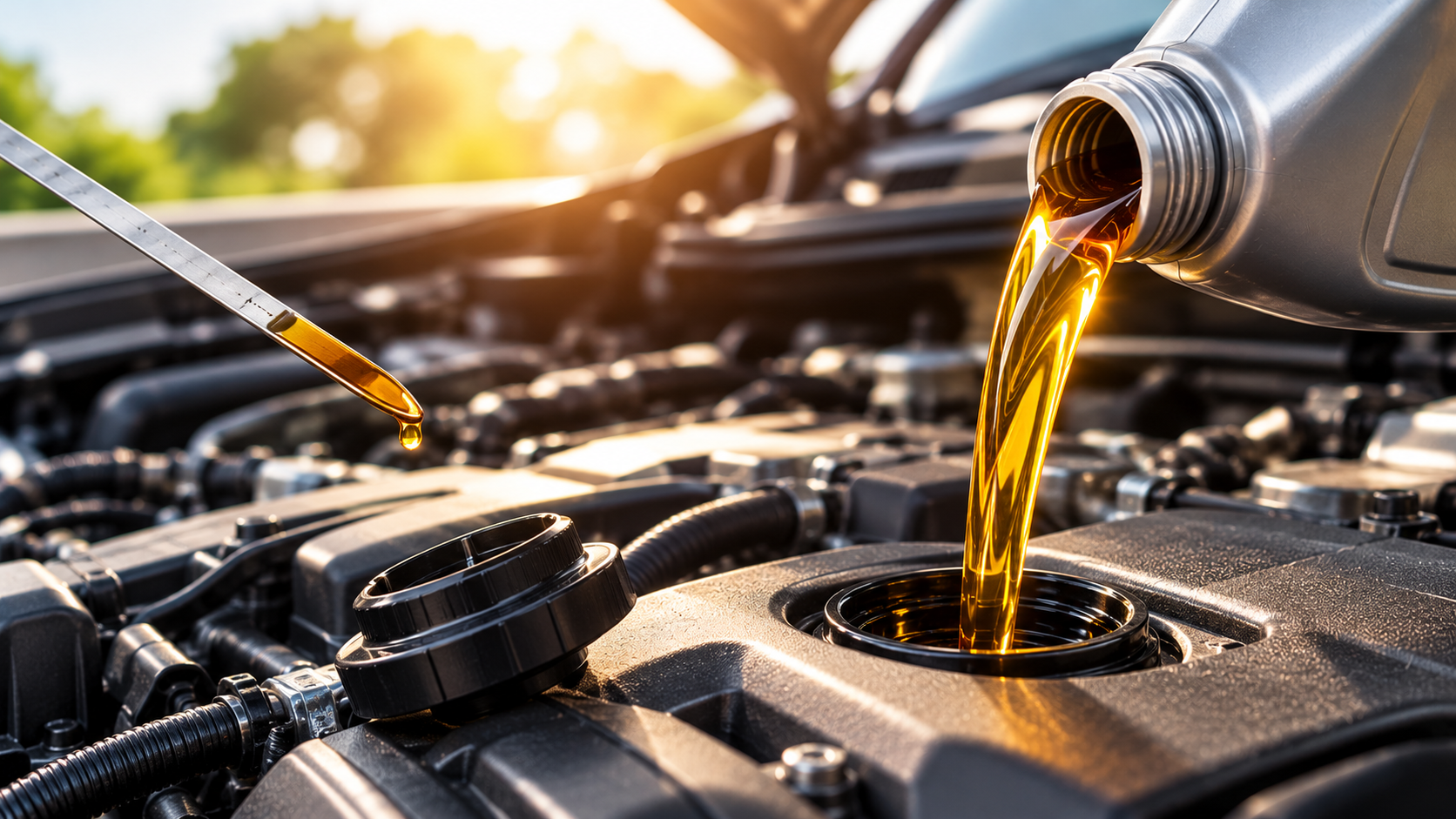
Engine oil is essential for keeping a car's engine running smoothly. It lubricates moving components, helps control temperature, carries contaminants towards the oil filter and reduces friction between metal surfaces. However, these benefits depend on the oil level remaining within the range specified by the vehicle manufacturer.
Some car owners believe that filling the engine beyond the maximum mark provides an additional safety margin, especially before a long journey. In reality, exceeding the recommended level can introduce new problems rather than improve protection.
Manual vs Automatic Car: Pros and Cons Explained
Why Does an Engine Need the Correct Amount of Oil?
An internal combustion engine contains many moving parts, including pistons, crankshafts, camshafts, bearings and valve-train components. These parts operate under heat, pressure and mechanical stress.
The engine's lubrication system circulates oil through galleries and passages to deliver lubrication to components that need it. An oil pump moves the oil, while the oil filter captures many contaminants generated during normal operation.

The oil also helps carry heat away from certain engine components and supports the removal of contaminants. Some engines use additional oil jets or other specialised systems to cool particular parts.
However, the engine is designed to operate with a specific oil quantity and level range. The oil pan, pump pickup, crankshaft, internal passages and other components are engineered around that quantity.
If the level drops too low, the oil pump may struggle to maintain a consistent supply under certain driving conditions. If the level becomes too high, the crankshaft or other rotating components may come into contact with the oil, depending on the engine design.
Both situations can interfere with proper lubrication. Therefore, maintaining the correct level is more important than adding extra oil.
What Happens When You Put Too Much Engine Oil in a Car?
The effects of overfilling depend on how much excess oil is present and the design of the engine. A very small excess may not cause immediate symptoms in every vehicle, but a substantial overfill should not be ignored.
Pre-Delivery Inspection (PDI): A Checklist Before You Take Delivery
1. The Crankshaft May Churn the Oil
One of the main risks of overfilling is that the rotating crankshaft or connecting rods may contact the oil in the sump.
The crankshaft rotates at high speed. If the oil level rises enough for moving components to disturb the oil, it can create turbulence and whip air into the liquid.
This process can produce foam or aerated oil. Oil containing excessive air may not provide the same consistent lubricating film as properly supplied oil.
The severity of this risk depends on the engine's design and the amount of excess oil. Not every small overfill causes crankshaft contact, but adding oil beyond the specified level offers no guaranteed protection.
2. Aerated Oil Can Affect Lubrication
Engine oil needs to maintain a stable lubricating film between moving surfaces. Excessive aeration can interfere with the oil pump's ability to deliver a consistent supply of liquid oil.
Air bubbles can make the oil less effective at maintaining the intended lubrication conditions. In demanding circumstances, this can increase the risk of wear or lubrication-related damage.
Modern engines are designed with specific oil circulation and crankcase ventilation systems. Maintaining the correct oil level helps these systems operate as intended.

3. Excess Oil Can Contribute to Leaks
Overfilling can contribute to increased oil mist, foaming and crankcase ventilation problems. Depending on the engine design and the amount of excess oil, these conditions may increase the likelihood of oil escaping through seals or gaskets.
However, an oil leak does not automatically mean that the engine has been overfilled. Worn seals, damaged gaskets, blocked ventilation systems and other mechanical faults can also cause leaks.
If oil appears around the engine after an overfill, the level should be checked and the source of the leak identified rather than assuming that adding or removing oil alone will resolve every problem.
4. Oil May Enter the Intake or Exhaust System
Many engines use a positive crankcase ventilation (PCV) system to manage gases that pass into the crankcase during combustion.
If an engine is significantly overfilled, excessive oil mist may enter the crankcase ventilation system in some designs. This oil can then reach the intake system and be burned during combustion.
Depending on the vehicle and the severity of the problem, this may cause smoke, increased oil consumption, deposits or other running issues.
In vehicles fitted with catalytic converters or petrol particulate filters, burning excessive oil can also contribute to contamination or damage over time.
These effects are not inevitable after every minor overfill, but they are important reasons to correct an excessive oil level.
5. The Engine May Develop Running Problems
A seriously overfilled engine may experience symptoms such as unusual noises, smoke from the exhaust, oil leaks or abnormal running behaviour.
The exact symptoms vary according to the engine, oil quantity and resulting mechanical effects. Some vehicles may show no obvious symptoms immediately, even when the oil level is incorrect.
The absence of a warning light does not guarantee that the engine is safe to operate with a substantial overfill.
If the engine develops smoke, unusual knocking, a significant leak or other serious symptoms after oil has been added, stop in a safe place, switch off the engine and arrange professional assistance.
New Car vs Used Car: Which One Should You Buy?
Does More Engine Oil Improve Lubrication?
No. Once the engine has the correct oil quantity, adding more does not automatically increase the lubricating film or provide additional protection.
Engine lubrication depends on several factors, including:
- The oil's viscosity and manufacturer-required specification.
- The oil pump's ability to circulate oil at the required pressure and flow rate.
- The condition of the oil filter and lubrication passages.
- The engine's temperature and operating conditions.
- The oil level remaining within the designed range.
For example, using an oil with the correct viscosity and performance specification helps the engine receive suitable lubrication during cold starts and at normal operating temperature.
Adding an extra litre of oil does not improve these properties. Instead, it may raise the level above the permitted range.
The correct approach is to use the specified oil and maintain the level between the minimum and maximum marks, following the manufacturer's instructions.
Engine Oil Level: Too Low vs Correct vs Too High
|
Oil level
|
Possible consequences
|
What should you do?
|
|
Below minimum
|
Inadequate oil supply, reduced lubrication and possible engine damage
|
Check for leaks and add the specified oil carefully; seek help if the level drops repeatedly
|
|
Between minimum and maximum
|
Normal operating range when checked under the specified conditions
|
Maintain the level and follow the service schedule
|
|
Slightly above maximum
|
May be tolerated by some engines, but depends on the design and amount of excess
|
Recheck the level correctly and consult the owner's manual or a service professional
|
|
Significantly above maximum
|
Potential aeration, crankcase ventilation problems, leaks or other engine damage
|
Do not continue running the engine unnecessarily; have the excess oil removed
|
How to Check Your Car's Engine Oil Level Correctly
Checking the oil level regularly is one of the simplest ways to help protect your engine. However, checking it incorrectly can lead to unnecessary topping up or an inaccurate reading.
Step 1: Park the Car Safely
Park on level ground and switch off the engine. Apply the parking brake and follow the owner's manual regarding how long to wait before checking the oil.
Some manufacturers specify checking the oil when the engine is cold, while others require the engine to be warm and then switched off for a prescribed period.
There is no single procedure that applies to every vehicle.
Step 2: Locate the Dipstick or Electronic Measurement System
If your car has a manual dipstick, locate it using the owner's manual. Some modern vehicles use an electronic oil-level measurement system instead.
Do not assume that every vehicle can be checked using the same method.
Car Loan vs Cash Purchase: Which Makes More Financial Sense?
Step 3: Read the Dipstick Correctly
For a conventional dipstick, remove it and wipe it clean with a suitable cloth. Insert it fully again, then remove it and read the oil level.
The oil should normally fall between the minimum and maximum markings. If the dipstick has different markings or the manual specifies another method, follow those instructions.
An electronic system may require a particular engine temperature, parking position or waiting period before it displays a valid result.
Step 4: Add Oil in Small Amounts
If the level is below the recommended range, use the engine oil specification listed in the owner's manual.
Add a small amount at a time, then recheck the level using the prescribed procedure. This helps prevent accidentally exceeding the maximum mark.
Do not assume that an entire bottle is needed simply because the level appears low.
Step 5: Check Again Before Driving
After topping up, confirm that the level is within the permitted range and that the oil filler cap is securely installed.
If the level is repeatedly low, investigate the cause. Possible reasons include oil leaks, normal oil consumption or an underlying engine problem.
If the level is above maximum, do not try to compensate by guessing how much oil to remove. Obtain an accurate reading and have excess oil removed when necessary.

What Should You Do If You Accidentally Overfill the Engine?
If you discover that you have added too much engine oil, do not panic. The appropriate action depends on how far the level exceeds the maximum mark and the vehicle manufacturer's instructions.
First, check the level again using the correct procedure. A reading taken on sloping ground or immediately after switching off an engine may be inaccurate for some vehicles.
If the oil level is clearly above the permitted maximum, arrange to have the excess removed. A workshop can drain the appropriate amount or use suitable extraction equipment, depending on the vehicle.
Avoid driving with a significant overfill until the problem has been corrected. If the engine has already been run and you notice smoke, unusual noises, warning lights or leaks, switch it off safely and seek professional help.
Do not loosen engine components or attempt a hot-oil drain without the appropriate tools and experience. Engine oil can cause burns, and working under a vehicle without proper support is dangerous.
Company-Fitted vs Aftermarket Accessories: Which Is Better?
How Often Should You Check Engine Oil?
The ideal checking frequency depends on the vehicle, its age, driving conditions and the manufacturer's recommendations.
For many drivers, checking the oil periodically and before a long journey is a sensible habit. Vehicles that consume oil, have higher mileage or are used under demanding conditions may need more frequent checks.
Some modern cars monitor oil level electronically, but these systems do not remove the need to follow maintenance instructions. An oil-level warning and an oil-pressure warning also serve different purposes.
A low oil-level warning indicates that the quantity may need attention. A red oil-pressure warning can indicate a serious lubrication problem and should be treated urgently according to the owner's manual.
Regular checks can help identify problems early, but they should always be performed correctly.
Conclusion: More Engine Oil Does Not Mean Better Protection
The claim that adding more engine oil improves engine protection is a myth. Engines are designed to operate with a specific oil quantity and level range, and exceeding that range can cause problems rather than improve lubrication.
Too little oil can compromise the oil supply, but too much oil may cause aeration, crankcase ventilation issues, leaks and, in severe cases, engine damage.
For reliable performance, use the correct oil specification, check the level according to the manufacturer's procedure and add oil gradually when necessary. If the engine is overfilled, correct the level before continuing normal use.
Wheels42 Verdict: The best engine protection comes from the correct oil level, not extra oil. Keep the level within the manufacturer's recommended range to support effective lubrication, reduce avoidable risks and help your engine last longer.

 Khyati Sharma 2026-09-19