Car polishing is one of the most popular ways to improve a vehicle's exterior appearance. Many car owners believe that polishing their cars frequently will keep the paint looking fresh, glossy and healthier for longer. As a result, some vehicle owners polish their cars every few weeks or whenever they notice dust, minor marks or a reduction in shine.
More frequent polishing does not always keep car paint healthier. In fact, excessive polishing can gradually remove the protective clear-coat layer, reduce paint thickness and make the vehicle's exterior more vulnerable to environmental damage.
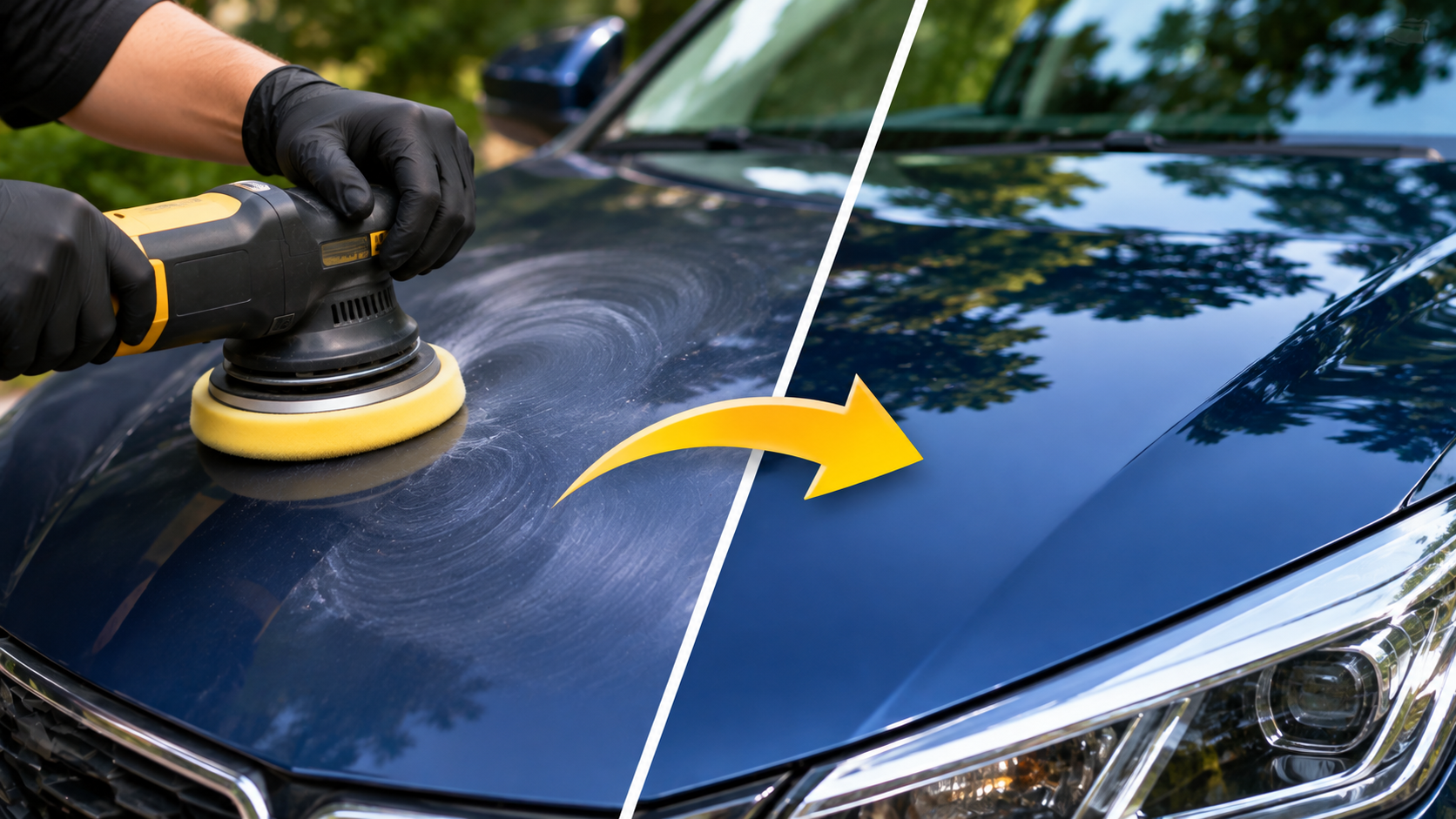
Car polishing is designed to improve the appearance of painted surfaces by reducing minor imperfections, oxidation and swirl marks. Most conventional polishing compounds work by using fine abrasives to level a very thin portion of the clear coat.
This process can improve gloss and make the paint look smoother, but it also removes some of the existing clear-coat material.
Therefore, polishing should be performed only when necessary rather than treated as a routine cleaning activity.
New Car vs Used Car: Which One Should You Buy?
1. What Is Car Polishing and Why Is It Done?
Car polishing is a paint-correction process used to improve the appearance of a vehicle's painted exterior.
Over time, a car's paint can develop several imperfections due to regular use and environmental exposure. These may include swirl marks, light scratches, oxidation, water spots and surface defects.
Polishing uses specially formulated compounds and polishing pads to remove or reduce these imperfections.
Most conventional paint-correction polishing products contain fine abrasive particles. These abrasives carefully level the clear coat surrounding a defect, making the surface appear smoother.
The main purposes of car polishing include:
-
Improving paint gloss and clarity.
-
Reducing the appearance of swirl marks.
-
Correcting minor surface scratches.
-
Removing certain forms of oxidation.
-
Improving the appearance of water spots.
-
Preparing the surface for wax or paint protection products.
However, polishing is not the same as washing or waxing.
Washing removes dirt and contaminants, while waxing adds a protective layer. Polishing corrects imperfections by removing a small amount of the existing clear coat.
This difference is important because the clear coat is a limited protective layer.

2. Why More Frequent Polishing Can Damage Car Paint
One of the biggest misconceptions among car owners is that polishing is similar to applying a protective coating.
In reality, most abrasive polishing processes remove a small amount of clear coat to correct surface imperfections.
Modern automotive paint generally consists of several layers:
-
Primer: Helps the paint adhere to the vehicle's body.
-
Base coat: Provides the vehicle's colour.
-
Clear coat: Provides gloss and protects the colour layer.
The clear coat is exposed to sunlight, dust, rain, bird droppings and other environmental contaminants.
When polishing is performed, abrasive compounds remove microscopic amounts of this outer layer.
A single carefully performed polishing session may not create a noticeable problem. However, repeating the process unnecessarily can gradually reduce the available clear-coat thickness.
If too much material is removed, the paint may become more vulnerable to environmental damage.
In severe cases, excessive polishing can expose the underlying colour coat, requiring professional refinishing.
This is why experienced detailers generally recommend correcting paint only when there is a genuine need.
Down Payment and Car Loan EMI: How Much Should You Pay?
3. Does Polishing Every Month Make a Car Look Better?
Polishing can temporarily improve a vehicle's appearance, but performing it every month is generally unnecessary.
A freshly polished vehicle may look significantly glossier because minor surface imperfections have been reduced.
However, that does not mean the paint needs to be polished again after a few weeks.
Regular washing using appropriate car-cleaning products can maintain the vehicle's appearance without repeatedly removing clear coat.
If the vehicle develops dust, water spots or minor surface contamination, these issues should first be addressed through proper cleaning.
A non-abrasive detailing spray, suitable water-spot remover or paint-safe cleaning product may solve certain problems without requiring full paint correction.
Monthly polishing may be particularly unsuitable for vehicles that are already in good condition or have previously undergone multiple paint-correction treatments.
The objective should be to preserve the original paint rather than repeatedly correct imperfections that do not significantly affect its appearance.
4. What Happens When Clear Coat Becomes Too Thin?
The clear coat plays an important role in protecting automotive paint.
It provides the glossy finish that makes vehicle colours appear vibrant while helping protect the underlying base coat from environmental exposure.
Excessive polishing can reduce this protective layer.
When clear-coat thickness becomes insufficient, several problems may develop.
Reduced UV protection: The vehicle's paint may become more vulnerable to sunlight-related deterioration.
Loss of gloss: Uneven polishing or excessive correction can leave the surface looking dull or inconsistent.
Increased paint vulnerability: The underlying colour coat may become more exposed to environmental contaminants.
Clear-coat failure: Severe material removal can contribute to premature paint failure, although this depends on the original paint condition and other factors.
Expensive repairs: If the clear coat is damaged beyond correction, repainting may become necessary.
It is important to understand that polishing does not replenish the clear coat. Once removed, the material cannot simply grow back.
This makes careful paint maintenance more important than frequent correction.

5. Difference Between Car Washing, Waxing and Polishing
Many vehicle owners use the terms washing, waxing and polishing interchangeably. However, these processes serve different purposes.
Car washing is primarily intended to remove dirt, dust, road grime and other contaminants.
Waxing involves applying a protective product over the paint surface. It can improve water behaviour and add gloss while providing a temporary protective layer.
Polishing is a correction process that reduces imperfections by removing a very thin amount of the clear coat when abrasive products are used.
Understanding these differences helps car owners avoid unnecessary polishing.
For example, if a car simply looks dull because of dust or water marks, washing and suitable detailing may restore its appearance.
If the paint is already smooth and glossy, applying a suitable wax or paint sealant may be more appropriate than polishing it again.
Hatchback vs Sedan vs SUV: Which Car Type Suits You Best?
6. How Frequently Should You Polish Your Car?
There is no universal polishing schedule that applies to every vehicle.
The ideal frequency depends on the paint's condition, parking environment, washing habits, previous detailing work and the type of polishing products used.
A new vehicle with healthy factory paint may not require polishing for a considerable period.
A vehicle with visible swirl marks, light oxidation or other paint imperfections may benefit from professional paint correction.
However, once the imperfections have been corrected, the owner should focus on preventing new damage rather than repeating the process regularly.
The following factors should be considered before deciding whether polishing is necessary:
Paint condition: Check for visible scratches, swirl marks, oxidation and surface defects.
Previous polishing history: A vehicle that has undergone several correction sessions may have less clear-coat material available.
Parking conditions: Vehicles exposed to sunlight, dust and pollution may require more frequent cleaning, but not necessarily more polishing.
Washing technique: Incorrect washing methods can create new swirl marks and scratches.
Product type: Some finishing products contain little or no abrasive material, while stronger compounds remove more clear coat.
A professional inspection can help determine whether correction is appropriate.
7. Common Signs That Your Car May Need Polishing
Polishing should be based on the condition of the paint rather than a fixed calendar schedule.
Certain visible signs may indicate that a vehicle could benefit from paint correction.
Swirl Marks
Swirl marks are fine circular scratches that become particularly noticeable under direct sunlight or strong artificial lighting.
They are often caused by improper washing, dirty microfiber towels, rough cleaning materials or incorrect drying techniques.
Light swirl marks may be corrected through appropriate polishing.
Light Surface Scratches
Minor scratches that affect only the clear coat may sometimes be reduced using a suitable polishing compound.
However, scratches that extend into the colour coat or primer generally require a different repair approach.
Oxidation
Paint oxidation can make the exterior appear dull, faded or chalky.
It is more commonly noticeable on older vehicles or paint systems exposed to prolonged environmental stress.
Depending on the paint condition, professional correction may improve the appearance.
Reduced Paint Gloss
A vehicle may lose some of its original shine because of contamination, poor maintenance or surface imperfections.
Before deciding to polish, owners should ensure that the paint is properly washed and decontaminated.
Sometimes, the improvement needed can be achieved without abrasive correction.
How Many Airbags Do You Really Need? A Safety Primer
8. Why Frequent Polishing Is Not a Replacement for Regular Washing
Polishing and washing have different purposes.
Some owners believe that polishing can maintain paint quality better than ordinary washing. This is incorrect.
A car that is regularly polished but poorly washed may develop new scratches and contamination-related problems.
Dust, sand and road particles can accumulate on the exterior. If they are wiped away incorrectly, they may cause additional swirl marks.
Proper washing is therefore one of the most important parts of paint maintenance.
Follow these practices:
-
Use a dedicated automotive shampoo.
-
Avoid household detergents.
-
Use clean microfiber wash mitts.
-
Wash the vehicle using suitable techniques.
-
Avoid rubbing dry dust directly off the paint.
-
Dry the surface with a clean microfiber towel.
-
Regularly clean your washing accessories.
These habits help reduce the need for frequent paint correction.

9. Can Waxing or Ceramic Coating Reduce the Need for Polishing?
Yes, suitable paint protection products can help maintain the appearance of a vehicle and reduce the need for frequent correction.
Car Wax
Traditional car wax creates a temporary protective layer over the painted surface.
It can improve gloss, enhance water beading and make routine cleaning easier.
Wax does not repair scratches or restore removed clear coat. However, it can help maintain the appearance of properly maintained paint.
Paint Sealant
Paint sealants are designed to provide a protective layer over automotive paint.
Depending on the formulation, they may offer longer-lasting protection than conventional wax products.
They can help reduce the direct adhesion of certain contaminants and simplify maintenance.
Ceramic Coating
Ceramic coatings create a bonded protective layer over the vehicle's exterior.
They are popular because of their water-repellent properties, gloss enhancement and resistance to certain forms of surface contamination.
However, ceramic coatings are not scratch-proof and cannot completely prevent swirl marks.
They also do not eliminate the need for proper washing.
Importantly, applying ceramic coating usually requires suitable surface preparation. If paint correction is needed, it should be performed carefully before the coating is installed.
Once the coating is applied, routine maintenance should focus on gentle cleaning rather than unnecessary polishing.
Manual vs Automatic Car: Pros and Cons Explained
10. Common Car Polishing Mistakes That Owners Should Avoid
Even when polishing is genuinely required, incorrect techniques can create additional problems.
Some common mistakes include:
Polishing too frequently: Repeated abrasive correction gradually removes clear-coat material.
Using aggressive compounds unnecessarily: Strong cutting compounds should not be used when a mild finishing product is sufficient.
Applying excessive pressure: Heavy pressure can create uneven correction, heat and additional paint defects.
Using dirty polishing pads: Contaminated pads may introduce new scratches.
Ignoring paint thickness: Vehicles with previous repairs or repeated polishing may have limited material available for correction.
Polishing in direct sunlight: Heat can affect product behaviour and make the process harder to control.
Expecting deep scratches to disappear: Deep scratches cannot always be safely removed through polishing.
Skipping surface preparation: Polishing a contaminated surface can introduce additional defects.
Professional paint correction involves selecting the right compound, pad, machine speed and technique for the condition of the paint.
11. How to Maintain Car Paint Without Frequent Polishing
The best way to maintain automotive paint is to prevent damage rather than repeatedly correcting it.
Car owners can follow a simple maintenance routine.
First, wash the vehicle regularly using automotive shampoo and clean washing accessories. Avoid using rough cloths or dry wiping methods.
Second, remove bird droppings, tree sap and other potentially harmful contaminants as soon as reasonably possible.
Third, use a suitable wax, paint sealant or ceramic coating to maintain a protective layer.
Fourth, park the vehicle in shaded or covered areas whenever practical. This can reduce exposure to sunlight and certain environmental contaminants.
Finally, inspect the paint periodically. If imperfections become noticeable, determine whether they require correction before using abrasive products.
This approach helps preserve the original paint and reduces unnecessary detailing expenses.
Car Polishing vs Other Paint Maintenance Methods
|
Maintenance Method
|
Main Purpose
|
Removes Clear Coat?
|
Recommended Use
|
|
Car washing
|
Removes dirt and contaminants
|
No
|
Regular maintenance
|
|
Car waxing
|
Adds a temporary protective layer
|
No
|
Periodic protection
|
|
Paint sealant
|
Provides a protective surface layer
|
No
|
Periodic protection
|
|
Ceramic coating
|
Adds a durable bonded protective layer
|
No, during normal application
|
Long-term paint protection
|
|
Light polishing
|
Reduces minor surface imperfections
|
Yes, generally a small amount
|
When correction is needed
|
|
Heavy compounding
|
Corrects more noticeable paint defects
|
Yes, potentially more
|
Only when necessary
|
|
Paint protection film
|
Adds a physical protective layer
|
No, during normal installation
|
Protecting vulnerable painted panels
|
12. Is Professional Car Polishing Better Than DIY Polishing?
Professional polishing can be beneficial when a vehicle has noticeable paint imperfections or when the owner is unfamiliar with paint-correction techniques.
Professional detailers can inspect the paint, select appropriate polishing products and use specialised equipment to achieve consistent results.
They may also measure paint thickness where suitable equipment and access allow, helping them assess the available material before correction.
DIY polishing can be suitable for minor maintenance when the owner understands the product and uses the correct equipment.
However, using an aggressive compound or incorrect machine settings can damage the paint.
For vehicles with deep scratches, previous repainting, thin clear coat or expensive finishes, professional inspection is generally advisable.
The goal should always be to achieve the desired appearance while removing as little clear coat as reasonably possible.
Final Verdict: Does More Frequent Polishing Always Keep Paint Healthier?
No, more frequent polishing does not always keep automotive paint healthier.
Although polishing can improve gloss, reduce swirl marks and correct minor surface imperfections, most abrasive polishing processes remove a small amount of the clear coat.
Repeated unnecessary polishing can gradually reduce the protective layer and increase the risk of paint damage.
For most vehicle owners, regular washing, careful drying and appropriate paint protection are more important than frequent polishing.
Wax, paint sealants and ceramic coatings can help maintain the appearance of a vehicle without repeatedly correcting the clear coat.
Polishing should be performed when the paint genuinely needs correction, not simply because a certain number of weeks or months has passed.

 Khyati Sharma 2026-11-06