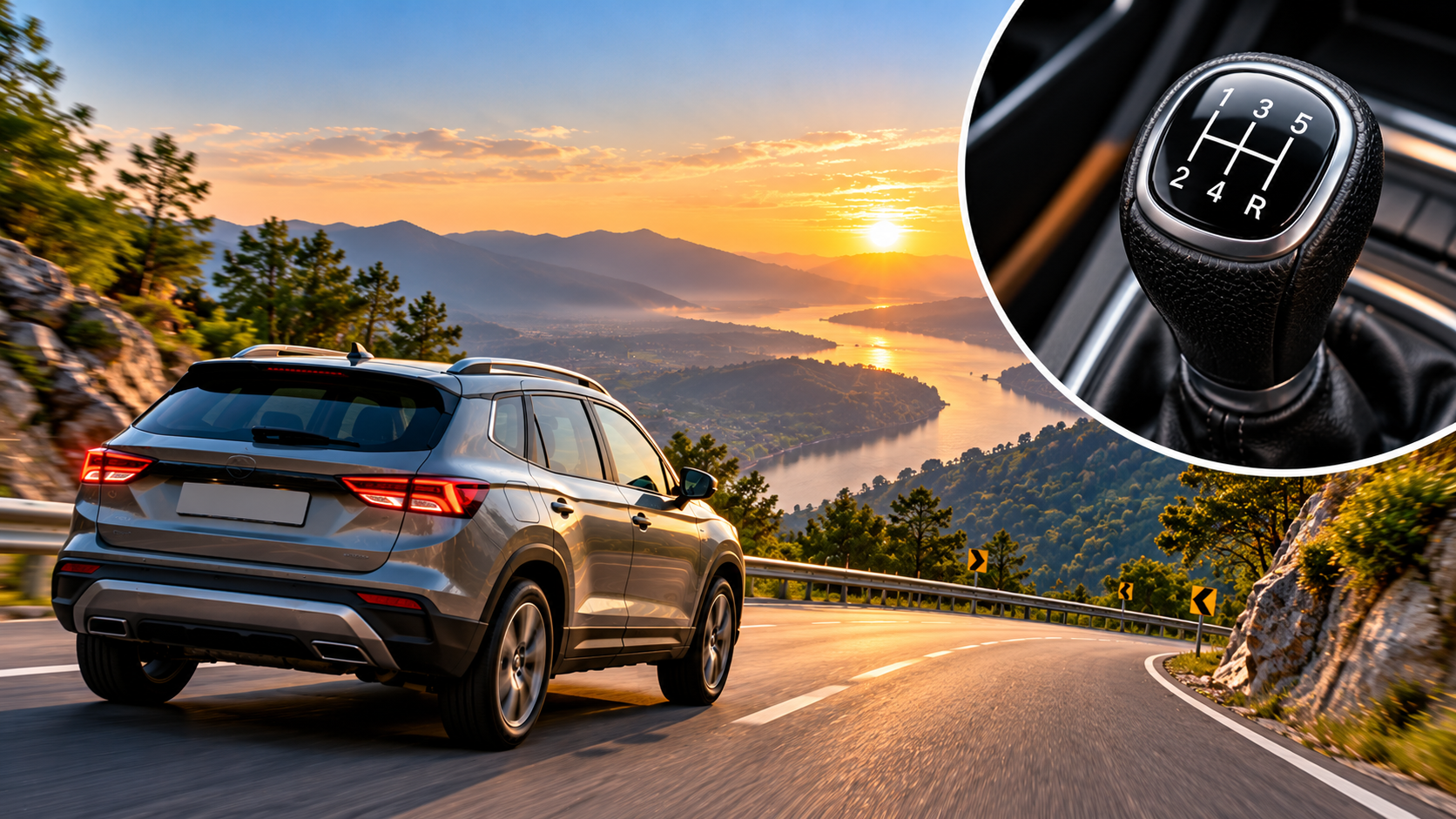
Many manual-car drivers have a habit of keeping their left foot lightly on the clutch pedal while driving. Some do it because they expect to change gears soon, while others find it comfortable to keep their foot close to the pedal in heavy traffic.
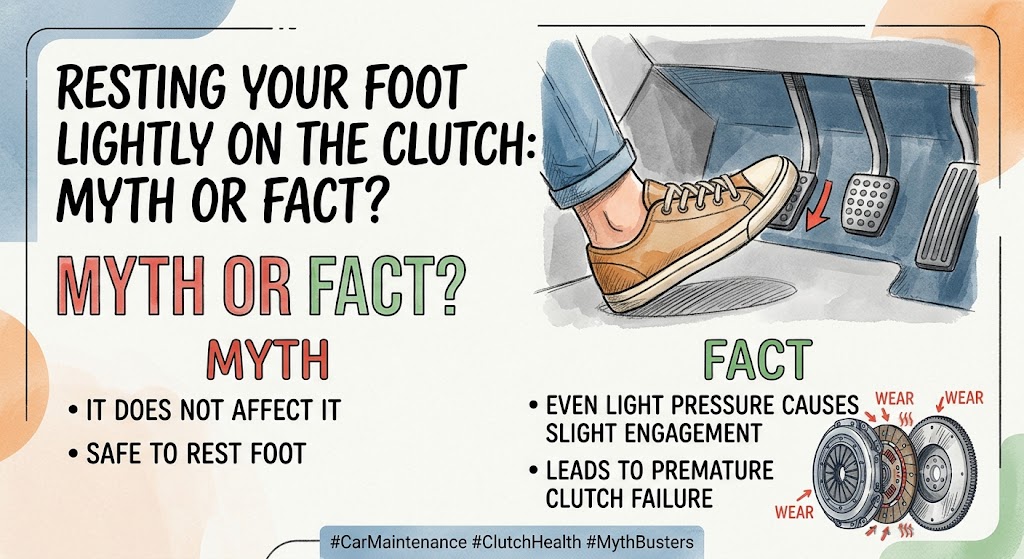
However, even light pressure on the clutch pedal can affect how the clutch operates, depending on the vehicle's design and how much pressure is applied. The habit is commonly known as riding the clutch, and it can contribute to premature clutch wear if it causes the clutch to remain partially disengaged.
The clutch is an essential component of a manual-transmission car. It allows the driver to disconnect the engine from the gearbox for gear changes and reconnect them smoothly when moving off. When the clutch pedal is fully released, the clutch is generally designed to engage and transfer engine power efficiently.
Keeping a foot on the pedal unnecessarily can interfere with this operation. Although resting your foot on the clutch does not automatically cause damage every time, it is a habit worth avoiding.
Company-Fitted vs Aftermarket Accessories: Which Is Better?
1. What Happens When You Rest Your Foot on the Clutch?

In a manual car, pressing the clutch pedal operates a release mechanism that allows the engine and gearbox to disconnect temporarily. Depending on the design, this mechanism may use a hydraulic system or a mechanical linkage.
When you release the pedal completely, the clutch engages and transfers engine torque through the transmission to the driven wheels.
The problem arises when you keep your foot on the pedal and apply even a small amount of pressure. In some vehicles, this can begin loading the release mechanism and, if the pressure is sufficient to move it, may partially disengage the clutch.
This can reduce the clamping force holding the clutch disc against the flywheel and pressure plate. If the clutch begins slipping while the engine is transmitting torque, friction and heat can increase.
The exact effect depends on the clutch design and the amount of pedal movement. Simply placing your foot near the pedal without touching it does not cause clutch wear. Even light contact may be harmless in some circumstances if it does not apply enough force to operate the mechanism.
Nevertheless, keeping your foot on the clutch creates an unnecessary risk of applying pressure unintentionally, particularly during long drives or in stop-and-go traffic.
How Many Airbags Do You Really Need? A Safety Primer
2. What Is Riding the Clutch?
Riding the clutch means keeping the clutch pedal partially pressed when there is no need to disengage the engine from the gearbox.
This habit is different from pressing the clutch briefly to change gears or using the biting point during a normal hill start. Those actions are part of operating a manual transmission correctly.
Riding the clutch usually happens in situations such as:
-
Keeping the left foot resting on the clutch pedal while cruising.
-
Driving with the clutch partially pressed in slow-moving traffic.
-
Holding the clutch at its biting point for longer than necessary.
-
Keeping the pedal slightly depressed while accelerating.
-
Using the clutch unnecessarily when the car is already moving steadily in gear.
Some drivers may not realise they are doing it because the pressure is very light. Others keep their foot near the pedal because they anticipate frequent gear changes.
The best practice is to keep your left foot away from the clutch pedal when you are not changing gears or performing a manoeuvre that requires clutch control. This reduces the chance of accidental pedal pressure and allows the clutch to remain fully engaged.
3. How Can Resting Your Foot on the Clutch Cause Damage?

The consequences depend on the amount of pressure applied and the vehicle's clutch mechanism. However, sustained or repeated partial engagement can contribute to several problems.
Premature clutch plate wear
The clutch disc uses friction material to transfer engine power. When the clutch slips under load, the friction surfaces move against one another.
If resting your foot causes the clutch to slip repeatedly, the friction material can wear more quickly than it would under normal operation.
Increased heat
A slipping clutch converts some engine energy into heat. Excessive heat can damage the friction material and affect the pressure plate and flywheel surfaces.
This is particularly concerning when a driver combines unnecessary clutch pressure with acceleration, climbing a hill or carrying a heavy load.
Additional load on the release mechanism
Depending on the clutch design, pressure on the pedal can load the release bearing and related components. Continuous or unnecessary loading may contribute to premature wear.
The exact effect varies between conventional release-bearing systems and other designs, so the amount of pressure matters.
Reduced clutch performance
A clutch that has suffered excessive wear or overheating may begin slipping under acceleration. The engine speed may rise without a corresponding increase in vehicle speed.
If the problem progresses, the car may struggle to transfer engine power effectively, and the clutch assembly may need repair or replacement.
Car Waiting Period: How to Get Your New Car Faster
4. Does Light Pressure Always Damage the Clutch?
No. It is important to distinguish between resting your foot on the pedal and actually operating the clutch mechanism.
If your foot merely touches the pedal without applying enough force to move it or load the release mechanism, there may be no meaningful effect on clutch wear.
However, drivers cannot always judge how much pressure they are applying, especially when the foot is resting on the pedal for long periods. Some clutch systems respond to relatively small pedal movements.
Therefore, the safest habit is straightforward: keep your left foot off the clutch pedal whenever you are not using it.
This does not mean the clutch will fail immediately if you accidentally touch the pedal. Clutch wear develops over time, and the effect of any individual action depends on the circumstances. The aim is to avoid unnecessary pressure and prevent a small habit from becoming a repeated source of wear.
5. Common Driving Situations Where Clutch Riding Happens

Driving on highways
Some drivers rest their left foot on the clutch while cruising on a highway, even when they do not need to change gears.
Once the car is in the appropriate gear, keep your left foot on the footrest if the vehicle has one. This helps prevent accidental pedal pressure and can make your driving posture more comfortable.
Driving in heavy traffic
Stop-and-go traffic often encourages drivers to keep their foot hovering over or resting on the clutch.
Instead, use the clutch when moving off or changing gears, and release it completely once the gear is engaged. When the car is stationary, use the brake to hold it rather than keeping the clutch partially engaged unnecessarily.
Driving uphill
Clutch control is necessary when starting on an incline, but holding the biting point for too long can generate excessive heat.
Use the parking brake, footbrake or hill-start assist where available to prevent the car from rolling backwards. Release the clutch smoothly when you are ready to move.
Approaching a turn
Some drivers press or partially press the clutch while approaching every turn, even when the car can safely negotiate the turn in the selected gear.
Choose an appropriate gear and maintain control of the vehicle. Press the clutch when required for a gear change or when necessary to prevent the engine from stalling, rather than keeping it partially engaged throughout the manoeuvre.
Ex-Showroom vs On-Road Price: What's the Real Difference?
6. Signs That Your Clutch May Be Wearing Out
A worn or damaged clutch can show several warning signs. Resting your foot on the pedal does not necessarily mean your clutch is damaged, but if the habit has been frequent, it is worth paying attention to changes in vehicle behaviour.
-
Engine revs rise without matching acceleration: This may indicate clutch slipping, particularly under load.
-
Burning smell: An unusual burnt smell after driving in traffic or climbing a hill may indicate excessive clutch heat.
-
Difficulty accelerating uphill: A worn clutch may struggle to transmit engine power effectively.
-
Judder during take-off: Vibration when releasing the clutch can result from clutch contamination, uneven wear or other mechanical problems.
-
Changes in pedal feel: A clutch pedal that suddenly feels unusually soft, hard or different from normal may require inspection.
-
Unusual noises: Noise when pressing or releasing the clutch may indicate a problem with the release mechanism or another component.
These symptoms can have several causes, so they should not automatically be attributed to riding the clutch. If you notice persistent slipping, unusual noises or a burning smell, have the vehicle inspected by a qualified mechanic.
7. How to Use the Clutch Correctly
|
Driving situation
|
Correct practice
|
Habit to avoid
|
|
Cruising in a gear
|
Keep the clutch fully released
|
Resting your foot on the pedal
|
|
Changing gears
|
Press the clutch fully, shift and release smoothly
|
Keeping the clutch partially pressed
|
|
Stopping in traffic
|
Use the brake to hold the car stationary
|
Holding the biting point unnecessarily
|
|
Starting uphill
|
Use the parking brake or hill-start assist as appropriate
|
Balancing the clutch and accelerator for too long
|
|
Waiting at a signal
|
Keep the car secured with the brake
|
Remaining in gear with the clutch pressed for an extended wait
|
|
Moving off
|
Release the clutch smoothly once ready to move
|
Repeatedly slipping the clutch without need
|
8. Practical Tips to Extend Clutch Life
Drivers can follow several simple habits to reduce unnecessary clutch wear:
-
Keep your left foot off the pedal: Use the footrest while driving steadily whenever one is available.
-
Press the clutch fully for gear changes: This helps the clutch disengage as intended.
-
Avoid prolonged slipping: Move away smoothly instead of holding the biting point for an extended period.
-
Use the brakes on slopes: Do not rely on clutch pressure to keep the vehicle stationary.
-
Avoid unnecessary acceleration: Excessive engine speed while slipping the clutch can generate more heat.
-
Learn your vehicle's biting point: Familiarity helps you move off smoothly without holding the clutch halfway for too long.
-
Address warning signs early: Prompt inspection can help prevent further damage if a fault develops.
These habits are useful for new drivers and experienced motorists alike. Clutch replacement can be expensive because accessing the assembly often involves substantial labour, although costs vary by vehicle.
Car Loan vs Cash Purchase: Which Makes More Financial Sense?
Conclusion: Myth or Fact?
The statement that resting your foot lightly on the clutch does not affect it is a myth when that contact applies unnecessary pressure to the pedal or causes partial disengagement. Such pressure can load the release mechanism and, if it causes clutch slipping, increase friction, heat and wear.
Simply touching the pedal without applying meaningful pressure does not automatically damage the clutch. Nevertheless, keeping your foot away from it is the better driving habit because it prevents accidental operation.
For longer clutch life, release the pedal fully after changing gears, use the brakes to hold the car stationary and avoid unnecessary clutch slipping in traffic or on hills.
A small change in driving habits can help reduce avoidable wear, improve control and potentially save money on repairs over the life of your car.

 Khyati Sharma 2026-09-10