Khyati Sharma 2026-09-27
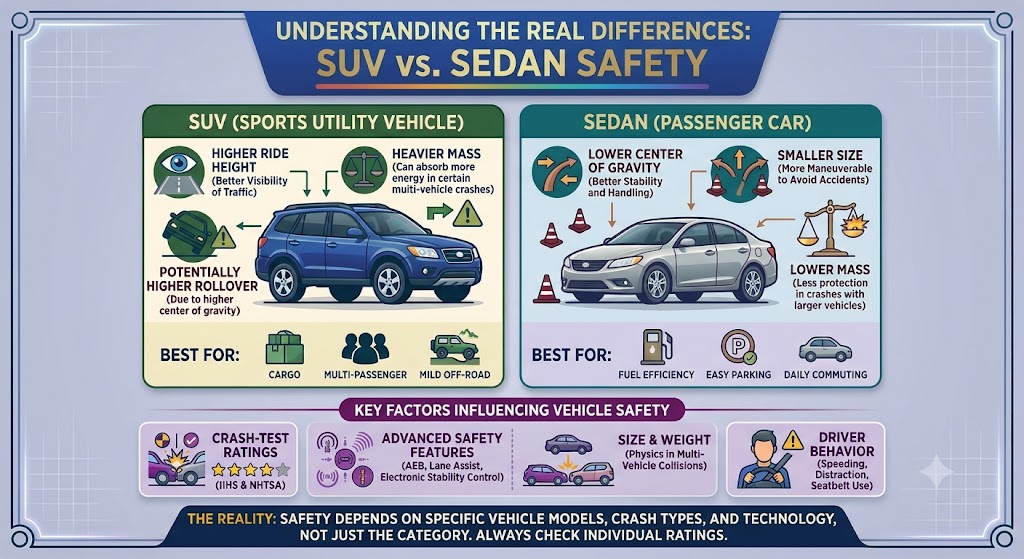
Many car buyers believe that a four-wheel-drive (4WD) vehicle is safer on slippery roads because all four wheels receive power from the engine. This feature can improve traction when accelerating on wet, muddy, snowy or uneven surfaces. However, there is a common misconception that four-wheel drive also helps a vehicle stop faster when the driver applies the brakes.
The truth is that four-wheel drive does not automatically reduce braking distance on a slippery road. Stopping performance depends primarily on tyre grip, braking systems, vehicle speed, road conditions and the driver's response.
Whether you drive an SUV cars, a sedan cars, a pickup truck or an off-road vehicle, understanding the difference between acceleration traction and braking traction can help you make safer decisions on the road.
In this article, we explain how four-wheel drive works, why it does not guarantee shorter stopping distances, and which safety features really matter when driving in rain, mud or snow.
Four-wheel drive, commonly called 4WD or 4x4, is a drivetrain system designed to send engine power to all four wheels. Depending on the vehicle, the system may engage all four wheels continuously or allow the driver to select different operating modes.
Four-wheel drive is particularly useful when a vehicle needs extra traction on challenging surfaces. For example, when driving through mud, loose gravel, sand or certain snowy conditions, distributing engine power across four wheels can help the vehicle move forward more effectively.
Without four-wheel drive, a conventional two-wheel-drive vehicle sends engine power to either the front or rear wheels. If the driven wheels lose traction, the vehicle may struggle to accelerate or become stuck.
However, four-wheel drive primarily changes how engine power reaches the wheels. It does not automatically increase the grip available between the tyres and the road during braking.
This distinction is essential to understanding why a 4WD vehicle may accelerate confidently on a slippery surface but still require a long distance to come to a complete stop.
Manual vs Automatic Car: Pros and Cons Explained
The short answer is no, not by itself.
When a driver presses the brake pedal, the vehicle's braking system slows the wheels through friction at the brakes. The tyres then transfer the braking force to the road surface.
The maximum braking force that can be transmitted depends heavily on the available tyre-road grip. On a wet, icy or muddy surface, that grip may be significantly lower than on dry asphalt.
Four-wheel drive helps distribute engine torque to the wheels, particularly during acceleration. It does not create additional friction between the tyres and the road simply by powering all four wheels.
Consider two otherwise comparable vehicles travelling at the same speed on a wet road. One has four-wheel drive, while the other has two-wheel drive. If both have equally effective brakes and similar tyres, four-wheel drive alone does not guarantee that the first vehicle will stop sooner.
Actual results can vary because of differences in vehicle weight, tyre type, brake calibration, suspension, ABS operation and road conditions.
A 4WD vehicle may even have a longer stopping distance if it is heavier or fitted with tyres that provide less grip on wet pavement.
The important lesson is that better traction for moving forward does not necessarily mean better traction for stopping.
The confusion comes from how four-wheel drive feels behind the steering wheel.
When accelerating on a slippery surface, a two-wheel-drive vehicle may struggle to transfer engine power to the road. Its driven tyres can spin, reducing the vehicle's ability to move forward.
A four-wheel-drive vehicle can distribute that power across four tyres, potentially reducing excessive wheelspin and improving forward movement.
This can create the impression that the vehicle has more grip in every situation.
However, braking is a different process. During deceleration, the brakes act on the wheels to reduce their rotational speed. The tyres must then transmit the braking force to the road.
A four-wheel-drive vehicle can still slide if the tyres cannot generate enough grip. It can also lose control when cornering too quickly on a wet surface.
For example, a 4WD SUV climbing a muddy hill may perform much better than a two-wheel-drive car. But if both vehicles are travelling too fast on a wet road and the driver brakes suddenly, neither vehicle is guaranteed to stop safely.
Four-wheel drive should therefore be viewed as a traction aid, not a substitute for careful driving.
New Car Dealer Negotiation Tips That Actually Work
Several factors influence how quickly a vehicle can stop. Understanding them is more useful than relying on the drivetrain alone.
Tyre condition and tyre grip
Tyres are one of the most important parts of a vehicle's braking system because they provide the contact between the vehicle and the road.
Worn tyres may struggle to channel water away from the tread, increasing the risk of losing grip on wet roads. Tyre pressure also matters: both underinflation and overinflation can affect handling and braking performance.
The type of tyre makes a difference, too. Summer, all-season, winter and off-road tyres are designed for different conditions. A tyre that performs well on loose terrain may not provide the best braking performance on wet tarmac.
Vehicle speed
Speed has a major influence on stopping distance. The faster a vehicle travels, the more distance it generally needs to stop.
For example, increasing speed from 50 km/h to 100 km/h doubles the speed but increases kinetic energy fourfold. Under otherwise comparable conditions, the braking distance can increase substantially.
This is why reducing speed before entering a slippery section is so important.
ABS and braking system
The anti-lock braking system (ABS) helps prevent the wheels from locking during hard braking. It allows the driver to maintain greater steering control while braking, although it cannot overcome the physical limits of tyre grip.
Brake condition is equally important. Worn brake pads, damaged components or poorly maintained braking systems can compromise performance.
Road surface
A dry, clean road generally provides more grip than a road covered in standing water, loose gravel, mud or ice.
Even a high-performance braking system cannot deliver unlimited stopping force when the road surface offers very little traction.
Vehicle weight and load
A heavily loaded vehicle has more mass to slow down. Although braking systems are designed for the vehicle's operating weight, additional load can affect braking performance, tyre temperatures and handling.
Drivers should stay within the vehicle's specified load limits and avoid carrying unsecured cargo.
|
Feature |
Four-wheel drive (4WD) |
Two-wheel drive (2WD) |
|
Acceleration on slippery surfaces |
Can provide better traction |
Driven wheels may lose grip more easily |
|
Braking distance |
No automatic reduction |
Can achieve comparable braking performance |
|
Cornering on wet roads |
Still limited by tyre grip |
Still limited by tyre grip |
|
Risk of wheel lock |
Depends on braking systems and grip |
Depends on braking systems and grip |
|
ABS benefits |
Helps manage wheel lock during braking |
Helps manage wheel lock during braking |
|
Best safety practice |
Slow down and maintain distance |
Slow down and maintain distance |
All-wheel drive (AWD) is closely related to 4WD, but the systems are often designed for different purposes.
AWD systems commonly distribute power automatically between the front and rear wheels as driving conditions change. Many are designed to improve everyday traction on wet roads, while traditional 4WD systems may offer selectable modes intended for more demanding off-road conditions.
Both systems can improve the ability to accelerate when traction is limited. However, neither automatically shortens braking distance.
Some AWD vehicles have advanced electronic systems that manage power distribution and vehicle stability. These systems may help the driver maintain control in certain situations, but their effectiveness still depends on the available grip.
It is important not to confuse AWD, ABS and electronic stability control (ESC). They perform different functions:
AWD/4WD: Distributes engine power to the wheels.
ABS: Helps prevent wheel lock during braking.
ESC: Helps the driver maintain directional stability when the vehicle begins to skid.
A vehicle may have all three systems, but none can eliminate the limits imposed by slippery road surfaces.
How to Compare Car Variants: Base vs Mid vs Top Trim
Whether your car has 4WD, AWD or 2WD, these driving habits can reduce the risk of an accident.
1. Reduce your speed. Drive more slowly when rain, standing water, mud or poor visibility reduces your ability to react.
2. Increase your following distance. Leave more space between your vehicle and the vehicle ahead. The extra distance gives you more time to react and brake smoothly.
3. Brake progressively. On slippery roads, avoid sudden or aggressive braking where possible. Apply the brakes smoothly and allow the vehicle to slow down before a bend.
4. Maintain your tyres. Check tread depth, tyre pressure and overall tyre condition regularly. Use tyres appropriate for the conditions in which you drive.
5. Keep ABS in mind. In an emergency stop in a vehicle equipped with ABS, apply firm, continuous pressure to the brake pedal and steer as needed. Do not repeatedly pump the brake pedal unless the vehicle's instructions specifically require it.
6. Avoid sudden steering movements. Abrupt steering, acceleration or braking can upset the vehicle's balance when grip is limited.
7. Be especially careful in standing water. Driving too quickly through water can cause aquaplaning, where the tyres lose effective contact with the road. If this happens, avoid sudden braking or steering, ease off the accelerator and allow the tyres to regain contact.
8. Check visibility. Use appropriate lights in poor weather, keep the windscreen clean and ensure the wipers are working properly.
On icy or very muddy roads, even gentle inputs may be insufficient to maintain control. Avoid unnecessary journeys when conditions are dangerous.
|
Myth |
Fact |
|
4WD vehicles always stop faster. |
Four-wheel drive does not automatically shorten braking distance. |
|
All four wheels receiving power means all four have more grip. |
The available tyre-road friction remains limited by the surface and tyres. |
|
AWD prevents skidding. |
AWD can improve acceleration traction but cannot eliminate skidding. |
|
A heavy SUV is always safer on wet roads. |
Weight, tyres, brakes, stability and speed all affect safety. |
|
ABS guarantees a shorter stop on every surface. |
ABS helps prevent wheel lock and maintain steering control, but stopping distances vary. |
|
4WD means you can drive faster in rain. |
Safe speed must reflect road conditions, visibility and available grip. |
Four-wheel drive can be a valuable feature if you regularly travel on rough roads, steep inclines, loose gravel, mud or snow. It can help the vehicle maintain forward traction and reduce the likelihood of getting stuck in challenging conditions.
However, if your main concern is stopping safely on wet city roads or highways, prioritise the features that directly affect braking and vehicle control.
Look for a vehicle with effective ABS and ESC, suitable tyres, good independent safety-test results and a well-engineered braking system. Consider the vehicle's weight, handling and visibility as well.
For Indian buyers, 4WD can be especially useful for certain rural routes, mountainous terrain and off-road travel. But it is not necessary for every driver, and it should not be treated as a guarantee of better braking performance during monsoon conditions.
A well-maintained two-wheel-drive car with good tyres and effective safety systems can brake very effectively. Likewise, a 4WD vehicle can take a long time to stop if it is travelling too fast on a slippery road.
Four-wheel drive improves a vehicle's ability to transfer engine power to the road, particularly when accelerating on slippery or uneven surfaces. However, it does not automatically help a vehicle stop faster on a slippery road.
Braking depends primarily on tyre grip, braking-system performance, vehicle speed and the road surface. ABS and electronic stability control can help drivers maintain control, but neither can overcome every loss of traction.
The safest approach is to choose appropriate tyres, maintain the braking system, reduce speed in poor conditions and leave enough space to stop safely.







Mahindra
₹11.39 - 14.95 Lakh
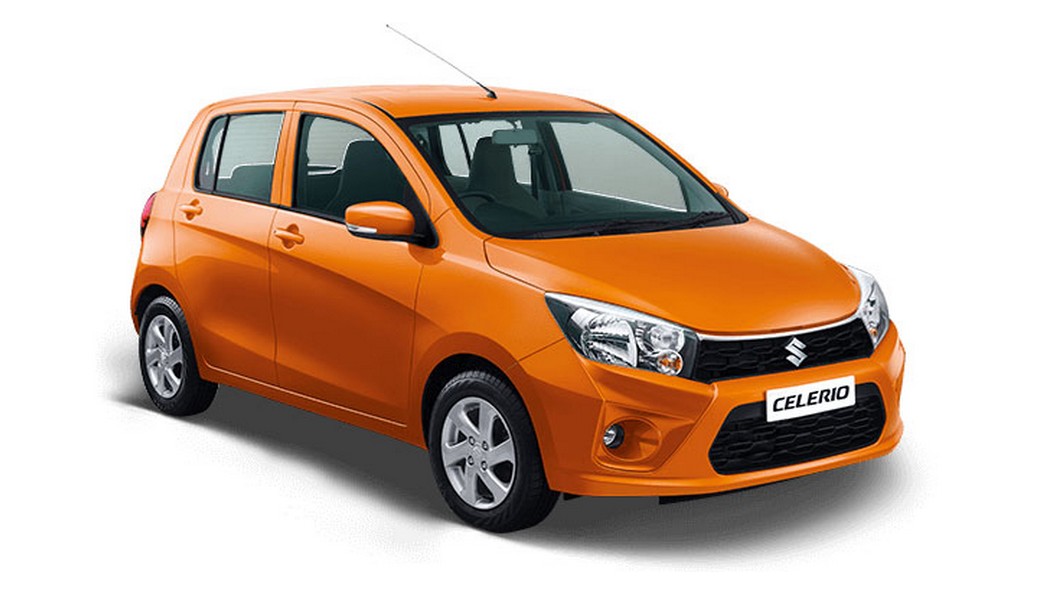
Maruti
₹4.70 - 5.44 Lakh