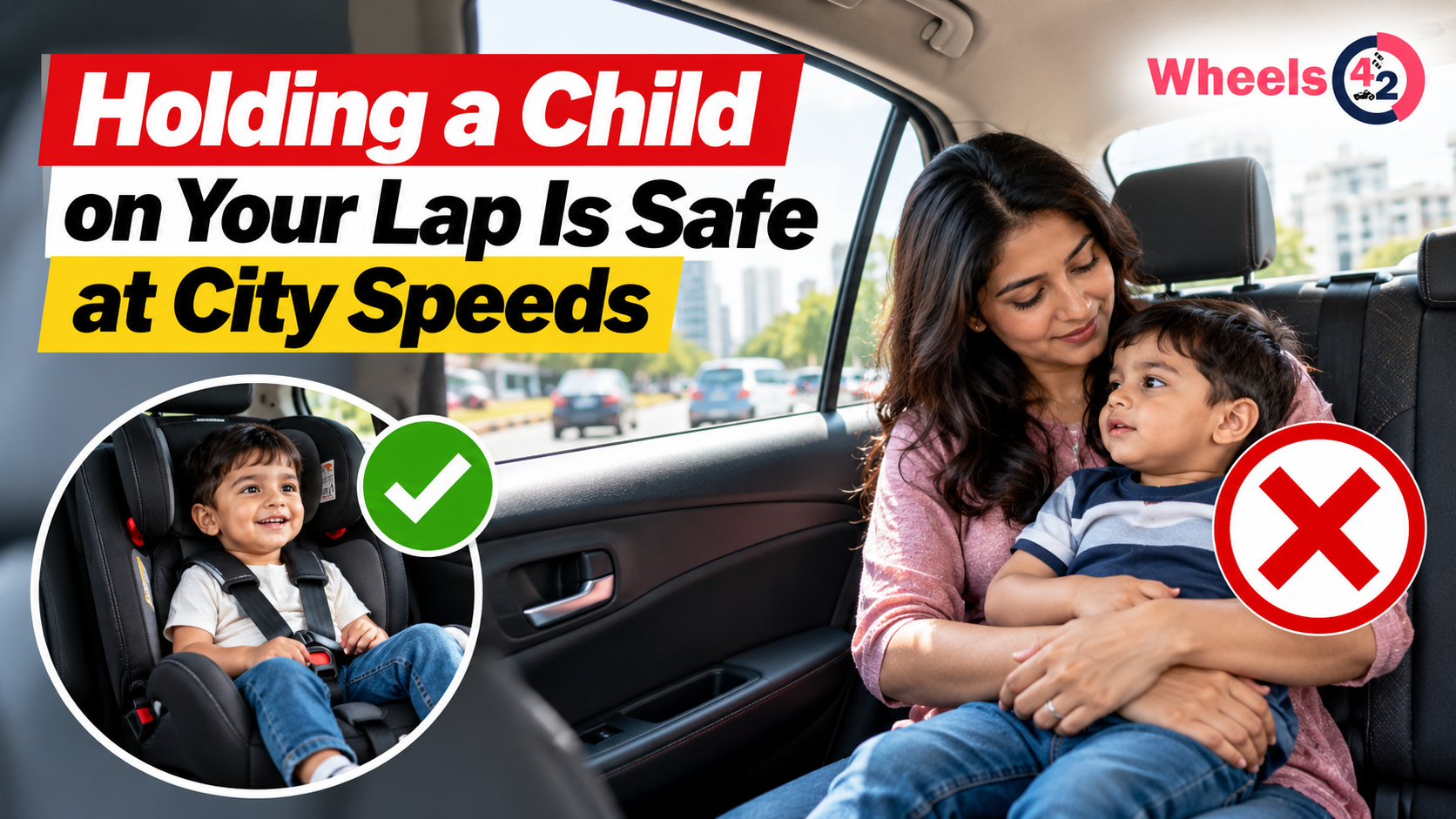
Many parents believe that holding a child on their lap inside a car is safe when travelling at low speeds. During short trips to the market, school, a nearby shop or a relative's home, some adults allow children to sit on their laps instead of using a child car seat.
This practice may seem harmless, particularly when traffic is moving slowly. However, holding a child on your lap is not safe, even at city speeds. Sudden braking, an unexpected collision or a vehicle striking another car can cause serious injuries. An adult's arms cannot reliably restrain a child during a crash.
The safest approach is to use a properly installed child restraint suitable for the child's age, height and weight. In this article, we explain why lap-holding is dangerous, how child car seats improve protection and what parents can do to make every journey safer.
Company-Fitted vs Aftermarket Accessories: Which Is Better?
1. Why Do Parents Hold Children on Their Laps in Cars?
There are several reasons why parents and caregivers allow children to sit on their laps while travelling.
Some believe that a short journey does not require a child car seat. Others feel that holding a baby close provides greater comfort and control. Children may also cry, become restless or refuse to sit in a separate seat.
Common reasons include:
-
The destination is only a few minutes away.
-
The driver plans to travel slowly.
-
The child feels more comfortable in an adult's arms.
-
The family does not have a suitable child restraint.
-
The rear seat appears spacious enough to accommodate everyone.
-
Parents believe they can hold the child tightly during sudden braking.
Unfortunately, these assumptions ignore the forces involved in a collision. Even an experienced driver cannot predict every road hazard or prevent another vehicle from making an unexpected movement.
A short trip does not guarantee a safe trip. Every time a car moves, its occupants need appropriate protection.

2. What Happens During Sudden Braking?
When a moving vehicle brakes suddenly, the car slows down, but the people inside continue moving forward because of inertia.
Seat belts and child restraints are designed to control this movement. A child sitting on an adult's lap, however, is not independently secured.
During sudden braking, the adult may instinctively tighten their arms around the child. But human strength cannot reliably counter the forces involved in an emergency stop or collision.
If the adult is wearing a seat belt, that belt is designed to restrain the adult, not a second passenger sitting on their lap. The child may be caught between the adult and the belt or vehicle interior, depending on the circumstances.
If the adult is not wearing a seat belt, both passengers face additional danger because they can be thrown forward or around the cabin.
This is why an adult's arms should never be treated as a substitute for a properly fitted child restraint.
How to Choose Between Two Similar Car Models: A Decision Framework
3. Are Children Safe on an Adult's Lap at City Speeds?
No. Driving slowly does not make holding a child on your lap a safe practice.
Imagine a family travelling through a residential neighbourhood at 30 km/h. Another vehicle suddenly enters the road, forcing the driver to brake sharply. Even if the car does not suffer major damage, an unrestrained child can move forward violently.
Depending on the circumstances, the child may strike the dashboard, front seat, door or another occupant. Potential injuries include head trauma, facial injuries and injuries to the chest or abdomen.
Children are particularly vulnerable because their bodies are still developing. Their heads are proportionally larger than those of adults, and their necks and bodies require suitable support during a crash.
The distance travelled does not determine whether a collision can occur. A journey of just one kilometre still requires proper safety precautions.
4. Why Is a Child Car Seat Important?

A child car seat is designed to provide protection that an adult's arms cannot offer.
Depending on its design, it helps support the child's body, manage movement during a collision and distribute crash forces across appropriate areas. The correct restraint also helps keep the child in a suitable position.
Different seats are designed for different stages of a child's development.
-
Infant car seats: Designed for babies and generally installed facing the rear of the vehicle.
-
Convertible child seats: Can accommodate different stages of growth according to the manufacturer's limits.
-
Forward-facing child seats: Typically use a harness to restrain a child who has outgrown the rear-facing limits.
-
Booster seats: Help position the vehicle's seat belt correctly for children who are not yet large enough for an adult belt to fit properly.
The appropriate seat depends on the child's height, weight, age and the manufacturer's instructions. Parents should also check that the restraint is compatible with their vehicle.
A child car seat cannot prevent every injury, but correctly choosing and installing one is an important part of passenger safety.
5. Lap-Holding vs a Proper Child Restraint
|
Safety factor
|
Child held on an adult's lap
|
Proper child restraint
|
|
Independent protection
|
No
|
Yes
|
|
Protection during sudden braking
|
Unreliable
|
Designed to control movement
|
|
Suitable for infants
|
No
|
Yes, with an appropriate infant seat
|
|
Body positioning
|
Depends on the adult's grip
|
Designed for the child's size
|
|
Risk of uncontrolled movement
|
High
|
Reduced when correctly installed and used
|
|
Recommended for car journeys
|
No
|
Yes
|
6. How to Choose the Right Child Car Seat
Parents should select a child restraint according to the child's size and developmental stage, while following the seat manufacturer's instructions.
For infants: Use an appropriate rear-facing infant seat. Rear-facing restraints support the head, neck and torso, and young children should remain rear-facing until they reach the seat's specified height or weight limits.
For toddlers: Continue using a suitable rear-facing seat for as long as its limits permit. Once the child outgrows those limits, use an appropriate forward-facing restraint with a harness.
For older children: A forward-facing seat or booster may be suitable, depending on the child's size and the restraint's limits.
For children using an adult seat belt: Check that the lap belt sits low across the hips, the shoulder belt crosses the chest, and the child can sit upright with their back against the seat.
Do not move a child into a larger restraint too early simply because they appear uncomfortable. Check the seat's limits and fit before making a change.
7. How to Install a Child Car Seat Correctly

Even a good-quality child seat may not provide its intended protection if it is installed or used incorrectly.
Follow these essential steps:
-
Read the instructions: Check both the vehicle owner's manual and the child-seat manual.
-
Use the approved installation method: Follow the instructions for the vehicle seat belt or ISOFIX anchors, where supported.
-
Check stability: Ensure the restraint is secured according to the manufacturer's requirements.
-
Adjust the harness: It should fit snugly, without twists, and sit in the correct position.
-
Check the recline angle: Rear-facing seats must be positioned at the angle specified by the manufacturer.
-
Avoid bulky clothing: Thick coats can interfere with a snug harness fit. Secure the harness first and use suitable warmth over it if needed.
-
Inspect the seat regularly: Check for damage, recalls and any restrictions following a crash.
Never place a rear-facing child seat in front of an active frontal airbag. A deploying airbag can cause severe or fatal injuries to an infant in a rear-facing restraint.
Hatchback vs Sedan vs SUV: Which Car Type Suits You Best?
8. What If a Child Refuses to Sit in a Car Seat?
Some children cry, resist the harness or demand to be carried. This can make travelling stressful for parents, particularly when they are in a hurry.
However, the solution is not to allow the child to travel unrestrained.
Parents can try the following approaches:
-
Introduce the child seat gradually before the journey.
-
Check that the restraint fits the child's size and is adjusted correctly.
-
Explain the safety routine in simple, reassuring language.
-
Allow an older child to bring a small, safe toy.
-
Plan extra time for getting the child settled.
-
Stop in a safe location if the child becomes distressed during the trip.
Never remove a child from their restraint while the vehicle is moving. If the child needs attention, pull over somewhere safe before adjusting the seat or comforting them.
Making buckling up part of every journey helps children develop safer habits as they grow.
9. Where Should Children Sit in a Car?
The rear seat is generally a suitable place for children when they are secured in the correct restraint. However, the appropriate position depends on the vehicle, the child seat's compatibility and the manufacturer's instructions.
Children should never be allowed to move around the cabin or share one seat belt. An adult should not use a single seat belt to restrain themselves and a child together.
Drivers should also secure loose luggage and other objects. During sudden braking, unsecured items can move through the cabin and cause injuries.
Before starting the car, check that every passenger is seated correctly and that every child has an appropriate restraint.
10. Indian Road Safety Rules for Child Passengers
Drivers and caregivers should follow applicable Indian traffic rules and the vehicle manufacturer's instructions when transporting children.
Seat-belt requirements and child-restraint provisions may depend on the applicable rules and vehicle configuration. Parents should not assume that holding a child on a lap is an accepted alternative to a suitable restraint.
Even where the legal position requires checking for a particular vehicle or passenger, the safety principle remains unchanged: an adult's arms are not a substitute for a properly fitted child car seat.
Using an appropriate restraint on every journey helps establish a consistent safety routine for the entire family.
Ex-Showroom vs On-Road Price: What's the Real Difference?
Conclusion
Holding a child on your lap may seem convenient during a short city journey, but it is not a safe way to travel. Sudden braking or a collision can cause an unrestrained child to move violently, and an adult cannot reliably hold them in place.
A properly selected and installed child car seat provides dedicated protection suited to the child's size and developmental stage. Parents should make sure every child is secured correctly before the car moves, regardless of the distance or speed.

 Khyati Sharma 2026-09-28